Most of what people have heard about radon testing goes something like this: test in winter, with the windows closed, during heating season, because that’s when levels are highest. There is enough truth in that advice to explain why it gets repeated. But it leaves out a few things that are worth understanding before you decide to put off testing until November.
The first is that radon is not seasonal in any strict sense. It is a radioactive gas that seeps continuously from uranium-bearing soil and rock into buildings through foundation gaps, cracks, and porous concrete. Seasonal patterns affect how much accumulates indoors, but they do not determine whether your home has elevated radon. Homes with elevated radon have it year-round.
The second is that summer testing, done correctly, gives you real and actionable data. It is not a second-best option.
Why Radon Levels Vary by Season at All
Radon enters homes through pressure differences. The air inside a heated home in winter is warmer and less dense than outdoor air, so the home acts like a chimney, drawing air up and in from below through any available gaps in the foundation. This is called the stack effect, and it pulls more radon-bearing soil gas into the home during heating season.
In summer, air conditioning can also create negative pressure that draws air in from below, but the effect is typically less pronounced than in winter. Additionally, homes in summer are sometimes ventilated through open windows, which dilutes indoor radon concentrations.
The result is that radon levels measured in winter are often somewhat higher than levels measured in summer in the same home. The EPA’s guidance on radon testing acknowledges this variation and recommends testing under closed-house conditions regardless of season.
For a short-term test, this means keeping windows and doors closed for 12 hours before and throughout the test period. If you follow those protocols, a summer test gives you a valid reading that the EPA considers equivalent to tests performed in other seasons for decision-making purposes.
When Summer Testing Is Particularly Useful
There are situations where testing now, in summer, is the right choice and should not be deferred.
You are buying or selling a home. Real estate transactions do not pause for the seasons. If a home sale is contingent on a radon test, you test when the transaction requires it. A properly conducted short-term test under closed-house conditions is acceptable to buyers, sellers, and real estate professionals in any month.
Your last test is more than two years old. The EPA recommends retesting every two years, particularly if you have made changes to the home, if you have added living space below grade, or if there has been significant construction or renovation near the foundation. If your last test was pre-pandemic or if you genuinely do not remember when you tested, test now.
You have never tested. The EPA estimates that about 1 in 15 homes in the United States has radon levels at or above the action level of 4 picocuries per liter (pCi/L). In Georgia, elevated radon can occur in any county, and the geologic variability of the Piedmont region means results vary significantly from neighborhood to neighborhood and even street to street. Not testing is not a safe default.
You want to monitor after mitigation. If your home has had a radon mitigation system installed, periodic retesting confirms the system is still working as intended. A mitigation system that has lost suction due to a damaged pipe, a clogged suction point, or a failed fan may not be reducing radon effectively even though it is still running.
How Radon Testing Works in Practice
Radon testing has two main formats: short-term tests and long-term tests.
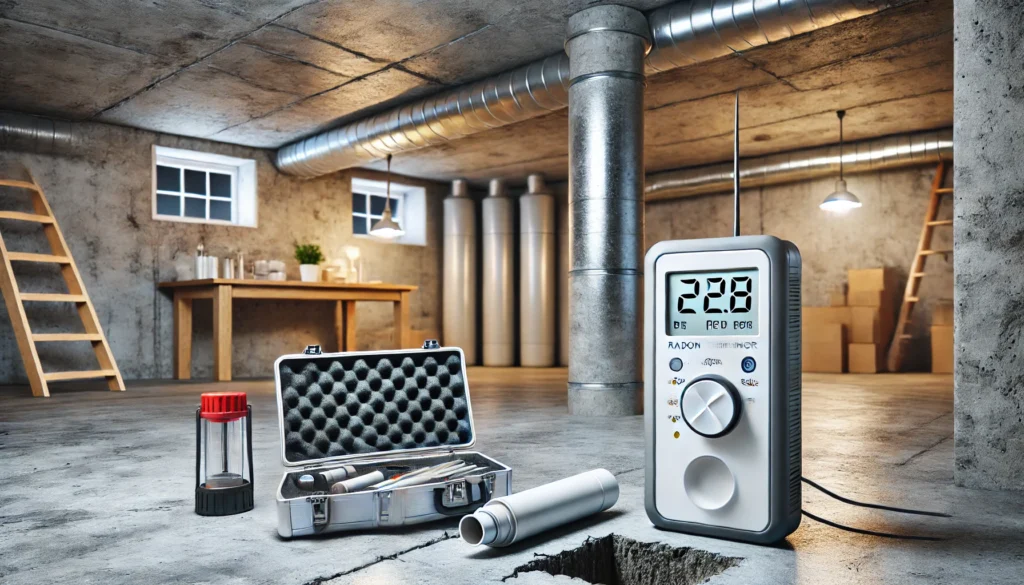
Short-term tests use charcoal canisters or electret ion chambers placed in the lowest livable level of the home for 48 to 96 hours. The device collects radon during that window, is sent to a laboratory, and results are typically returned within a week. Short-term tests are the most common format for real estate purposes and initial screenings.
Long-term tests use alpha track detectors that collect data over 90 days to one year. Because they average across multiple seasons and weather conditions, they give a more accurate picture of typical annual exposure. The EPA considers long-term testing the most reliable measure of average radon concentration in a home.
If your goal is the most accurate picture of your year-round radon exposure, a long-term test placed now and collected in late fall or early winter gives you data that spans the seasonal transition and is harder to dismiss as a seasonal anomaly. That is not a reason to wait for winter; it is a reason to start now.
What the Action Level Means
The EPA’s action level for radon is 4 pCi/L. If your test comes back at or above that concentration, the EPA recommends fixing the home. The EPA also notes that levels between 2 and 4 pCi/L carry meaningful risk over time and that mitigation at those levels should be considered.
The most common mitigation method is sub-slab depressurization, where a pipe is installed through the foundation slab and a fan draws soil gas from beneath the slab and vents it above the roofline before it can enter the home. In most homes this reduces radon to below 2 pCi/L. In the Augusta region, crawl space homes require a different approach, typically involving a sealed vapor barrier and exhaust fan, but the goal is the same: interrupt the path from soil to living space.
The average indoor radon level in the United States is about 1.3 pCi/L, according to the EPA. Outdoor air averages about 0.4 pCi/L. If your home is significantly above average, the cumulative exposure over years of living there adds up. Radon is the second leading cause of lung cancer in the United States, responsible for an estimated 21,000 deaths per year. You cannot see it, smell it, or feel it. Testing is the only way to know.
A Practical Note for Augusta and the CSRA
Georgia does not have mandatory radon disclosure requirements for home sales. Some sellers test, many do not, and many buyers do not request it. This means that if you move into a home without testing, you may have no information at all about the radon history of the property.
Both Augusta-Richmond County and neighboring areas in the Piedmont include soil types with elevated uranium content. This does not mean every home has a problem, but it does mean that local geology does not give you a blanket reason to assume your home is safe.
The practical recommendation is straightforward: test the home you live in, particularly the lowest livable level, particularly if you have spent significant time there and never tested. If you want help interpreting your results or scheduling professional radon testing, the EnviroPro 360 team can help. Reach out any time.