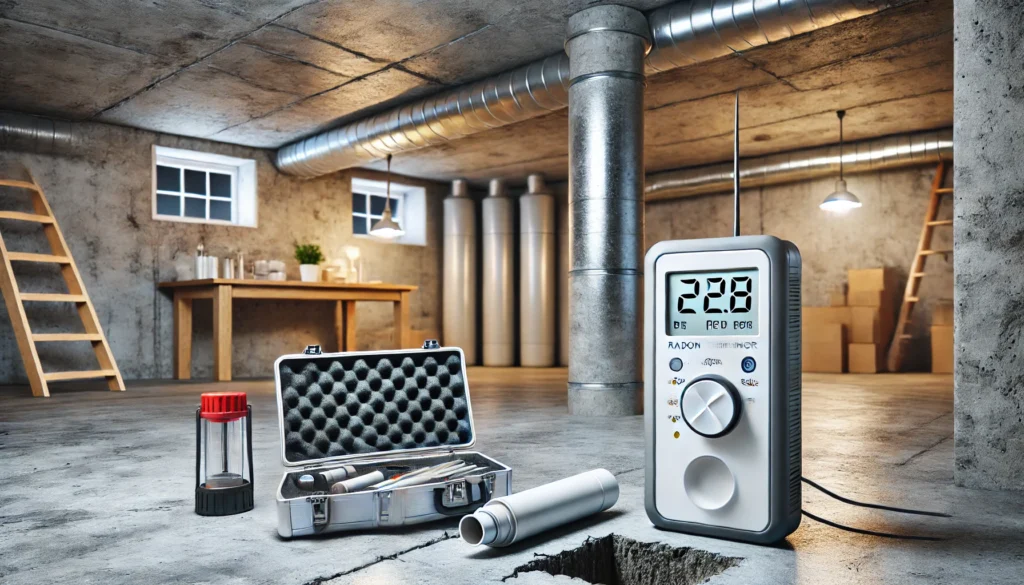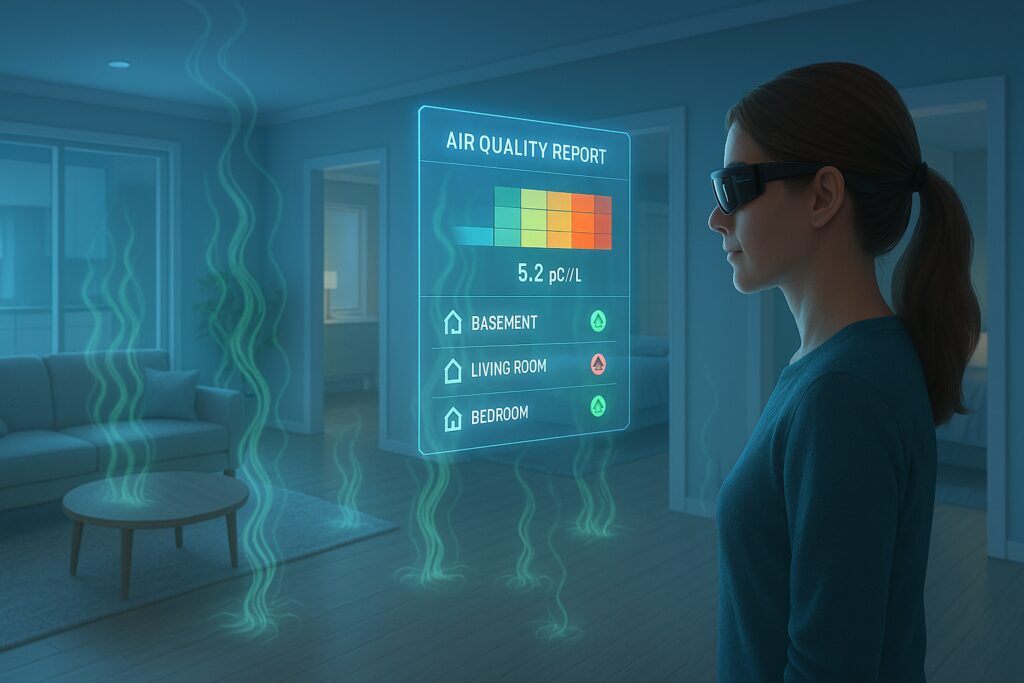
Home buyers in Georgia and South Carolina often receive a radon test result as part of the transaction disclosure process. The seller arranges a test, the result comes back below the EPA action level of 4.0 pCi/L, and the buyer moves forward satisfied that radon has been addressed. But a seller’s test result is not a reliable indicator of what you will actually be exposed to once you move in.
There are specific, technical reasons why retesting after purchase is worth doing, and the cost of a post-purchase test is modest relative to what you have already invested.
Why Seller Tests Often Underrepresent Actual Risk
The circumstances under which a seller’s test is conducted are often different from the conditions under which a home is actually occupied.
Short-term tests are the standard for real estate transactions because they produce results quickly, within two to seven days. But short-term results are sensitive to conditions during that specific window. Barometric pressure, temperature, precipitation, and ventilation all affect how much radon enters during any given week. A test conducted during mild weather with windows partially open will likely read lower than the same home tested in closed winter conditions.
The EPA requires closed-house conditions during radon testing, meaning windows and exterior doors must remain closed for the period before and during the test. However, ensuring these conditions are maintained throughout a real estate test period is difficult to verify. A seller who complies with the protocol casually rather than strictly can produce a result that is lower than it would otherwise be.
Seller tests also reflect a specific point in time, often during the selling season, which may be spring or summer. As discussed elsewhere, radon concentrations in the CSRA tend to be higher during cooler months when homes are sealed and stack effect draws more soil gas through the foundation. A test from April may not represent what November looks like.
How Your Occupancy Changes Radon Behavior
Once you move in, several things change that affect how radon accumulates in your home.
Furniture placement matters more than most people expect. A test monitor placed in an empty room gives a different reading than one placed in a furnished room where air circulation patterns are altered by sofas, shelving, and rugs near the floor. This is a minor factor but not a negligible one.
More significant are behavioral and structural changes that happen around or after a move. Finishing a basement converts an unconditioned space with relatively little occupancy into a living area where residents may spend hours daily. Weatherproofing and sealing gaps after moving in, while improving energy efficiency, also reduces air exchange and can cause radon to accumulate at higher concentrations than it did before.
If you seal the home more tightly than the previous owner maintained it, or if you spend more time in lower-level spaces, your actual exposure can be meaningfully different from what the seller’s test captured.
When to Retest After Purchasing
The practical guidance for new homeowners is to retest within the first 90 days of occupancy. This gives you a baseline under the conditions that actually apply to how you live in the home, not how the previous owner staged it for testing. If you plan any renovation work that involves the basement, crawl space, or foundation, retest again after the work is complete.
If the seller’s test result was between 2.0 and 3.9 pCi/L, the case for retesting is even stronger. The EPA considers levels above 4.0 pCi/L the action threshold but notes that any level above 2.0 pCi/L carries cumulative risk with long-term exposure. A seller’s result of 3.5 pCi/L combined with conditions that increase radon accumulation after move-in could put your actual exposure above the action level.
According to the CDC, radon is the second leading cause of lung cancer in the United States after smoking. Unlike most home hazards, radon exposure produces no acute symptoms and no warning signs. You will not know whether your home has elevated levels unless you test.
What Happens If Post-Purchase Testing Shows Elevated Levels
If you test within the first two years of purchase and results are elevated, you may have recourse depending on your purchase agreement terms and the seller’s representations. This is particularly relevant if the seller provided a test result as a disclosure document. Documenting your own results through certified testing is the foundation of any such conversation.
Radon mitigation for most residential properties involves a sub-slab depressurization system installed by a licensed contractor. The cost varies by foundation type and system design but is typically within the range of a few hundred to a couple thousand dollars. If mitigation is needed, EnviroPro 360 can conduct post-mitigation testing to confirm the system is working before you sign off with the contractor.
EnviroPro 360 provides certified radon testing throughout Augusta, Evans, Martinez, Grovetown, North Augusta, Aiken, and surrounding communities in Georgia and South Carolina. If you have recently purchased a home and want to verify your actual radon level under your own occupancy conditions, contact us to schedule a test.