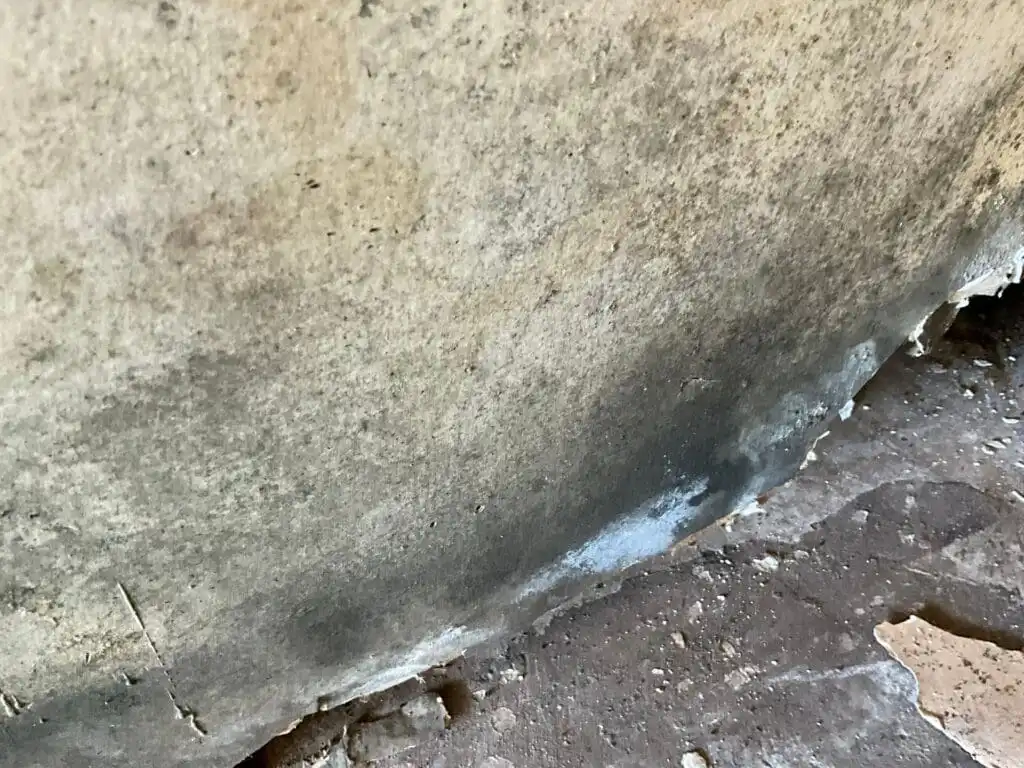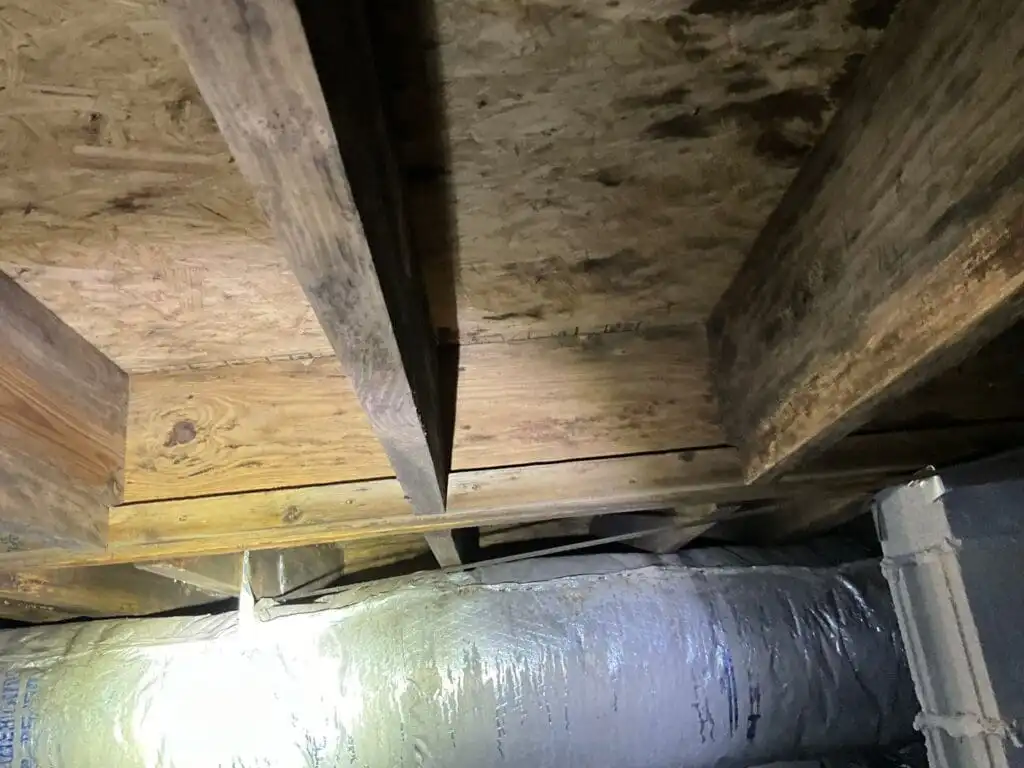
If you check the weather in Augusta on a typical July morning, you will find relative humidity readings between 80 and 95 percent before noon. By the time afternoon rolls around, temperatures are in the mid-nineties, and the heat index makes it feel like you are standing inside a wet towel. That combination of heat and persistent moisture is exactly what mold needs to spread rapidly inside a home.
Mold does not grow slowly in these conditions. Under the right circumstances, visible mold growth can appear on surfaces within 24 to 48 hours of sustained moisture exposure. By the time most homeowners notice it, a summer moisture problem has already been developing for weeks.
What Makes Augusta’s Summers So Risky
The EPA’s guidance on mold establishes that mold growth requires three things: a surface to grow on, temperatures between roughly 40 and 100 degrees Fahrenheit, and moisture. Augusta’s summer climate delivers two of those three in abundance, and the third is almost impossible to eliminate entirely from a structure because every surface in your home already exists.
Humidity above 60 percent indoors creates conditions where moisture condenses on surfaces that should be dry: inside HVAC ducts, on the backs of furniture pushed against exterior walls, inside wall cavities near leaky windows, and in crawl spaces. Once condensation forms on these surfaces regularly, mold has what it needs.
The Central Savannah River Area compounds this problem with a few local factors. Older housing stock in neighborhoods like Summerville, Harrisburg, and the Hill is often built on crawl space foundations. Crawl spaces in Georgia trap humid outdoor air underneath the living area. That trapped air pushes moisture up through subfloor materials and into the home’s lower level. If your crawl space is not properly encapsulated and the vapor barrier is damaged or absent, every humid July day is adding moisture to the space where your floors sit.
The region’s red clay soil also does not drain efficiently. Water pools after rain, saturates the soil adjacent to the foundation, and migrates toward the home. This is less dramatic than a flooded basement, but the chronic effect on relative humidity and mold risk inside the home is real.
The HVAC System Is Not Neutral
Your air conditioning system is both your primary defense against summer mold and a potential source of it. The system’s job is to cool air, and when air cools, it drops moisture. That moisture collects in the condensate drain pan and drains out through the condensate line. If the drain line is partially blocked, as it frequently is in homes that do not get regular HVAC maintenance, the pan overflows. Water sits in the base of the air handler, the coil housing gets wet, and mold begins to grow on the damp insulation and sheet metal surrounding the coil.
From there, every time the system runs, it distributes mold spores through your ductwork and into every room.
The CDC notes that HVAC systems can amplify mold problems by distributing spores to new locations and by introducing nutrients and moisture into duct insulation. Flex duct that has been damaged, kinked, or torn becomes a warm, dark, moist environment inside an already-enclosed system.
Signs that your HVAC may be contributing to a mold problem include musty odors that appear when the system first kicks on, visible dust buildup at supply vents, and allergy-like symptoms that seem to improve when you leave the house.
Where Mold Hides During Summer
The places mold grows during summer in Augusta follow predictable patterns:
Crawl spaces and subfloors. If humidity is not controlled in the crawl space, wood joists and subfloor sheathing absorb moisture. Mold on these surfaces is often not visible from inside the home, but the spores migrate upward.
Attics with inadequate ventilation. Heat builds up in attics during summer, and if there is any roof penetration, flashing gap, or ventilation problem, humidity from the living space rises into the attic and condenses on decking. Mold on roof sheathing is one of the most common and least-noticed problems in Augusta homes.
Behind exterior walls on the north and east sides. Walls that stay cooler and out of direct sun create condensation points where humid air inside the wall cavity can deposit moisture.
Bathrooms and laundry rooms. These rooms generate moisture with every use. If exhaust fans are undersized, vented into the attic rather than outside, or not used consistently, the ceiling and surrounding wall framing are chronically damp throughout summer.
When to Test Versus When to Remediate
If you have visible mold, testing the visible growth is generally not the first priority. You already know mold is there. The more useful question at that point is whether mold is also present in locations you cannot see, and whether the species present are elevated compared to outdoor baseline levels.
An indoor air quality test or surface mold test becomes valuable when you have:
- A musty odor without visible growth
- Recent water damage that was dried out but never inspected professionally
- A household member with persistent respiratory symptoms, especially symptoms that improve when they leave the home
- A home you are buying or selling where the history of moisture issues is unknown
- A recently remediated area where you want to confirm the work was effective
Testing before visible mold appears, or after remediation to confirm clearance, gives you information. Testing visible growth tells you less.
What You Can Control Before August
There are a few things you can address now that meaningfully reduce summer mold risk:
Get your HVAC system serviced. Make sure the condensate drain is clear, the coil is clean, and the system is actually dehumidifying, not just cooling. A well-tuned air conditioning system in Augusta should keep indoor relative humidity below 55 percent even in July.
Check your crawl space. If you have a crawl space foundation and you have never had it inspected, now is the time. Signs of concern include pooling water after rain, standing moisture on the vapor barrier, or white or gray fuzzy growth on wood surfaces. A damaged or incomplete vapor barrier is inexpensive to repair compared to treating mold that has been growing for two or three summers.
Inspect exhaust venting. Verify that bathroom fans and the kitchen range hood actually vent to the outside, not into the attic or wall cavity. You can check this by running the fan and holding a piece of tissue to the vent, but the definitive check is tracing the ductwork itself.
Use a hygrometer. An inexpensive humidity meter placed in the basement, crawl space, or first floor tells you whether humidity inside the home is in the danger zone. If you are regularly seeing readings above 60 percent indoors with the AC running, something in the system needs attention.
Augusta’s summer is not gentle on homes. The buildings that avoid mold problems in August are the ones whose owners paid attention in June and kept up with maintenance through July. If you are seeing signs of moisture problems in your home or want to establish a baseline before the humidity peaks, the EnviroPro 360 team is here to help. Reach out any time.