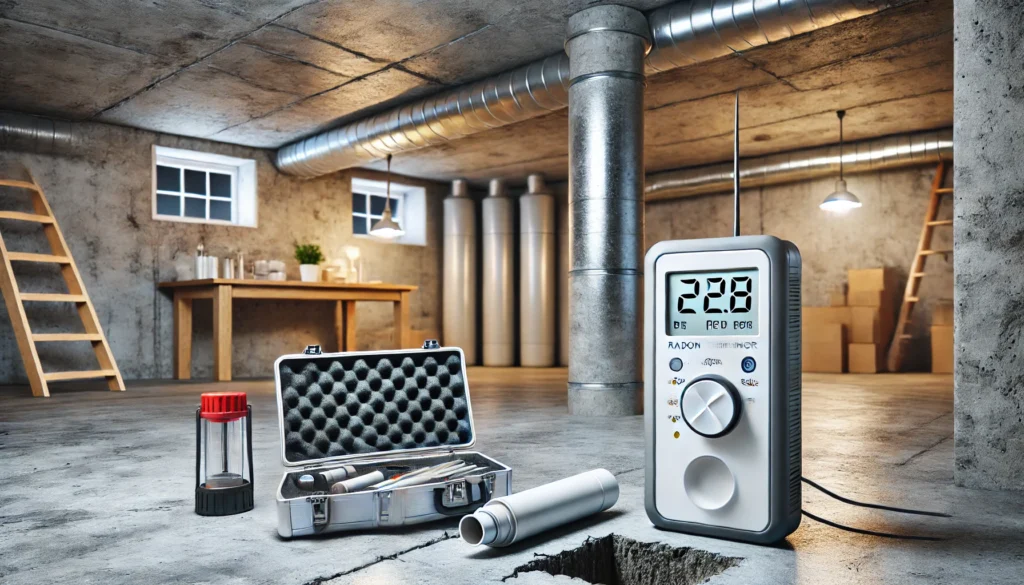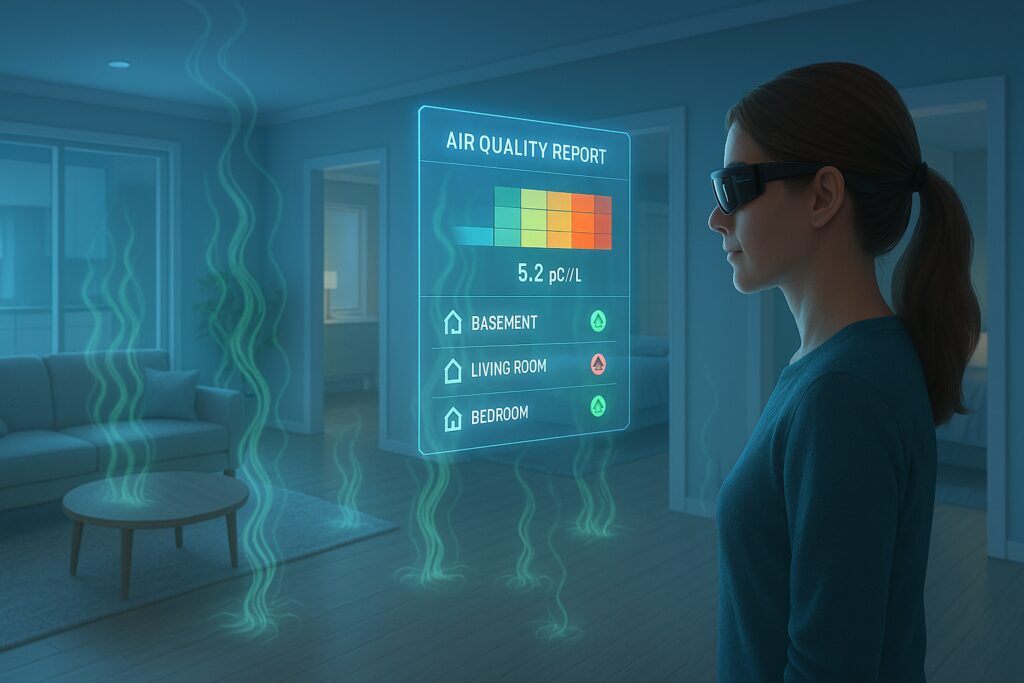
A homeowner in Evans finished her basement last year: new drywall, a drop ceiling, carpet over the slab, and a supply vent tied into the main HVAC trunk line. The house had tested for radon when she bought it eight years earlier, and the number came back well under the EPA’s action level of 4 pCi/L (picocuries per liter, the standard unit for measuring radon concentration in air). She assumed that number still applied. It didn’t. A follow-up test after the renovation came back at 6.8 pCi/L, nearly double the level the EPA considers safe.
Nothing about the soil under her house changed. What changed was the house itself, and that’s the part homeowners consistently miss.
Why a Renovation Resets the Radon Picture
Radon is a colorless, odorless gas produced by the natural decay of uranium in soil and rock. It enters homes through foundation cracks, sump pits, gaps around pipes, and porous concrete, then gets trapped indoors instead of dispersing outside. How much radon accumulates in your living space depends less on how much gas is in the soil and more on how your house handles air.
Renovations change exactly that. A few common examples:
- Finishing a basement turns an unoccupied, often poorly sealed space into living space, while also sealing the slab with new flooring that can trap gas against different points of entry or push it toward the perimeter.
- New HVAC ductwork or a supply vent added to a basement can pull radon-laden air into the return system and circulate it through the rest of the house.
- Sealing a crawl space or adding vapor barrier reduces natural ventilation under the house, which can either help or hurt radon levels depending on whether a passive vent pipe is part of the system.
- Replacing windows or adding insulation tightens the building envelope, reducing the air exchange that used to dilute indoor radon with outdoor air.
- Foundation repairs, including new footings, French drains, or crack sealing, change the pathways radon uses to enter, sometimes concentrating it in new spots.
None of these projects are radon problems on their own. But each one changes the assumptions your original test was based on, which means the result no longer reflects how the house actually behaves.
The EPA’s Guidance Is Explicit About This
The EPA’s Citizen’s Guide to Radon recommends retesting after any structural change that affects the lowest lived-in level of the home, including finishing a basement, adding an addition, or making significant changes to heating and cooling systems. The agency also recommends retesting every two years regardless of renovations, because radon levels can shift due to changes in soil moisture, foundation settling, or nearby construction.
If your renovation converted an unfinished space into a bedroom, home office, or playroom, that’s the clearest case for retesting. The EPA’s health risk estimates are based on the assumption that people spend meaningful time in the tested space. A basement that sat empty during your original test but is now where your kids do homework every afternoon needs its own current reading.
Why “It Passed Before” Isn’t Reassurance
The CSRA sits in an area with moderate radon potential, and soil conditions vary block to block, not just county to county. A test result from before construction only tells you what radon looked like under the conditions that existed at that time. Once you’ve changed the structure, that number is describing a house that no longer exists in that form.
This matters most in two situations homeowners tend to underestimate:
Basement finishing without a radon-resistant design. If your basement wasn’t built with passive radon mitigation (a vent pipe running from beneath the slab to above the roofline) and you’re now spending hours a day down there, the exposure math changes even if the gas concentration in the soil hasn’t.
HVAC changes that increase air mixing between levels. New return vents, added supply runs, or a basement mini-split system can pull radon from the lowest level into air that circulates through bedrooms and living areas upstairs. A test taken before that ductwork existed won’t reflect it.
What Retesting Actually Involves
Professional radon testing uses continuous radon monitors or lab-analyzed test devices placed in the lowest lived-in level of the home, following the closed-building conditions the EPA specifies for accurate results (windows and exterior doors closed except for normal entry and exit, typically for at least 12 hours before and during the test). Short-term tests run 2 to 90 days; longer-term monitoring gives a more accurate picture of how levels shift with weather and seasons.
If your renovation is still in progress, the most useful approach is often to test before final drywall goes up (so mitigation can be built in cheaply if needed) and again after the space is finished and in regular use.
What to Do
-
If you’ve finished a basement, added an addition, or changed HVAC ductwork in the last two years, schedule a retest. Don’t rely on a pre-renovation number for a space that’s structurally different now.
-
If you’re planning a renovation that touches the lowest level of your home, test before you close up walls. It’s far cheaper to add a passive vent stack during construction than to retrofit a mitigation system afterward.
-
Keep your test results with your renovation records. If you sell the house, a documented post-renovation radon test answers a question buyers and their inspectors will ask.
If you’ve recently renovated and aren’t sure whether your old radon test still applies, the EnviroPro 360 team can help you figure out what’s changed and what to test for. Reach out here and we’ll walk through it with you.