Augusta and the CSRA sit in one of the most mold-favorable climates in the country. Georgia’s long, humid summers push indoor humidity to levels where mold can establish and spread in wall cavities, crawl spaces, and attics faster than most homeowners expect. Crawl space construction is common in this region, and without proper vapor barriers and ventilation, ground moisture moves directly into the wooden framing beneath your floors. Add one water event, a slow plumbing leak, a backed-up gutter, or a roof penetration that lets moisture in, and the conditions for mold growth are already in place.
Understanding where mold comes from, where it hides, and when to call a professional are the basics every homeowner in this area should know.
How Mold Grows
Mold is a fungus that reproduces through microscopic spores carried in the air. Spores are present indoors and outdoors at all times — this is normal and unavoidable. The problem starts when spores land on a wet surface and begin to colonize. The EPA notes that mold can begin growing on wet building materials within 24 to 48 hours under the right conditions.
Three things drive mold growth: moisture, an organic food source, and temperatures above freezing. Building materials including drywall, wood framing, insulation, and ceiling tiles all provide food. Temperatures in occupied homes are always in the growth range. This means moisture is the only variable you can actually control. Any material that stays wet for more than 48 hours should be treated as potentially mold-affected until proven otherwise.
Where Mold Hides in Augusta-Area Homes
Mold in this region follows moisture, and moisture in Augusta-area homes tends to concentrate in predictable places:
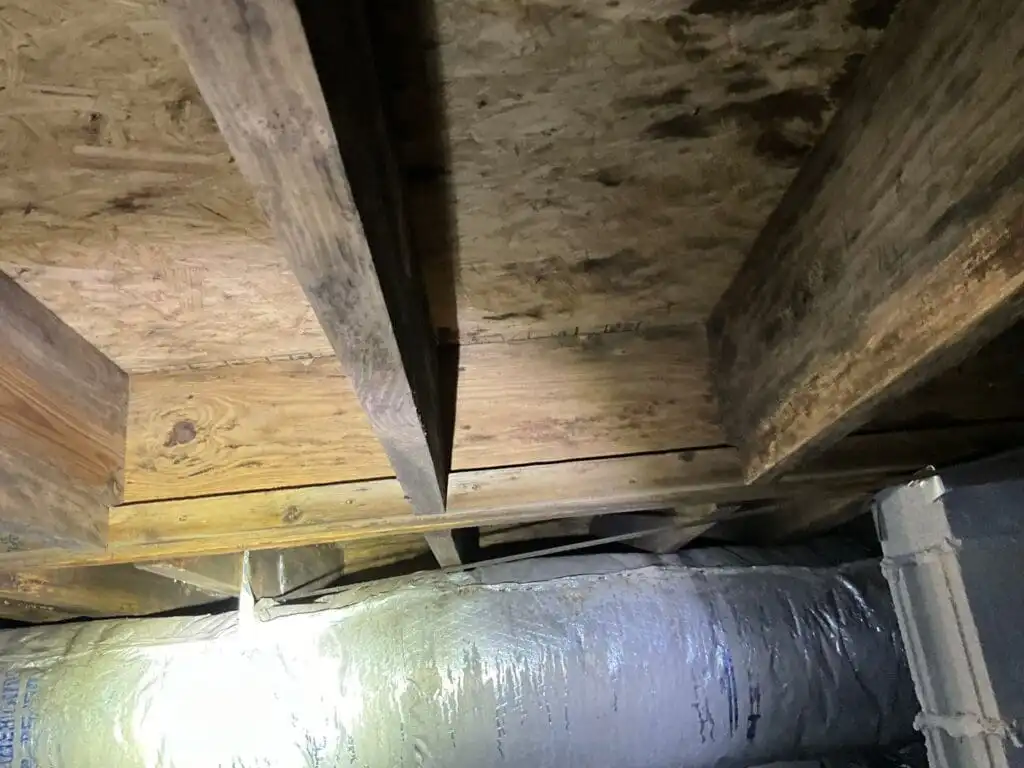
- Crawl spaces — the most common source of mold problems in this region. Unventilated or poorly sealed crawl spaces allow ground moisture to condense on floor joists and subfloor sheathing. Mold on floor joists often goes undetected for years because homeowners rarely inspect the crawl space.
- Behind walls in bathrooms and kitchens — slow supply line leaks and failed caulking around tubs and showers create moisture behind finished walls. By the time the drywall shows discoloration, mold growth on the back side is typically extensive.
- HVAC systems and ductwork — condensation inside supply ducts in humid climates creates conditions for mold growth. When the system runs, spores can be distributed through every room in the house.
- Attics — inadequate attic ventilation, especially in older homes with limited soffit venting, allows humid air to stagnate. Roof leaks that enter the attic and wet insulation can go unnoticed for months.
- Basements — less common in this region but present in some older Augusta properties. Basement walls without waterproofing absorb groundwater after heavy rain.
Health Effects of Mold Exposure
The CDC notes that mold exposure can cause nasal and sinus congestion, respiratory symptoms, eye irritation, and skin reactions, particularly in people with allergies, asthma, or weakened immune systems. People with existing respiratory conditions like COPD or asthma are especially vulnerable — mold exposure can trigger attacks and worsen baseline symptoms over time.
The severity of health effects depends on the type of mold, the concentration of spores, and the duration of exposure. Occupants living with an undetected hidden mold problem may experience chronic symptoms they attribute to allergies or seasonal illness, without recognizing that the exposure source is inside their home. Children and elderly adults are more susceptible to the effects of elevated indoor mold spore counts than healthy adults.
Testing: DIY Kits vs. Professional Inspection
Consumer mold test kits are inexpensive and available at hardware stores. They work by exposing a petri dish to air for a set period and then mailing it to a lab. The limitation is significant: because mold spores are always present in some concentration indoors and outdoors, a positive result from a consumer kit does not tell you whether your levels are elevated relative to outdoor air, where the source is, or whether the mold type poses a health concern. You get a result but not useful information.
Professional mold inspection and air sampling gives you data you can act on. A certified inspector collects air samples from the rooms of concern and a control sample from outside. Lab analysis compares indoor spore concentrations and species to the outdoor baseline. Elevated indoor counts relative to outdoor air indicate an active mold source inside the building. Thermal imaging and moisture meters help locate the source without opening walls unnecessarily.
A professional inspection is worth prioritizing when:
- You smell musty odors but cannot find visible mold
- You or family members have unexplained respiratory symptoms that improve when away from home
- Your home has had any water intrusion event in the past year that was not professionally dried and documented
- You are buying or selling a home and want documentation of indoor air quality
- Your crawl space has never been inspected
Preventing Mold in Your Home
Moisture control is the only reliable prevention strategy. Practical steps that matter most in this climate:
- Keep indoor humidity below 60 percent using air conditioning and dehumidifiers where needed — the CSRA’s summer humidity makes this especially important
- Inspect and maintain crawl space vapor barriers and ventilation annually
- Fix plumbing leaks immediately; do not wait to see if they get worse
- Ensure bathroom and kitchen exhaust fans are ducted to the exterior, not into the attic
- Check gutters and downspouts after each storm season to ensure water is directed away from the foundation
Schedule a Mold Inspection
If you suspect mold in your Augusta-area home or want to confirm your indoor air quality after a water event, EnviroPro 360 provides professional mold inspection and testing using air sampling and moisture assessment equipment. Results come with a clear lab report and recommendations for next steps. Contact EnviroPro 360 to schedule an inspection.
EnviroPro provides mold testing and inspection services in the areas surrounding Augusta, GA including the Georgia cities of: Augusta, Savannah, Macon, Warner Robins, Athens, Martinez, Statesboro, Evans, Milledgeville, Grovetown, and the South Carolina cities of: Columbia, Greenville, North Charleston, Rock Hill, Summerville, Sumter, Spartanburg, Hilton Head Island, Aiken, Anderson, Greenwood, Greer, Wade Hampton, Taylors, Mauldin, North Augusta, Bluffton, Lexington, Goose Creek, Newberry.