In several years working as an asbestos inspector in the Augusta area, I’ve been called in to assess situations that should never have happened.
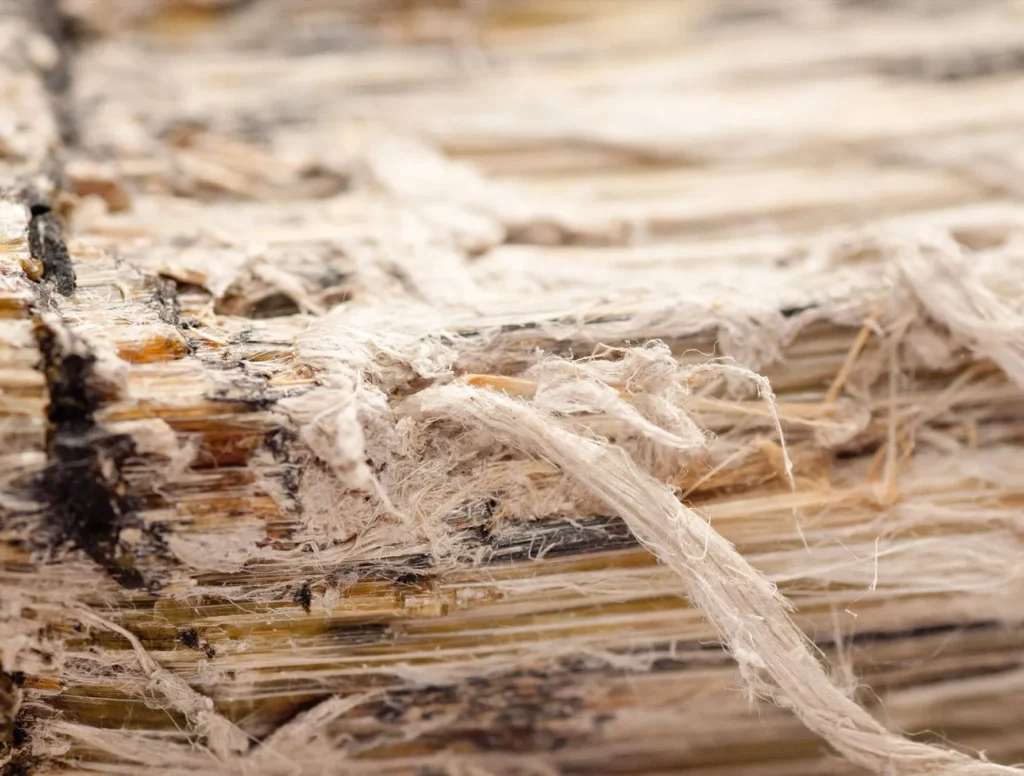
A homeowner in Evans hired a water damage mitigation company after a burst pipe. The crew removed drywall and ceiling material in a 1974 home without ever testing for asbestos first. When the homeowner later hired an independent inspector — concerned about the dust left behind — samples confirmed chrysotile asbestos in the ceiling texture. The fibers had been released throughout the living area during the demo. Furniture, HVAC ducts, clothing — all potentially contaminated. The mitigation company was long gone.
In another case, a renovation contractor in Augusta submitted asbestos samples themselves — taken without proper wet methods, without a chain of custody, and sent to a lab that wasn’t NVLAP-accredited. The results came back negative. Work proceeded. When an independent inspector later sampled the same materials, multiple samples confirmed asbestos-containing floor tile and mastic. The contractor had no idea what they were doing, or didn’t want to know.
These situations are not rare. And the consequences — contaminated homes, health risk to occupants, contractors who disappear — fall entirely on the property owner.
Why Contractors Should Never Self-Test
The conflict of interest is straightforward: a contractor has a financial incentive to find no asbestos. A positive result means delays, regulatory notifications, licensed abatement contractors, additional cost, and potential project restructuring. An independent inspector has none of those pressures. Their job is to find what’s there — accurately — and report it.
But beyond the conflict of interest, there’s a regulatory issue. Under EPA’s Asbestos NESHAP and OSHA’s construction standard (29 CFR 1926.1101), asbestos sampling must be performed by a qualified person with specific training in sampling methods, chain of custody requirements, and safe handling procedures. In Georgia, asbestos inspectors must be licensed by the Georgia EPD. In South Carolina, they must be licensed by DHEC. Construction contractors and water damage mitigation companies do not hold these licenses unless they have specifically obtained them.
When an unlicensed person collects asbestos samples, those samples may be inadmissible for regulatory purposes — and the sampling process itself, done improperly, can release the very fibers it was supposed to detect.
What Improper Sampling Actually Looks Like
Most homeowners and property owners don’t know what proper asbestos sampling looks like, which is why contractors can get away with doing it wrong.
Here’s what licensed sampling actually requires:
- Wet methods: The material must be wetted with amended water before and during sampling to suppress fiber release. A contractor who dry-scrapes a ceiling texture sample is releasing fibers into the air.
- Proper PPE: The inspector wears a respirator and disposable coveralls. Someone sampling in street clothes is not following protocol.
- Sealed containment: The sample goes immediately into a sealed, labeled container with a proper chain of custody. Loose samples in an unlabeled bag aren’t valid.
- Accredited laboratory: Samples must go to an NVLAP-accredited laboratory for polarized light microscopy (PLM) analysis. Not every commercial lab qualifies.
- Multiple samples: A single sample from one location is not sufficient. Licensed inspectors collect multiple samples from each homogeneous material area to account for variation.
When any of these steps are skipped, the results aren’t just unreliable — the sampling process itself may have made things worse.
How to Verify Credentials in Georgia and South Carolina
Before anyone collects asbestos samples from your property, verify their credentials directly:
- Georgia: The Georgia EPD maintains a public database of licensed asbestos inspectors, contractors, and air monitors. An inspector should hold a current Inspector or Inspector/Management Planner license issued by EPD.
- South Carolina: SC DHEC licenses asbestos professionals under Regulation 61-86.1. Ask to see the inspector’s current DHEC license and verify the expiration date before any sampling begins.
- Laboratory accreditation: Ask which laboratory will analyze your samples and confirm they hold NVLAP (National Voluntary Laboratory Accreditation Program) accreditation for asbestos bulk analysis. The NVLAP directory is publicly searchable through NIST.
If the person offering to test your property can’t point you to a current state license, don’t let them sample.
The Real Cost of Getting This Wrong
When asbestos fibers are released into a home through improper sampling or unprotected demolition, cleanup is not straightforward. Decontamination of an occupied living space — including furniture, HVAC systems, ductwork, and personal belongings — is expensive, disruptive, and in many cases incomplete. Once fibers are distributed through an HVAC system, the scope of contamination expands significantly.
The contractor who caused the problem typically won’t be there to fix it. Pursuing them through the courts is slow and uncertain. The homeowner is left managing a situation they didn’t create and couldn’t have anticipated without independent testing done beforehand.
Independent asbestos testing costs a fraction of what remediation costs. More to the point, it costs a fraction of what litigation costs. The value isn’t just regulatory compliance — it’s having a documented record that shows you hired a licensed inspector before any work began.
What to Ask Before Any Demolition or Renovation
Before any contractor begins work in a pre-1985 building in the Augusta area, ask these questions:
- Has an independent, state-licensed asbestos inspector surveyed the work area?
- Were samples analyzed by an NVLAP-accredited laboratory?
- Can I see the survey report with sample results and floor plan locations?
- Has the required state notification been filed if ACM was identified?
If any of these questions get a vague answer or a pushback, that’s a problem — not a minor paperwork detail.
Final Thoughts
The Augusta area has older housing stock. A substantial portion of homes and commercial buildings built before the mid-1980s contain asbestos-containing materials in some form — ceiling texture, floor tile, pipe insulation, roofing, or siding. That’s not a scare statistic. It’s the reality of the building inventory in this region.
Independent asbestos testing protects you from contractors who don’t know what they’re doing, and from those who do know and would rather not find anything. Either way, a licensed inspector’s survey gives you accurate information before work begins — and a documented record if anything is ever disputed afterward.
If you have questions about independent asbestos testing or want to schedule a survey before your next renovation project, the EnviroPro 360 team is happy to help. Reach out any time.