Asbestos on outdoor surfaces is a less-discussed exposure pathway, but for school administrators, property owners, and parents, it carries real risk. Naturally occurring asbestos in rock and soil can be disturbed by foot traffic, maintenance work, and weather — releasing fibers at ground level where children spend time. Legacy asbestos-containing materials in older school buildings present a separate but related concern governed by federal law.
This post covers both: how asbestos ends up on outdoor surfaces, what the law requires of schools and property owners, and what testing and mitigation actually involve in Georgia and South Carolina.
The federal law that governs asbestos in schools: AHERA
The Asbestos Hazard Emergency Response Act (AHERA), passed by Congress in 1986, is the controlling federal law for asbestos in school buildings. It applies to all public and non-profit private elementary and secondary schools in the United States — including those in Georgia and South Carolina.
Under AHERA, Local Education Agencies (LEAs) — typically the school district — are required to:
- Designate a person responsible for AHERA compliance at each school
- Hire accredited inspectors to inspect all school buildings for asbestos-containing material (ACM) and presumed asbestos-containing material (PACM)
- Develop and maintain a written asbestos management plan for each school
- Make the management plan available to parents, teachers, and employees upon request
- Conduct re-inspections of all ACM and PACM every three years
- Conduct periodic surveillance of known or assumed asbestos locations every six months
- Notify parents, teachers, and employee organizations at the start of each school year about AHERA activities and the availability of the management plan
Failure to comply with AHERA can result in EPA enforcement action and civil penalties. School districts that have not completed required inspections or do not have current management plans are out of compliance regardless of whether asbestos has actually been found.
Why Is Asbestos Dangerous?
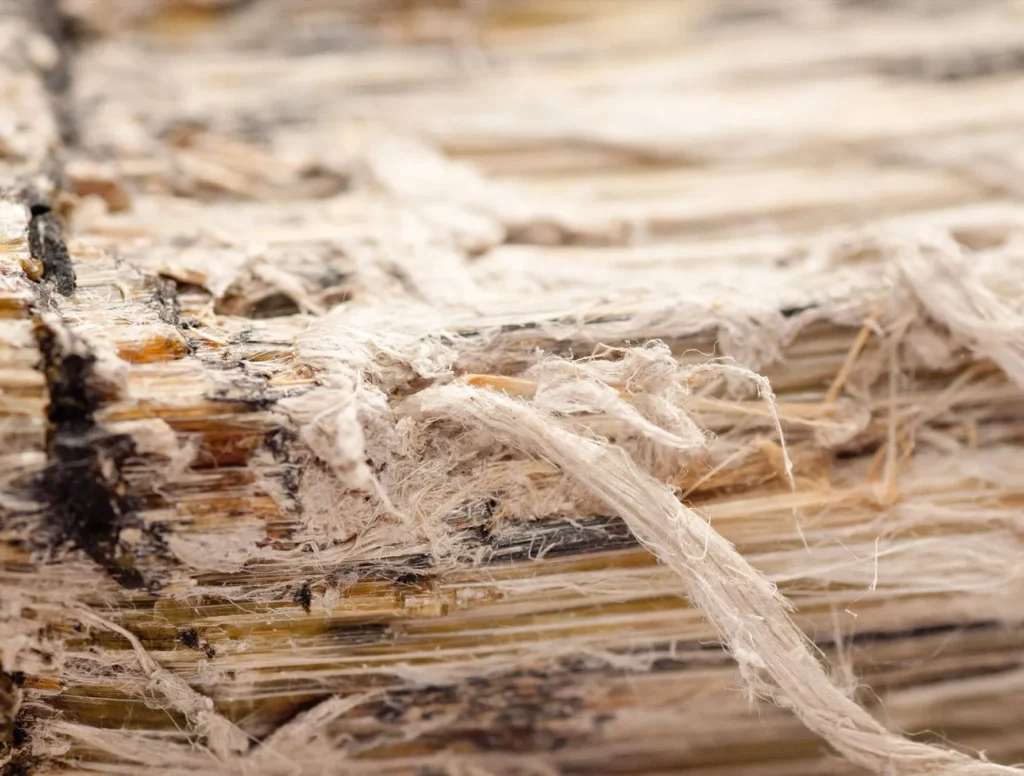
Asbestos is a group of naturally occurring silicate minerals with long, thin fibers. It was widely used in construction materials through the 1970s for its durability, fire resistance, and insulating properties. When materials containing asbestos are disturbed — through demolition, renovation, weathering, or foot traffic — microscopic fibers become airborne and can be inhaled.
Once inhaled, asbestos fibers become permanently lodged in lung tissue. The body cannot break them down or expel them, and they cause progressive damage over time. The diseases associated with asbestos exposure typically do not appear until decades after initial exposure:
- Asbestosis: Scarring of lung tissue that reduces breathing capacity. Latency period of 10 to 40 years.
- Lung cancer: Asbestos exposure multiplies the risk significantly, particularly in combination with smoking. Latency period of 15 to 35 years.
- Mesothelioma: A rare and aggressive cancer of the lining of the lungs, abdomen, or heart, caused almost exclusively by asbestos exposure. Latency period of 20 to 50 years.
Children face particular risk from outdoor asbestos exposure for several reasons. Their respiratory systems are still developing, making them more susceptible to fiber damage. They spend more time at ground level — where fiber concentrations near disturbed soil are highest — and they breathe at a faster rate relative to their body size. Crucially, a child exposed at age 7 has a much longer remaining lifespan for disease to develop than an adult exposed at 50.
Naturally occurring asbestos on playground surfaces and unpaved areas
Certain rock types contain naturally occurring asbestos. Serpentinite — a grayish-green to bluish-black rock — can contain chrysotile (white asbestos) and is the material most commonly associated with playground surface contamination. When serpentinite is crushed and used as gravel or fill, it can release asbestos fibers when walked on, raked, or disturbed by maintenance equipment.
School officials and facilities managers should inspect playgrounds, unpaved parking areas, running tracks, paths, and bus stop areas where crushed rock or gravel has been used as a surface material — particularly if that material has a grayish-green color and was installed before asbestos use was restricted in the 1980s.
Where serpentinite rock occurs in Georgia and South Carolina
In Georgia, serpentinite and related ultramafic rock formations are found primarily in the Blue Ridge Mountains of northeastern Georgia and through portions of the Piedmont region. In South Carolina, these formations occur mainly in the northwestern part of the state, including areas of Cherokee, York, and Union counties.
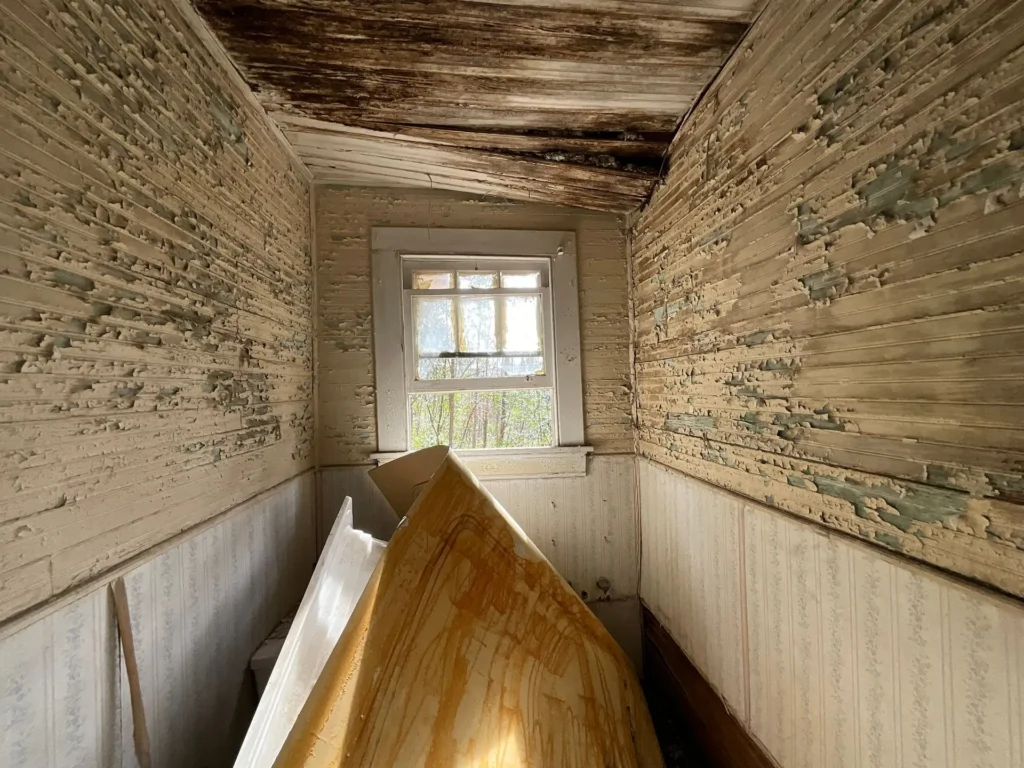
The Augusta area and the broader Central Savannah River Area sit in the Fall Line and upper Coastal Plain — a geological zone where naturally occurring serpentinite is not typically present. CSRA residents and school administrators are less likely to encounter asbestos in outdoor rock or soil and more likely to encounter it in legacy building materials: pipe insulation, ceiling tile, floor tile, roofing materials, and joint compound installed in schools and commercial buildings constructed before 1980.
Both concerns — outdoor surface contamination and in-building ACM — require professional testing to confirm or rule out asbestos presence. Visual inspection alone is not sufficient for either.
Testing methods for asbestos on outdoor surfaces and in building materials
Asbestos testing for outdoor surfaces typically involves bulk sampling of soil or crushed rock material followed by laboratory analysis. The EPA-approved standard methods used for this work are:
- Polarized Light Microscopy (PLM): The most common method for bulk sample analysis. A trained microscopist examines the sample under polarized light to identify asbestos fiber type and estimate percentage content. This is the standard method for building material samples and many soil/rock samples.
- Transmission Electron Microscopy (TEM): A more sensitive method used when PLM results are inconclusive or when very low fiber concentrations need to be detected. TEM is commonly used for air samples and for soil samples where trace asbestos must be ruled out.
- Phase Contrast Microscopy (PCM): Used primarily for airborne fiber counting in occupational settings and post-abatement clearance air sampling.
Sample collection must be done by a state-accredited asbestos inspector. Georgia requires EPD licensure; South Carolina requires DHEC certification. Samples collected without proper accreditation may not be accepted for regulatory purposes and cannot form the basis of a valid AHERA inspection or state notification.
Mitigation options for contaminated outdoor surfaces
If testing confirms asbestos in an outdoor surface material, three mitigation approaches are available. The right choice depends on the condition of the material, how frequently the area is used, and long-term plans for the property.
Encapsulation (sealing): A penetrating or bridging sealant is applied to the surface to bind fibers and prevent release. This approach works when the material is intact and not frequently disturbed. It is the least disruptive and least expensive option — generally $2 to $5 per square foot — but it requires ongoing monitoring and eventually retreatment. It does not remove the contamination.
Covering: Clean fill, asphalt, concrete, or other non-asbestos material is installed over the contaminated surface. This is appropriate for unpaved paths, parking areas, and play surfaces where the asbestos-containing material can be buried under sufficient depth of clean material and will not be disturbed by routine use. Cost varies widely by scope and surface type. Like encapsulation, the contamination remains in place.
Removal: Complete excavation of the contaminated material followed by licensed disposal. This is the most permanent solution and eliminates future liability, but it is the most expensive option — typically $5 to $15 or more per square foot depending on depth, volume, site access, and disposal costs. Removal requires proper containment, licensed abatement contractors, waste manifesting, and disposal at an approved facility.
Your county health department and Georgia EPD or South Carolina DHEC can provide guidance specific to your project. For AHERA-regulated school settings, the school’s AHERA management plan should be updated to reflect any remediation actions taken.
What to do if you suspect contamination
If you are a school administrator, facilities manager, or property owner who suspects asbestos on an outdoor surface or in building materials, the steps are straightforward:
- Do not disturb the area. Keep the surface off-limits until testing is complete. Raking, sweeping, or grading suspected material increases fiber release.
- Contact a state-accredited asbestos inspector. A licensed inspector will evaluate the material, collect appropriate bulk or surface samples, and submit them to an accredited laboratory.
- Review the laboratory results. Results will identify fiber type, asbestos percentage, and whether the material meets regulatory thresholds. Your inspector can explain what the findings mean for your specific situation.
- Consult your state agency. Georgia EPD and South Carolina DHEC can advise on notification requirements, mitigation expectations, and compliance timelines for your project type.
- Select and implement a mitigation approach. Work with your inspector and, if removal is required, a licensed abatement contractor to select the appropriate remediation method and complete the work under proper controls.
- Update your AHERA management plan (schools). Any asbestos findings and subsequent actions must be documented in the school’s AHERA management plan and records retained accordingly.
What to budget and plan for
Initial asbestos inspection and bulk sampling for a typical school building or outdoor area in Georgia or South Carolina generally ranges from $500 to $2,500 depending on the number of samples required and laboratory turnaround selected. Standard laboratory turnaround is 5 to 7 business days; rush processing is available for time-sensitive situations.
If contamination is confirmed and mitigation is required, budget and timeline will depend on the approach selected, the size of the affected area, and whether AHERA notification and abatement sequencing add lead time. Schools should factor in the need to keep affected areas off-limits during testing and remediation — which may require scheduling around academic calendars.
FAQ
Does AHERA cover outdoor playgrounds as well as indoor spaces?
AHERA’s inspection and management plan requirements apply to school buildings. Outdoor surfaces such as playgrounds, parking lots, and athletic areas are not explicitly covered under AHERA in the same way, but EPA guidance and state agencies typically recommend treating contaminated outdoor surfaces at schools with the same urgency as in-building ACM. Regardless of AHERA applicability, a school district has a duty of care to address known environmental hazards on school property.
How do I know if the gravel or fill on a school playground contains asbestos?
Visual inspection alone is not sufficient. Material that appears grayish-green or bluish-black may contain serpentinite, but the only way to confirm asbestos content is through laboratory analysis of a collected bulk sample. A state-accredited inspector should collect the sample using proper protective protocols.
Our school was built in the 1970s and has never had an AHERA inspection. What should we do?
Contact your state education agency and an accredited asbestos inspector immediately. Schools that have not conducted AHERA-required inspections are out of compliance with federal law. A qualified inspector can conduct the inspection, help you develop or update the management plan, and advise on any needed remediation.
Is naturally occurring asbestos in soil treated differently than asbestos in building materials?
The health risk from inhaled fibers is the same regardless of source. Regulatory requirements differ — naturally occurring asbestos in outdoor soil falls under EPA Superfund authority and state environmental regulations rather than AHERA, and notification and remediation requirements vary by jurisdiction. Your state agency can advise on the applicable framework for your specific situation.
Can parents request to see the school’s AHERA management plan?
Yes. AHERA requires that the management plan be kept at the school and made available for inspection by parents, teachers, and employee organizations upon request within a reasonable time. Schools are also required to notify parents and staff at the start of each school year about the plan’s availability.
What qualifications should I look for in an asbestos inspector for a school project?
Look for state accreditation in the state where the school is located. In Georgia, inspectors must hold EPD licensure. In South Carolina, inspectors must be certified by DHEC. For AHERA work specifically, inspectors must also hold EPA/AHERA accreditation. Ask for documentation of current credentials before any sampling begins.
We removed the suspect surface material ourselves before testing. What now?
Stop and notify your state agency. If the material contained asbestos, improper removal and disposal may constitute a regulatory violation. Document what was removed and where it went. Your state environmental agency — Georgia EPD or South Carolina DHEC — can advise on what corrective steps are required and whether enforcement action is likely.
How often does an AHERA re-inspection need to happen?
AHERA requires a full re-inspection of all ACM and PACM every three years by an accredited inspector. It also requires periodic surveillance — a visual check of known asbestos locations — every six months. Both must be documented and kept in the school’s management plan records.
EnviroPro 360: Asbestos inspection and testing for schools and commercial properties
EnviroPro 360 provides certified asbestos inspections and testing for schools, commercial facilities, and residential properties across Augusta, GA and the Central Savannah River Area. Our licensed inspectors are accredited in both Georgia and South Carolina and produce reports that meet AHERA documentation requirements and state notification standards.
- AHERA-compliant asbestos inspections for schools and educational facilities
- Bulk sampling of building materials, soil, and outdoor surface materials
- Accredited laboratory analysis with PLM and TEM methods
- Management plan documentation support
- Coordination with licensed abatement contractors for remediation projects
- Add-on testing: mold, radon, lead paint, and Legionella
If you manage a school facility or property with suspect materials in Augusta or the CSRA, contact EnviroPro 360 to schedule an inspection with a state-accredited asbestos inspector.