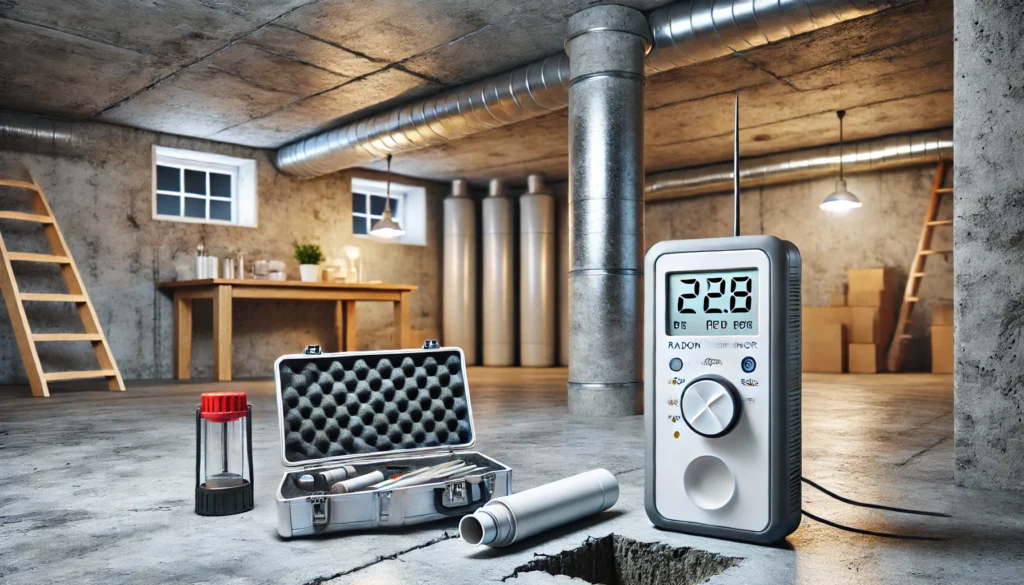
Your radon test came back high. Or maybe it came back at 1.9, 2.8 or 3.9, and you’re not sure what that means. Either way, don’t panic. A high radon level is common, and it can be fixed. But it is a reason to act. Radon harm builds up over time. Once a high level is confirmed, plan to fix it in weeks, not years.
This guide explains what your number means and what the EPA action level is. Then it walks you through what to do, step by step.
What is radon?
Radon is a radioactive gas. It forms when uranium in soil and rock breaks down. It has no color, smell or taste.
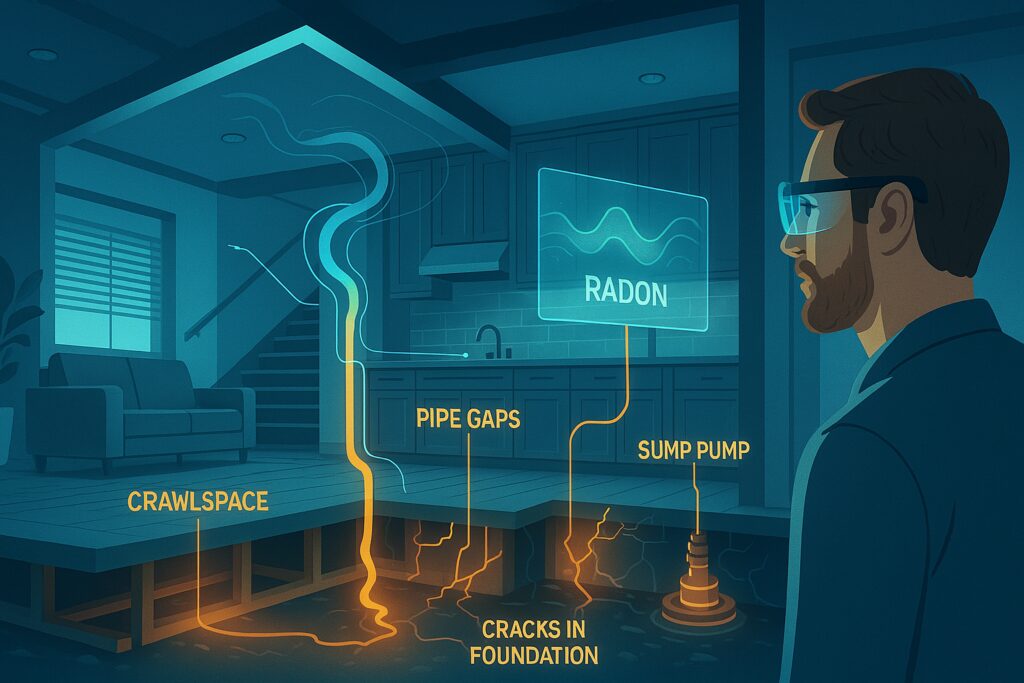
The gas rises out of the ground and gets into homes through:
- Cracks in the foundation
- Gaps around pipes and wires
- Crawl spaces
- Sump pits
- Openings in a concrete slab
The CDC says radon is the second leading cause of lung cancer in the U.S. The EPA estimates it causes about 21,000 lung cancer deaths a year. It is the top cause in people who have never smoked. Radon causes no symptoms you can feel. The harm builds over years of breathing it. Testing is the only way to know your level.
What the EPA action level means
Radon is measured in pCi/L (picocuries per liter). This unit tells you how much radioactivity is in a liter of air.
The EPA action level is 4.0 pCi/L. If your home is at or above that level, the EPA recommends a radon mitigation system. Mitigation is a system that pulls radon from under the house and vents it outside.
The EPA picked 4.0 for a practical reason. At that level, the risk is high enough to act on. And most homes can be brought below it with today’s mitigation methods.
Is 4.0 pCi/L a “safe” line?
No. The action level is not a safe level. The EPA says no level of radon is risk-free. Any radon you breathe adds some risk. Lower is always better.
Some numbers help put your result in context. The EPA’s Citizen’s Guide to Radon gives these:
- Outdoor air averages about 0.4 pCi/L.
- The average U.S. home has about 1.3 pCi/L inside.
- About 1 in 15 U.S. homes is at or above 4.0 pCi/L.
The World Health Organization uses a lower reference level of 2.7 pCi/L. That is one reason the EPA says to consider fixing homes between 2.0 and 4.0. Many homeowners choose to do so.
Why your neighbor’s result doesn’t count for your home
Many people think radon is only a problem in the mountains or up north. That’s not true. Georgia and South Carolina both have homes with high radon. Levels depend on the soil and rock under each house. They also depend on the foundation and how the home was built.
So your neighbor may test low while your home tests high. Both homes can be on the same street. Where you live can’t tell you your level. Only a test can.
What your radon level means
Here is a simple guide to radon test results:
| Radon level | What it means |
|---|---|
| Below 2.0 pCi/L | Lower risk, but no level of radon is risk-free. Test again every 2 years and after big changes to the house. |
| 2.0 to 3.9 pCi/L | The EPA says to consider fixing your home. A long-term test shows your average over the year. |
| 4.0 pCi/L and above | At or above the EPA action level. Confirm with a second test, then fix your home with a radon mitigation system. |
| 8.0 pCi/L and above | Well above the action level. Confirm it quickly and plan mitigation soon. |
Is 1.9 pCi/L a safe radon level?
A result of 1.9 is below 2.0 and well under the action level. It’s lower risk. But it isn’t zero risk. You don’t need to fix the home. Test again in about two years. Retest sooner if you finish a basement or change the HVAC. Keep in mind that one short-term test is a snapshot. Levels are often higher in winter.
What about 2.1, 2.8, 3.2 or 3.9 pCi/L?
These results are below the action level. The EPA still says to consider fixing your home in this range. The closer you are to 4.0, the more it is worth a closer look. A result of 3.9 is not much different from 4.1.
The best next step is a long-term test. It runs 90 days or more. It shows your average over the seasons. A summer result of 3.2 could hide a winter average above 4.0.
Is 4.1 pCi/L bad?
A result of 4.1 is at the action level. It’s not an emergency. But the EPA recommends you confirm it and then fix the home. Treat it the same as any result of 4.0 or higher.
What does a “positive” radon test mean?
Radon tests don’t give a simple positive or negative answer. Almost every home has some radon. A test gives you a number in pCi/L. People often say “positive” when the number is 4.0 or higher.
Reading a store-bought kit result
Store kits, such as First Alert kits, are usually charcoal canisters. You set the kit out, mail it to a lab and get a number back. Read that number against the table above.
A kit result is only as good as how it was set up. A kit near a window, vent or outside wall can read wrong. So can a kit in a damp room or one left out too long. Read can I trust a radon test kit from the store?
Step 1: Confirm the result
Before you hire anyone, confirm your result. A short-term test done under closed house conditions is reliable. Closed house conditions mean windows and outside doors stay shut during the test. Still, one reading can reflect unusual weather or setup.
If your first test was a DIY charcoal kit, confirm it with a professional test. If a certified tester used a continuous radon monitor, the result is already strong. A continuous radon monitor is an electronic device that records radon every hour.
The EPA gives clear rules for follow-up tests:
- If your first result is 4.0 or higher, do a follow-up test.
- If your first result is 8.0 or higher, do a second short-term test right away.
- If you want to know your yearly average, use a long-term test.
Two short-term results that agree are enough to decide on mitigation. Read the difference between short-term and long-term radon tests.
Step 2: Don’t try DIY mitigation
Radon mitigation is not a DIY job. Sealing cracks in the slab can help a little at those spots. But it doesn’t fix the pressure under the house that pulls radon in. Opening windows lowers radon while they are open. Once you close them, radon goes back up. Neither one is a real fix.
A real system deals with the pressure under the foundation. It needs a site check, the right pipe route and the right fan size. That is the work of a certified radon mitigation contractor.
Step 3: Hire a certified radon mitigation contractor
Look for a contractor certified by NRPP or NRSB. NRPP is the National Radon Proficiency Program. NRSB is the National Radon Safety Board. A certified contractor will look at your foundation. Then they design a system for your home and install it correctly.
Most homes use sub-slab depressurization. A pipe goes through the slab. A fan runs all the time. It pulls radon from under the slab and vents it above the roof. The EPA says these systems can lower radon by up to 99%. Installation often takes less than a day.
Crawl space homes use a related method. A plastic vapor barrier covers the crawl space floor. A fan pulls radon from under it. The right system depends on your foundation and how radon gets in. Learn more in how to reduce radon levels in your home.
Cost depends on the foundation and the home’s layout. The EPA says most homes can be fixed for about the same cost as other common home repairs. Ask the contractor for a written quote.
Step 4: Retest after mitigation
After the system is installed, retest. This step is a must. It is the only way to know the system works. A system can be mostly right and still miss a radon entry point. The retest catches that before you assume the problem is solved.
The fan should run at least 24 hours before the retest starts. The EPA suggests retesting within 30 days of installation. After that, test again every two years.
Use an independent tester, not the company that put in the system. An independent result has no stake in the outcome. EnviroPro 360 can do the post-mitigation retest. You get written records for your files or a future sale.
What happens during a professional radon test?
A professional radon test is simple. Nothing gets drilled or opened.
A certified tester places a continuous radon monitor in the lowest lived-in level. It stays there for at least 48 hours. You keep windows and outside doors closed. After the test, you get:
- Your average radon level and the hour-by-hour readings
- A clear report in plain language
- An explanation of what your number means
- Next steps if the level is high
EnviroPro 360’s testers are NRPP certified and follow ANSI testing standards. ANSI is the American National Standards Institute. Most results are ready 24 to 48 hours after the test ends. We only test. We don’t install mitigation systems, so our results aren’t tied to selling you a fix.
When should you test for radon?
The EPA says every home should be tested. Test, or retest, when:
- You’re buying a home. A test before closing lets you plan the fix as part of the deal. Read radon testing during a home sale.
- You’re selling a home. Many buyers now ask for a radon test.
- You’ve never tested. Every home should be tested at least once.
- You’ve renovated. New HVAC, a finished basement or foundation work can change radon levels.
- It’s been two years. Retest every two years, even after a low result.
Your next steps
- Find your number in the table above and see which row you fall in.
- If you’re at 4.0 pCi/L or higher, confirm it with a second test.
- If it’s confirmed, hire a certified mitigation contractor, then retest with an independent tester.
EnviroPro 360 provides radon testing for homes and businesses in Augusta and nearby towns in Georgia and South Carolina. If you have questions about a high radon result or want to talk through your situation, the EnviroPro 360 team is happy to help. Reach out any time.