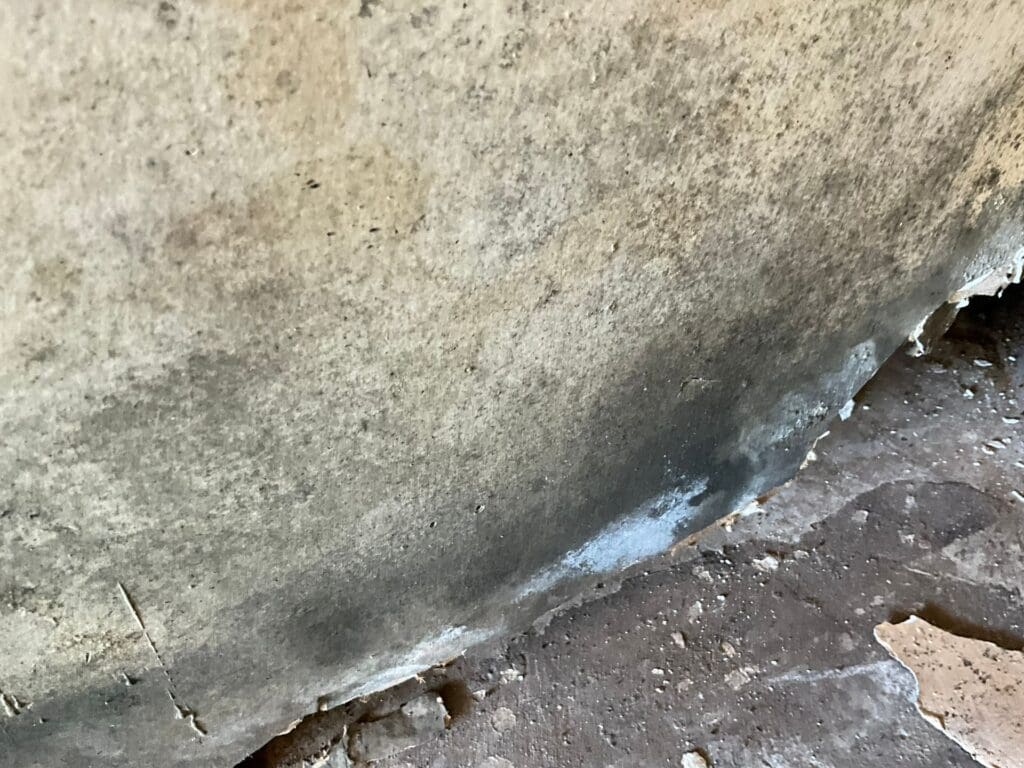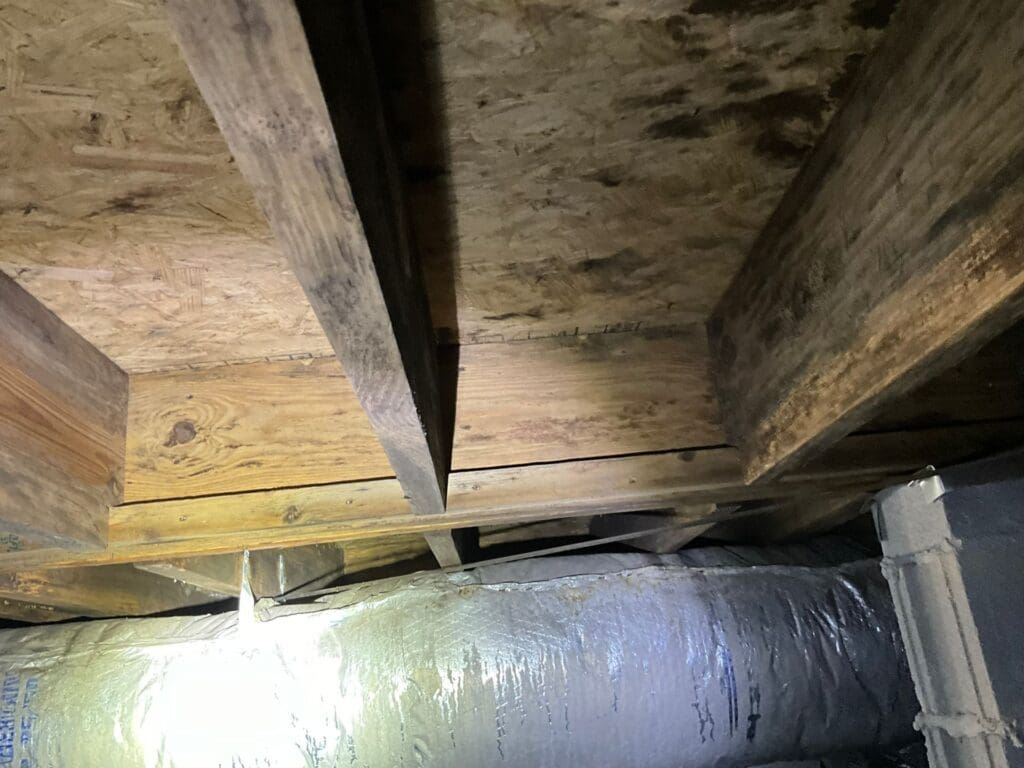
At-home mold test kits are sold widely and used frequently. Whether they are worth using depends on what you are trying to answer and what you plan to do with the result. For some questions, a DIY kit is a reasonable starting point. For others, it produces information that looks useful but is missing the context needed to act on it.
This is the practical distinction: what DIY kits can and cannot tell you, and which situations fall on each side of the line.
What At-Home Kits Can Confirm
A surface swab kit can confirm that mold is present on a specific visible surface. If you see a discolored patch on a bathroom wall and want confirmation that it is mold before deciding what to do, a swab kit provides that. A positive result confirms the presence of mold on that surface.
An air sampling kit can detect whether certain mold spore types are present in the air during the collection period. If a kit shows a significant result, it supports the case for calling a professional for a full assessment.
In both cases the kit is functioning as an initial screening step, not a complete assessment.
What At-Home Kits Cannot Tell You
The gaps in DIY kit results are where the real limitations show up:
- No outdoor baseline for comparison. Mold spores are present in all indoor and outdoor air at baseline levels. Knowing that a spore type was detected in your living room air does not tell you whether the concentration is elevated above normal background levels. Determining that requires an outdoor control sample collected at the same time — which DIY kits do not include.
- No coverage of concealed locations. Mold most commonly grows in crawl spaces, inside wall cavities, in HVAC drain pans and ductwork, and under flooring — none of which is accessible to a swab or a single open petri dish placed in a room. A negative result from testing visible surfaces and one room of air does not rule out a hidden source.
- No moisture source identification. Knowing mold is present does not tell you why it is there. Without identifying and correcting the moisture source, any cleaned or remediated area will develop mold again. DIY kits do not include moisture assessment.
- No interpretation of severity. Lab results from kit-based air samples report what spore types were found. They do not indicate whether the finding is consistent with a small surface colony or a larger hidden growth, or what remediation scope would be appropriate.
When a DIY Kit Is a Reasonable Starting Point
A kit provides useful information when the question is simple and the decision it informs is limited:
- You see visible discoloration and want to confirm it is mold before deciding whether to clean it yourself or call for professional assessment
- You want preliminary data to support requesting professional testing from a landlord or property manager
- You recently completed a small mold cleanup of a limited visible area and want a basic verification that the surface growth is gone
In each of these scenarios the kit result is a supporting input into a decision, not the final answer itself.
When Professional Testing Is the Better Starting Point
The EPA recommends professional assessment when hidden mold is suspected, since mold growing inside walls, crawl spaces, or HVAC components is not accessible to visual inspection or DIY testing. Skip the kit and start with professional inspection when:
- A musty odor is present but you cannot find a visible mold source
- Household members have respiratory symptoms (coughing, congestion, eye irritation) that are consistently worse at home and better when away
- A water event occurred — flood, leak, HVAC overflow — and materials were not professionally dried within 24 to 48 hours
- The home has a crawl space that has not been inspected recently, particularly in spring after a wet winter
- You are buying or selling a home and need results that lenders, insurers, or the other party can rely on
The CDC notes that mold exposure can cause nasal congestion, coughing, and worsened asthma, with more severe effects in children, elderly individuals, and people with preexisting respiratory conditions. In Augusta and the CSRA, where high humidity runs from spring through fall and crawl spaces are a common mold source, the scenarios above apply to a large share of homes. A kit result in these situations often raises more questions than it answers.
The Bottom Line
At-home kits are not without value, but they are often used in exactly the situations where their limitations matter most — when someone has a persistent odor or health symptoms and wants an answer. In those cases a professional assessment with moisture mapping, multi-location air sampling, and an outdoor control baseline is the appropriate tool.
Schedule a Professional Mold Inspection
EnviroPro 360 provides certified mold inspection and air sampling across Augusta, Aiken, and the CSRA, with results from an AIHA-accredited laboratory. Contact EnviroPro 360 to schedule an inspection.