If you are planning a significant renovation or demolition project on a commercial building or large residential structure in Augusta or anywhere in the CSRA, asbestos regulation is not optional reading. Federal law and Georgia’s environmental regulations require specific steps before any work disturbs building materials that may contain asbestos. Missing those steps does not just create liability after the fact; it can shut down a project mid-work and result in penalties that dwarf the cost of doing the testing upfront.
This guide explains what the regulations actually require, when they apply, and what property owners and contractors are each responsible for.
The Federal Framework: NESHAP
The federal rule governing asbestos in demolition and renovation is called NESHAP, which stands for National Emission Standards for Hazardous Air Pollutants. Specifically, 40 CFR Part 61, Subpart M is the EPA regulation that applies to asbestos in buildings being renovated or demolished.
NESHAP applies to most commercial buildings, institutional buildings, and multi-family residential structures of four or more units. It generally does not apply to single-family residential homes, though Georgia has state-level requirements that extend further than federal rules in some contexts.
Under NESHAP, the owner or operator of a demolition or renovation activity has specific obligations:
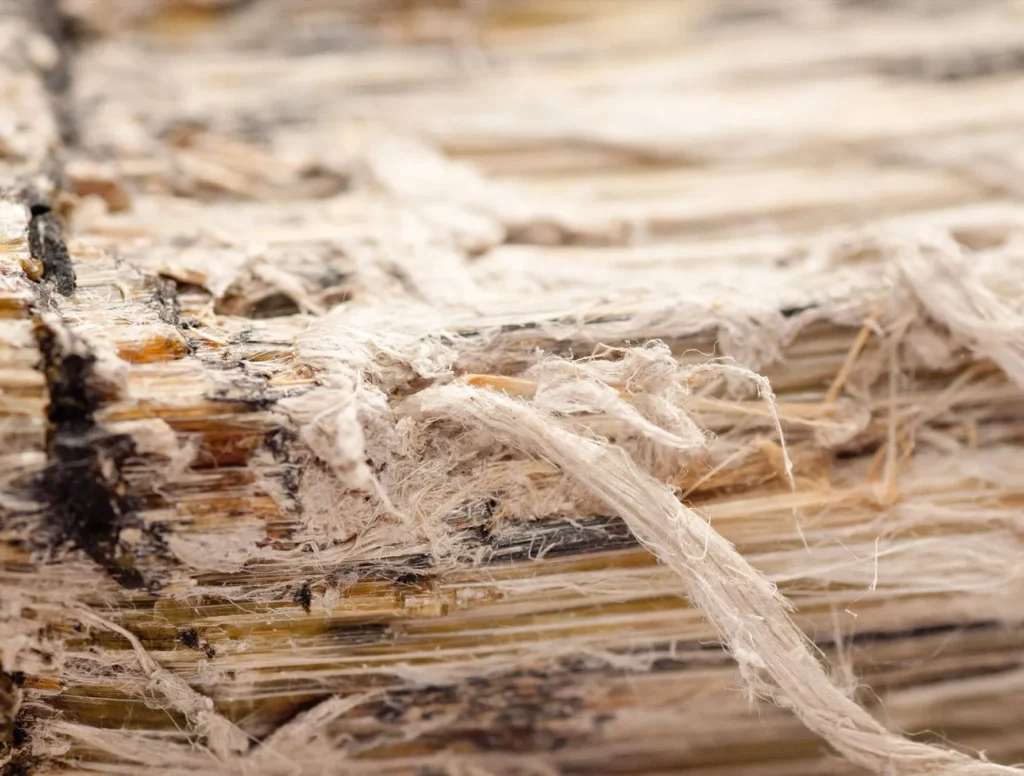
Before the project begins, any structure subject to NESHAP must be inspected for asbestos-containing materials (ACM) by a trained inspector. ACM is defined as any material containing more than one percent asbestos. The inspection must be completed before demolition or renovation activities disturb building materials.
If regulated ACM is found, it must be removed before demolition or before any renovation that will disturb it. The removal must be done by a licensed asbestos abatement contractor following specific work practice standards.
Notification is required. You must notify your state environmental agency before beginning any regulated demolition or renovation project, whether or not asbestos is present. In Georgia, notification goes to the Georgia Environmental Protection Division.
Georgia EPD Requirements
Georgia’s environmental regulations are administered by the Georgia Environmental Protection Division (EPD), part of the Georgia Department of Natural Resources. Georgia has adopted and extended the federal NESHAP requirements under the Georgia Air Quality Act.
Georgia contractors performing asbestos abatement must be licensed by Georgia EPD. The state maintains a database of licensed contractors that property owners can verify before hiring. Unlicensed contractors performing regulated asbestos removal are operating illegally, and property owners who hire them share in the regulatory exposure.
If you are a property owner, the fact that you hired a contractor does not fully transfer your responsibility. The regulations place obligations on the “owner or operator” of the project. If your contractor fails to follow required work practices or skips the inspection, you can be cited along with the contractor.
OSHA Requirements for Worker Protection
While EPA’s NESHAP rules focus on air quality and emissions, OSHA’s asbestos standards protect the workers doing the project. OSHA’s Construction Industry Standard (29 CFR 1926.1101) applies to demolition and renovation work that disturbs asbestos-containing materials.
OSHA requires:
- A competent person to identify and assess asbestos hazards before work begins
- Medical surveillance for workers exposed above action levels
- Engineering controls including wet methods, local exhaust ventilation, and HEPA filtration
- Appropriate respirator use classified by exposure level
- Decontamination procedures and regulated work areas when required
Workers have the right to know when asbestos is present. Contractors who knowingly expose workers to asbestos without the required controls face OSHA penalties and civil liability. This is a separate enforcement track from EPA’s NESHAP violations.
Who Is a Regulated Facility?
For contractors, one of the most practically important questions is whether a specific project triggers NESHAP notification and abatement requirements. The answer depends on two factors: the type of facility and the amount of regulated ACM present.
Under NESHAP, a project triggers regulated abatement requirements if it involves:
- Demolition of a facility of any size, OR
- Renovation of a facility where the amount of regulated ACM exceeds threshold quantities: 260 linear feet on pipes, 160 square feet on other components, or 35 cubic feet of material not measurable in the above categories
Single-family residential homes are excluded from most NESHAP requirements, though the home’s age and the amount of material involved still matter under some state rules and for worker protection purposes.
Commercial buildings, apartment complexes, office buildings, retail centers, schools, and government facilities are all regulated. If you are planning the gut renovation of a 1960s commercial strip in Augusta, you are planning a NESHAP project.
The Inspection Requirement
The inspection requirement under NESHAP is one contractors and property owners most often underestimate. The rule requires a thorough inspection of the structure by an accredited inspector before work begins. Sampling is required for materials that are assumed to contain asbestos unless the owner documents that the material is assumed to be ACM and treats it accordingly during the project.
A walkthrough without sampling does not satisfy the inspection requirement. An inspection by an unqualified person does not satisfy it either. The inspector must be accredited under EPA’s Asbestos Hazard Emergency Response Act (AHERA) program and must follow the sampling protocols required by the regulation.
Common asbestos-containing materials found in Augusta’s older commercial building stock include:
- Floor tiles and their adhesives (9-inch vinyl composition tiles were commonly made with chrysotile asbestos through the 1980s)
- Spray-applied fireproofing on structural steel
- Pipe and duct insulation
- Roofing felt, built-up roofing materials, and roofing mastics
- Textured paint and joint compounds applied before the mid-1970s
- Ceiling tiles in suspended grid systems installed before 1980
What Happens When Regulations Are Skipped
Federal and state asbestos violations result in penalties that are not trivial. EPA NESHAP violations carry civil penalties up to $70,117 per day per violation under the Clean Air Act, adjusted for inflation. Georgia EPD has its own penalty structure.
Beyond regulatory penalties, there is civil liability to workers who were exposed, neighbors who were exposed to airborne fibers during improper removal, and subsequent occupants of a property where asbestos was improperly handled. There is also the cost of remediation when a project has to stop, secure the site, bring in licensed abatement contractors, and then restart.
In the Augusta area, code enforcement for commercial projects increasingly includes verification of asbestos inspection documentation before permits are issued. This means that skipping the inspection is not just a regulatory risk; it is a permitting obstacle for projects that need building permits.
What Property Owners Should Do Now
If you own an older commercial property in the Augusta or CSRA area and renovation is in your future, the practical steps are:
First, identify the construction vintage of the building. Buildings constructed before 1980 have the highest likelihood of containing asbestos in multiple building components. Buildings from 1980 to 1990 may contain asbestos in some materials, particularly floor tiles and roofing.
Second, before any contractor begins demolition or renovation work, require written documentation of an asbestos inspection by a Georgia EPD-licensed inspector. Do not accept assurances that the material “probably doesn’t have asbestos” or that the contractor “has done hundreds of these.” Those assurances do not satisfy the regulatory requirement.
Third, if ACM is found, get abatement completed by a licensed contractor before renovation work proceeds. This adds time and cost to the project. It also keeps you compliant, protects workers, and eliminates a liability that could follow the property for decades.
If you have questions about asbestos inspection requirements for a specific project in Augusta or the CSRA, the EnviroPro 360 team can walk through your situation. Reach out any time.