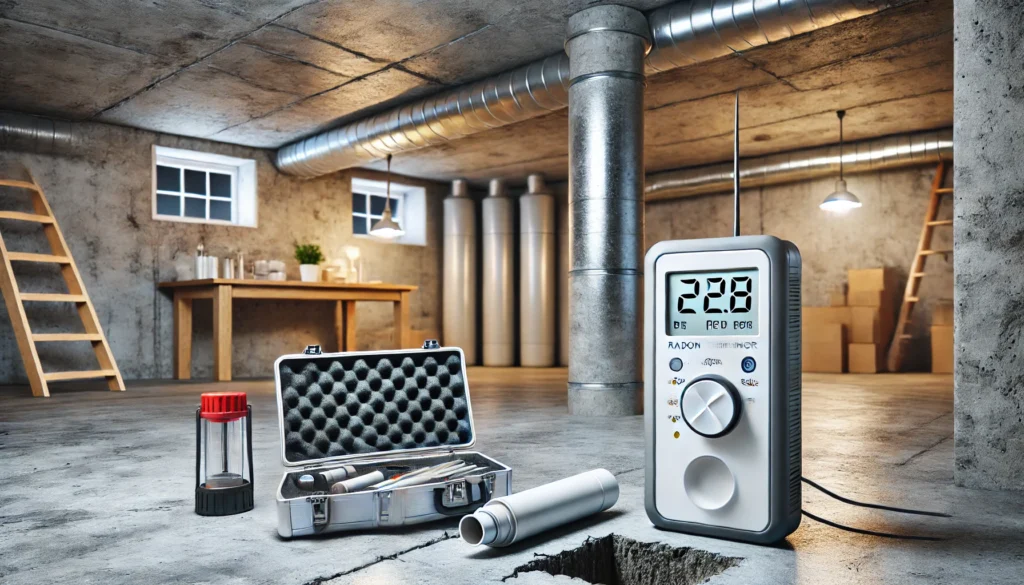
You tested your rental unit for radon and the result came back above 4.0 pCi/L. Now you need to know what your rights are, what your landlord is obligated to do, and what happens if they refuse to act.
This is a situation more renters are encountering as radon awareness grows. The legal landscape in Georgia and South Carolina is not fully developed on this specific issue, but that does not leave tenants without options.
Understanding Radon as a Health Hazard
The Environmental Protection Agency sets the residential action level for radon at 4.0 pCi/L (picocuries per liter). At or above this threshold, the EPA recommends taking steps to reduce indoor radon concentration. Radon is the second leading cause of lung cancer in the United States. The risk accumulates over years of regular exposure, which means an elevated level in a home where you spend significant time every day is a meaningful long-term health concern.
The Centers for Disease Control and Prevention similarly identifies radon as a significant public health issue, noting that approximately 21,000 Americans die from radon-induced lung cancer annually. Because radon produces no immediate symptoms, exposure continues without warning. By the time lung cancer develops, the exposure that contributed to it typically occurred years or even decades earlier.
What Georgia and South Carolina Law Says
Neither Georgia nor South Carolina currently has a state statute requiring landlords to test for radon or to disclose known radon levels to tenants. This is different from lead paint disclosure requirements, which are federally mandated for pre-1978 housing. Radon has no equivalent federal disclosure requirement for residential rentals.
The absence of a specific radon statute does not mean landlords have no obligation when radon levels are elevated. Both states operate under the general principle of the implied warranty of habitability, a legal standard that requires landlords to maintain rental properties in a safe and livable condition. Whether elevated radon rises to a habitability violation is a fact-specific question. Factors that matter include the concentration level, how long the condition has existed, and whether the landlord was made aware and failed to act.
Steps to Take If Your Radon Test Comes Back High
If you have a documented elevated radon result, the following steps give you the strongest position regardless of how your landlord responds.
- Keep the full test documentation. This includes the lab report or monitoring data, a record of where the test was placed, and the dates of the test period. Documentation of methodology matters if the result is later questioned.
- Notify your landlord in writing. Send a written notice by email with delivery confirmation or certified mail, stating the radon level found in your unit, the EPA action level of 4.0 pCi/L, and your request that the issue be addressed. Written notice creates a record that the landlord was informed.
- Request a mitigation plan and timeline. Ask your landlord to hire a certified radon mitigation contractor to assess the unit and install a reduction system if appropriate. Sub-slab depressurization systems are the standard approach for most residential properties and are typically installed within a single workday.
- Follow up with post-mitigation testing. After any mitigation work is completed, a follow-up radon test should confirm that the system is working and that levels have dropped below the EPA action level. Do not accept the contractor’s claim that the system worked without an independent test result.
- Consult a tenant’s rights attorney if the landlord refuses to respond. If your landlord ignores your written notice or refuses to address an elevated radon level, an attorney who handles landlord-tenant matters in Georgia or South Carolina can advise on your specific options, which may include filing a complaint with local housing authorities or pursuing remedies under the implied warranty of habitability.
Getting a Professional Test Result You Can Rely On
If you are building a case regarding elevated radon in your rental, a professional test result carries more weight than a DIY kit result. Professional testing follows EPA measurement protocols, includes documentation of placement and test conditions, and produces a result that can withstand scrutiny if your landlord contests the finding.
EnviroPro 360 provides professional radon testing for renters and homeowners throughout Augusta, Evans, Martinez, Grovetown, North Augusta, Aiken, and the broader CSRA. Testing results are provided with a plain-language explanation of what the number means and what EPA guidelines indicate about next steps.
EnviroPro 360 focuses on testing and result interpretation. Radon mitigation is performed by separate certified contractors. If your result is elevated, EnviroPro 360 can also conduct the post-mitigation retest to confirm the system is performing correctly.
Contact EnviroPro 360 to schedule a professional radon test for your rental unit in Augusta or anywhere in the CSRA.