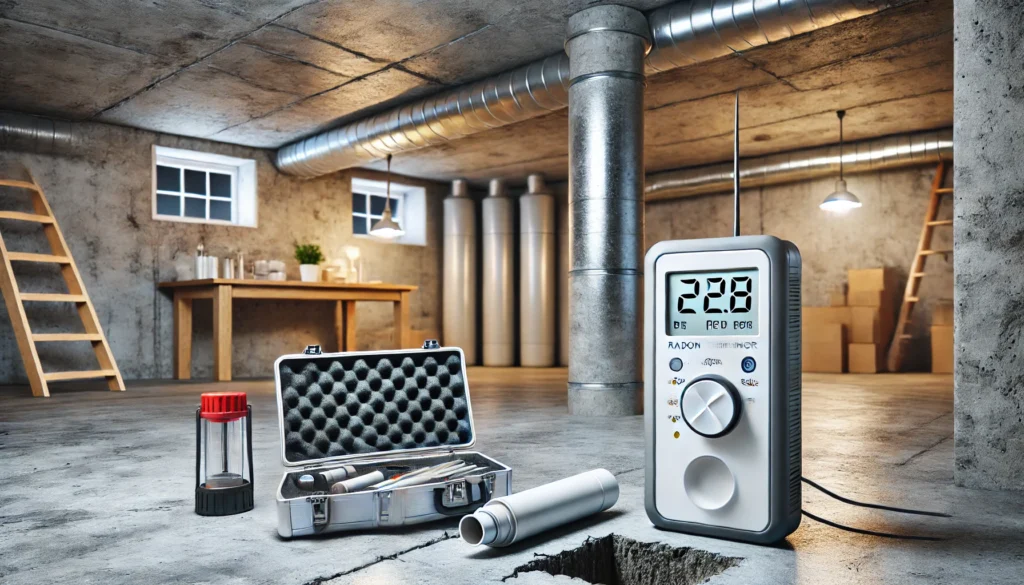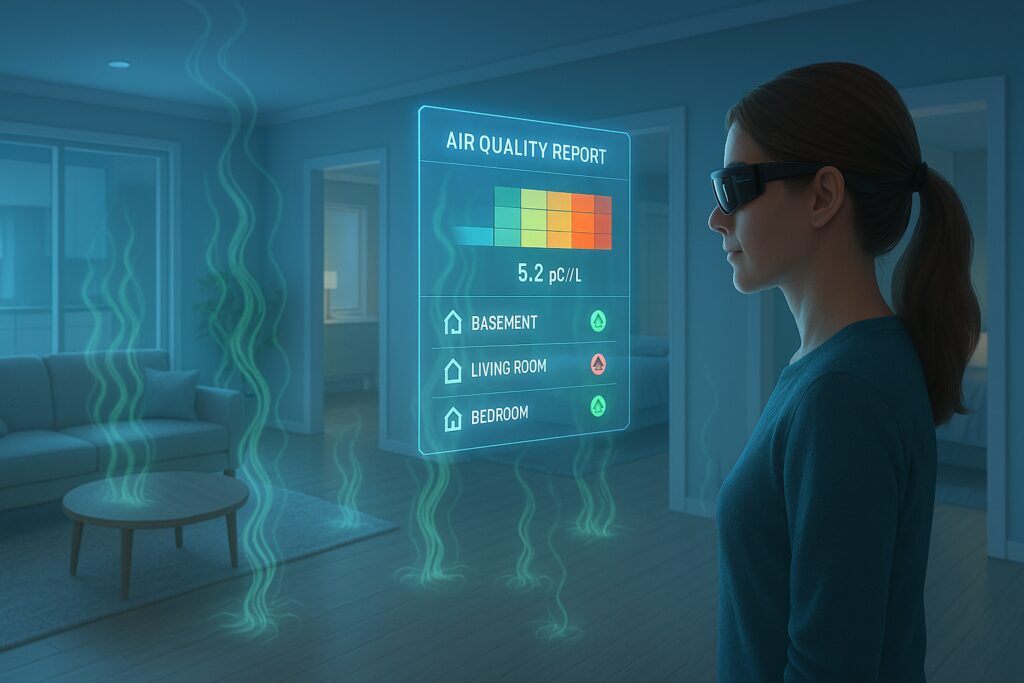
A common assumption among apartment renters is that radon is a ground-floor problem. If a unit is on the second, third, or fourth floor of a building, many tenants assume radon risk is minimal or nonexistent. That assumption is understandable but incorrect. Radon can accumulate in upper-floor units under conditions that are more common than most people realize.
How Radon Reaches Upper Floors
Radon is a colorless, odorless radioactive gas that forms from the natural decay of uranium in soil. It enters buildings at the lowest points: through foundation cracks, crawl spaces, pipe penetrations, and sump systems. Left to diffuse naturally in a well-ventilated structure, radon concentrations tend to be highest at ground level and lower on upper floors. But several building conditions change that pattern significantly.
The Stack Effect
Buildings behave like chimneys in cold weather. Warm indoor air rises toward the roof while cooler air is drawn in from below. This pressure differential, called the stack effect, pulls air upward through a building continuously. In a multi-story apartment building, radon that enters at the lowest level does not stay there. The stack effect distributes it upward through stairwells, elevator shafts, ductwork gaps, and any other vertical passage connecting floors. Upper-floor tenants may be breathing air that originated at the foundation level.
Shared HVAC Systems
Many multi-unit residential buildings use centralized or shared ventilation systems. When radon enters the air supply at the lower levels of a building, that air circulates throughout the system. Upper-floor units connected to the same air handling equipment receive the same air. The level of radon reaching upper floors depends on how well the system dilutes and exchanges air, but buildings with poor ventilation performance can distribute elevated concentrations broadly across all floors.
Tight Building Envelopes
Energy-efficient construction and renovation seal buildings more tightly than older methods. While this reduces heating and cooling costs, it also reduces natural air exchange. In a tightly sealed building, pollutants including radon have fewer pathways to escape. This can result in elevated concentrations on all floors, not just the ground level, particularly during winter months when windows remain closed for extended periods.
What the Health Data Shows
The CDC identifies radon as the second leading cause of lung cancer in the United States, accounting for approximately 21,000 deaths annually. The EPA’s recommended action level is 4.0 picocuries per liter (pCi/L). At or above that concentration, the EPA advises taking steps to reduce exposure. The risk is cumulative: years of exposure at modestly elevated levels carry meaningful health consequences, whether the occupant lives on the first floor or the fifth.
The EPA’s guidance on radon in multifamily buildings acknowledges that upper-floor units can have elevated radon levels, particularly in buildings where lower floors are known to have elevated concentrations and where the conditions described above are present. Testing is the only way to determine actual levels in a specific unit.
Apartment Types and Radon Risk in the CSRA
In the Augusta and Aiken market, the apartment stock ranges from older garden-style complexes built in the 1970s and 1980s to newer, more tightly sealed mid-rise buildings. Older buildings may have more air infiltration through gaps and unsealed penetrations. Newer, tightly constructed buildings may trap radon more effectively on all floors. Neither age category is automatically safer.
Crawl space construction, which is common in the CSRA due to soil and drainage conditions, can be a significant radon entry pathway. Buildings constructed over crawl spaces that lack adequate vapor barriers and ventilation introduce more radon into the building system at the foundation level, which then distributes upward through the mechanisms described above.
What Upper-Floor Tenants Should Know
Tenants on upper floors of apartment buildings generally cannot arrange radon mitigation on their own. Mitigation systems such as sub-slab depressurization are installed at the building level and require landlord or property management involvement. However, tenants can take several practical steps.
- Request a building-wide radon test or the results of any prior testing. Property managers may have tested lower-floor units without sharing results with upper-floor tenants. Asking is a reasonable first step.
- Schedule an independent test for the specific unit. Certified radon testing in an individual unit provides an accurate measurement of conditions in that space, regardless of what other units show.
- Increase ventilation during warmer months. Opening windows and using exhaust fans when weather permits can reduce indoor radon concentrations in any unit. This is not a substitute for testing but is a useful routine practice.
- Document and report elevated findings to property management. If testing reveals elevated radon in an upper-floor unit, putting that finding in writing to the landlord or property manager creates a record and often prompts action.
Testing Multi-Unit Buildings in the Augusta and Aiken Region
EnviroPro 360 provides professional radon testing for multi-family residential buildings, individual apartment units, and rental properties throughout the CSRA. Testing protocols follow EPA and ANSI/AARST standards and produce formal, lab-backed reports suitable for property management records, tenant communication, and mitigation contractor use.
Building owners, property managers, and tenants in Augusta, Evans, Martinez, Grovetown, North Augusta, and Aiken can all benefit from testing. Elevated radon is a fixable problem, but only after it has been measured. To schedule radon testing for a residential unit or multi-unit building in the CSRA, contact EnviroPro 360.