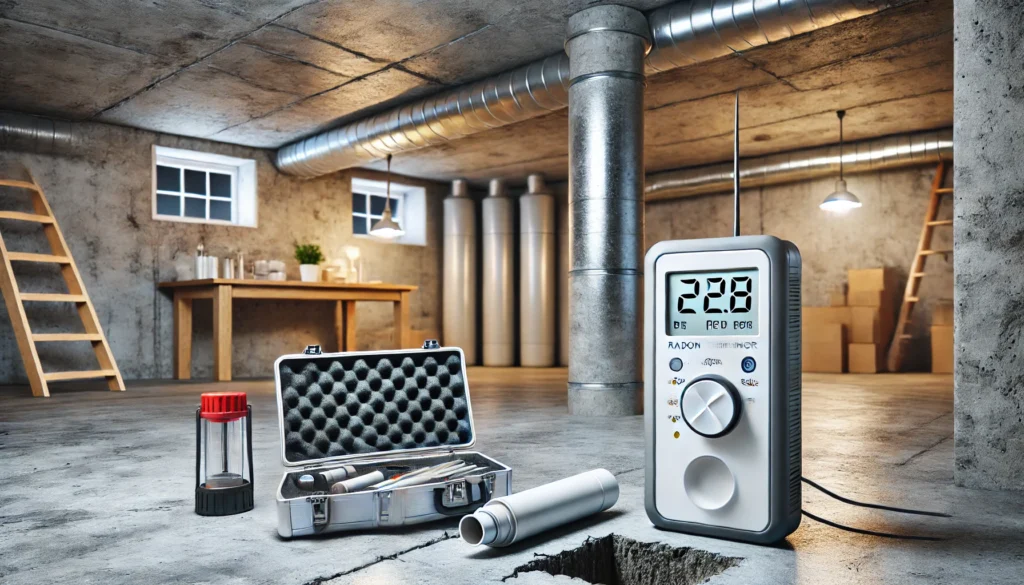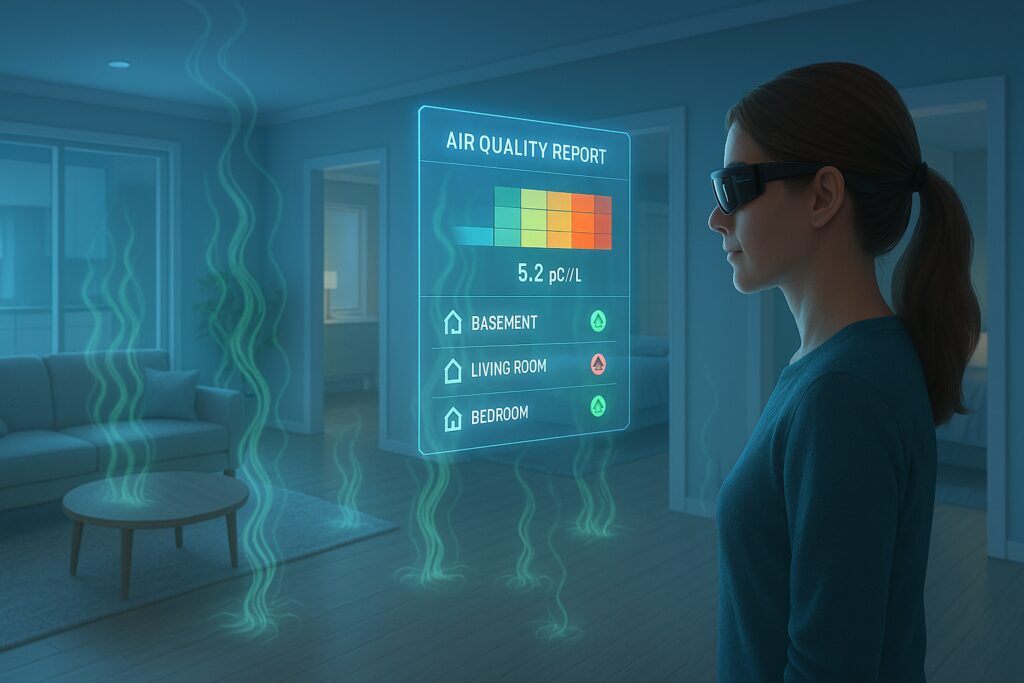
Air purifiers have become a fixture in the home wellness market. Models equipped with HEPA filters, activated carbon, and ionization technology are sold in hardware stores and big-box retailers as a way to improve indoor air quality. For anyone who has recently learned about radon gas, it is natural to wonder whether one of these devices could help.
The short answer is no. Air purifiers are not an effective solution for radon. Understanding why matters, especially for renters and homeowners in Georgia and South Carolina, where radon levels in many counties exceed what most residents expect.
What Air Purifiers Actually Do
Most residential air purifiers are designed to remove airborne particles. HEPA filters capture dust, pollen, pet dander, mold spores, and smoke particles by forcing air through a fine mesh. Activated carbon filters absorb odors and some volatile organic compounds. Ionizing purifiers charge particles in the air so they stick to surfaces instead of staying suspended.
All of these technologies work on what is already in the air. None of them address what continues entering the home from below.
Radon Is a Gas, Not a Particle
Radon forms from the decay of uranium in soil and rock beneath your home. It seeps upward through the ground and enters through cracks in the foundation, sump pits, crawl space gaps, utility penetrations, and floor drains. Once inside, it accumulates in lower levels and closed spaces.
Because radon is a gas, HEPA filters cannot capture it. It passes through the filter material entirely. Activated carbon does absorb some radon gas and radon decay products, and a small number of manufacturers market this as a radon benefit. However, the EPA does not recognize air purifiers as an effective radon mitigation strategy, and for good reason: a filter running in one room cannot address the continuous flow of radon entering through the foundation. It treats a small sample of air while the source remains unaddressed and the gas continues to accumulate throughout the home.
According to the CDC, radon is the second leading cause of lung cancer in the United States after smoking, responsible for about 21,000 deaths each year. The risk comes from long-term exposure to elevated concentrations, not from a single afternoon of breathing. That is why addressing the source matters more than filtering the air after the fact.
Why CSRA Residents Need to Take This Seriously
Georgia and South Carolina are not states people typically associate with radon. The gas is more commonly discussed in the upper Midwest and Rocky Mountain regions, where uranium-rich granite formations are well known. But parts of the Piedmont region, including areas in and around Augusta, Columbia County, Aiken, and the Carolinas, sit on geology that produces measurable radon concentrations.
The EPA has mapped Georgia and South Carolina radon potential by county. Numerous counties in both states fall into the moderate to elevated risk categories. Many homes in these areas have never been tested, partly because radon is not top of mind in the Southeast and partly because it produces no symptoms you would notice until after years of exposure. Buying an air purifier and assuming the problem is handled is a risk homeowners in this region cannot afford to take.
What Actually Reduces Radon
The EPA recommends professional radon mitigation when testing reveals levels at or above 4.0 pCi/L, though the agency notes that any level above 2.0 pCi/L carries long-term risk worth addressing.
The most common and effective approach is sub-slab depressurization. A licensed mitigation contractor installs a pipe beneath the foundation slab and connects it to a fan that continuously draws radon from below and vents it to the exterior. When installed correctly, these systems can reduce indoor radon by more than 90 percent. For crawl space homes, similar techniques use ventilation and vapor barriers to limit entry from exposed soil.
These systems work at the source. They reduce what enters the home rather than attempting to clean the air after the gas has already accumulated.
Testing Is the First Step for Renters and Homeowners
No mitigation approach is useful without first knowing your actual radon level. Short-term test kits are available at hardware stores for under $30 and provide a result in two to seven days. Professional testing from a certified provider gives more accurate data, particularly useful if you plan to present results to a landlord or document levels for a real estate transaction.
For renters in Georgia and South Carolina, landlords are generally not required by state law to test or mitigate. But certified test results create a documented record. A landlord faced with data showing levels at 5 or 6 pCi/L has a different conversation with a tenant than they would have with someone expressing a general concern. Testing gives you the information needed to act.
EnviroPro 360 provides certified radon testing throughout Augusta, Evans, Martinez, Grovetown, North Augusta, Aiken, and surrounding areas of Georgia and South Carolina. If you want to know whether your home has a radon problem, the only way to find out is to test. Air purifiers cannot tell you that, and they cannot fix it. Contact EnviroPro 360 to schedule a test and get accurate results you can act on.