Georgia and South Carolina get weather in November and December that homeowners outside the Southeast often underestimate. The CSRA does not have the hard freezes that protect northern homes from rain-related moisture intrusion, but it gets significant rainfall, occasional remnant tropical systems well into fall, and rapid temperature swings that drive condensation onto building materials. Leaves clog gutters right as the heaviest fall rains arrive. Homes get sealed up for the first time after months of open windows, trapping whatever humidity has accumulated.
The result is that holiday season water intrusion events happen more frequently than homeowners expect, and more frequently go unnoticed because everyone is busy and low-traffic areas like spare bedrooms, attics, and crawl spaces do not get checked. When moisture sits in building materials for more than 24 to 48 hours without being dried, mold begins to grow.
Why Fall and Winter Weather Creates Mold Risk in CSRA Homes
Several conditions converge during the November through February period that make water intrusion more likely and more likely to go undetected:
- Clogged gutters. Leaf fall in Georgia typically peaks in November. Gutters filled with wet leaves overflow at the fascia, forcing water under the roofline and against exterior walls rather than away from the foundation.
- Wind-driven rain at roof penetrations. Storm systems with strong winds push rain horizontally against chimney flashing, roof vents, and attic louvers in ways that calm rain does not. Penetrations that have been borderline for years will leak in a strong wind event.
- Condensation from heating. When heating systems run for the first time after months of dormancy, temperature differentials between warm interior air and cold attic decking or crawl space framing drive condensation. This is especially pronounced in homes where bathroom fans are not ducted to the exterior.
- Reduced ventilation. Homes sealed for winter accumulate humidity from cooking, bathing, and occupants. Without periodic fresh air exchange, indoor humidity builds up over weeks.
- Distraction and low-traffic areas. Attics, spare bedrooms, and crawl spaces do not get visited during the holiday period. A roof leak that starts in November may not be discovered until January or February.
Post-Rain Inspection Checklist
After any significant rainfall event — or at the start of the holiday season as a baseline — walk through this checklist systematically.
Ceilings and Upper Corners
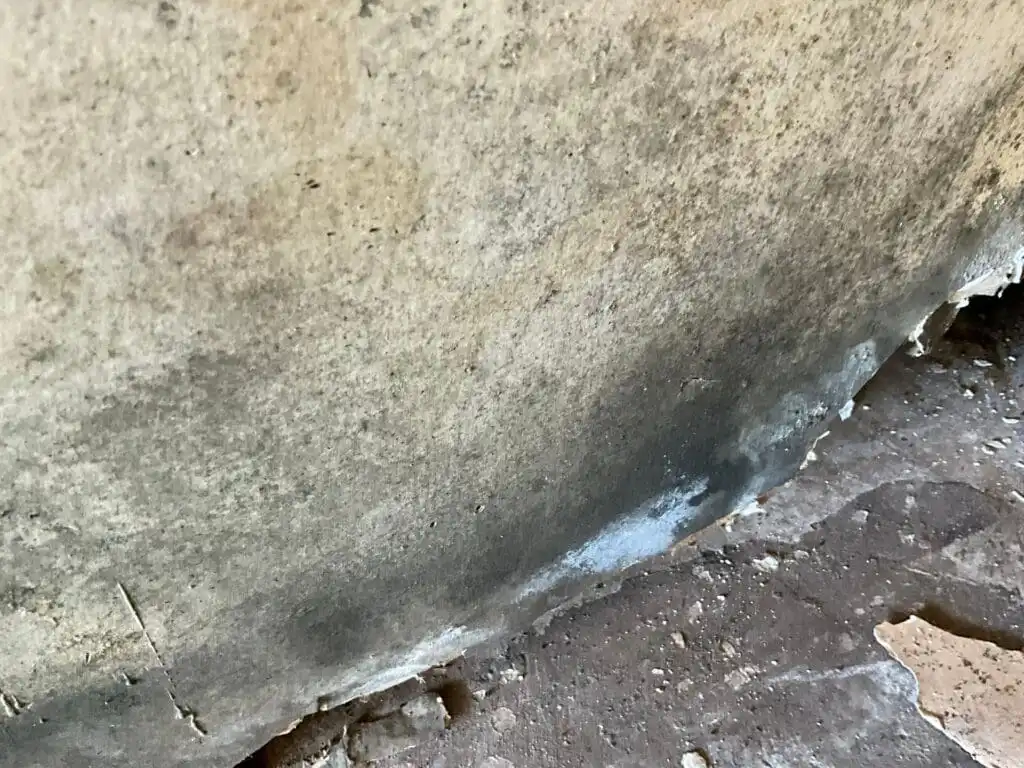
Check every room, including closets and rooms that stay closed. Look for water staining (brown or yellow rings or streaks), bubbling or peeling paint, soft spots in drywall, and dark discoloration in corners where walls meet the ceiling. Stains that are new or that have grown since the last inspection indicate active leakage.
Attic Access
Open the attic hatch and inspect with a flashlight without entering if the attic is not safely floored. Look for wet insulation (compressed or discolored), dark streaking on rafters or sheathing, and any daylight visible through the roof decking. If you can smell musty air from the attic access, moisture has been accumulating for some time.
Windows, Doors, and Entry Points
Run your hand along window sills and the bottom of door frames. Feel for dampness, softness, or swelling of wood components. Check the interior edges of window tracks for standing water or dark discoloration. Wind-driven rain frequently enters at window frames, particularly on the windward side of the house.
Gutters and Downspouts
Within a day or two of a rainfall event, look at your gutters to see whether they are still holding standing water or debris. Confirm downspouts are discharging water at least three feet from the foundation. Ground that stays saturated near the foundation after rain events is a drainage problem that creates crawl space moisture.
Crawl Space
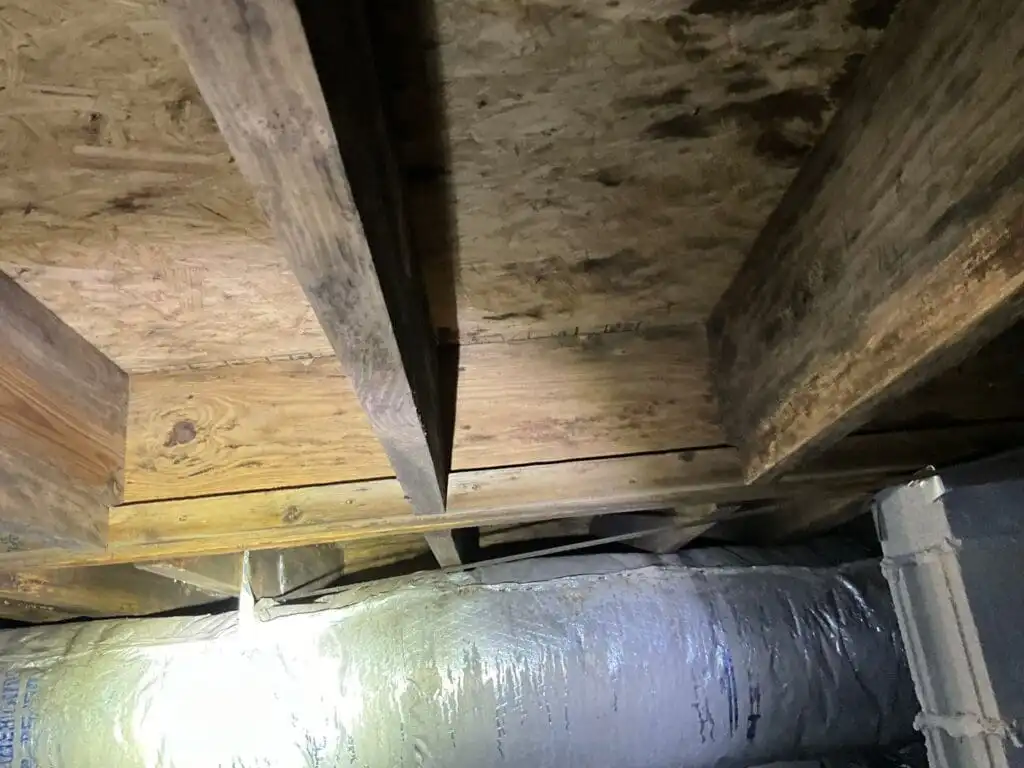
This is the highest-risk area in most CSRA homes and the least frequently checked. Use a flashlight to inspect from the access opening. Look for standing water, damp soil, wet or fallen insulation, and dark discoloration on floor joists and the vapor barrier. A musty smell from the crawl space access that you can detect standing at the opening indicates active mold growth below.
What to Do If You Find Moisture
The EPA recommends that wet building materials be dried within 24 to 48 hours to prevent mold growth. If you find moisture during your inspection:
- Photograph the affected area before doing anything else
- Begin drying with fans and a dehumidifier if the area is accessible
- Do not paint over stained areas or reseal caulking before the underlying material is fully dry — this traps moisture
- Have the source inspected and repaired before winter weather brings another rain event
The CDC recommends professional assessment when mold growth is extensive or when occupants have health conditions that increase their sensitivity. If you find visible mold growth, odors you cannot locate the source of, or moisture in the crawl space that has been present for more than a few days, professional inspection and testing is the right next step.
Schedule a Mold or Moisture Inspection
EnviroPro 360 provides mold inspection and moisture assessment across Augusta, Aiken, and the CSRA, including crawl space assessment, thermal imaging, and air sampling. Contact EnviroPro 360 to schedule an inspection after a weather event or at the start of the season.