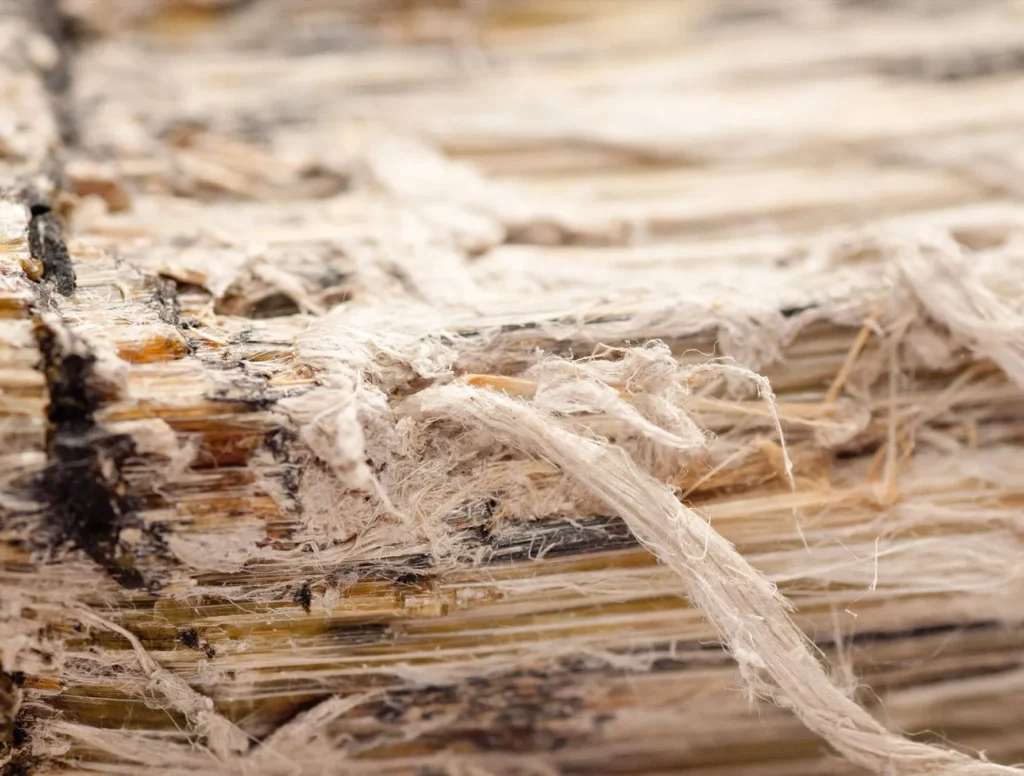
EPA’s Asbestos NESHAP sets work practices that must be followed during demolition and renovation of facilities — institutional, commercial, industrial, public, and most multi-unit residential buildings. There is a limited exemption for residential buildings of four or fewer dwelling units, but that exemption has edges that trip up project managers regularly.
If you’re planning a renovation or demolition, a compliant plan needs to be in place before anyone opens a ceiling or cuts pipe insulation. The steps below walk through what that plan looks like for projects in Georgia and South Carolina.
Step 1: Confirm if NESHAP applies to your project
Ask two questions:
- Is the structure a “facility”? (commercial, industrial, institutional, or multi-unit residential not otherwise exempt)
- Will demolition or renovation disturb suspect materials?
Single-family homes and duplexes may be exempt, but that exemption does not apply if those residences are being demolished as part of a commercial or public project — urban renewal, redevelopment, or infrastructure work, for example. When in doubt, treat the project as covered and confirm with your state agency before mobilizing.
Step 2: Order a pre-renovation asbestos survey by a licensed inspector
NESHAP requires a thorough inspection of the affected area before demolition or renovation begins. Your inspector must be state-accredited — Georgia requires EPD licensure; South Carolina requires DHEC certification — and the completed report must be kept on-site for contractors and state inspectors throughout the project.
A complete survey report includes:
- A site drawing or floor plan marking each sampled location
- A sample log with material type, location, quantity, and condition
- Accredited laboratory analysis results for each bulk sample
- An ACM/PACM summary table with friability classification
- The inspector’s conclusions and recommended management approach
Contractors use this report to understand what they’re working near, sequence abatement correctly, and confirm scope before bid. It is also the document your state notifications will reference, so ordering it early avoids delays downstream.
Step 3: File your state notifications on time
Georgia (EPD): Submit your project notification in GEOS at least 10 business days before any demolition, renovation disturbing ACM, or asbestos abatement. Georgia requires demolition notification regardless of whether ACM is present. For combined jobs — abatement plus demolition — Georgia directs separate notifications for each.
South Carolina (DHEC): Follow Regulation 61-86.1 for licensing, project design where required, and pre-work written notifications to the state. DHEC also publishes a plain-English brochure on renovation and demolition requirements.
Submit early. Missing the 10-day window will stall mobilization and may trigger an agency inquiry before work even begins.
Step 4: Align your work practices with OSHA 29 CFR 1926.1101
NESHAP governs emissions and state notifications. OSHA protects workers on the job site. These are separate obligations and both apply simultaneously.
Under 29 CFR 1926.1101, your contractors must:
- Establish regulated areas wherever airborne asbestos exceeds or could exceed the action level (0.1 f/cc as an 8-hour TWA)
- Keep exposures at or below the permissible exposure limit: 0.1 f/cc as an 8-hour TWA and 1.0 f/cc as a 30-minute STEL
- Designate a competent person — someone qualified to identify existing and predictable asbestos hazards, authorized to take corrective action, and physically present during work operations
- Conduct initial and periodic employee exposure assessments
- Document training, medical surveillance, and fit-testing for respiratory protection
The competent person requirement is the one most often overlooked on smaller commercial jobs. That person must be on-site — not simply reachable by phone from another location.
Step 5: Specify abatement and sequencing
If ACM will be disturbed, abatement must happen before general demolition or renovation work begins. Your project documents should define the following:
- Containment type: Full containment with critical barriers versus glove-bag removal for isolated pipe work, depending on scope and friability
- Negative air pressure: HEPA air filtration devices maintaining negative pressure relative to adjacent occupied spaces throughout the work period
- Wet methods: All ACM kept adequately wet during removal to suppress fiber release
- Personal protective equipment: Minimum half-face respirator with P100 filters for Class I and II work; full-face or supplied-air for higher-risk operations
- Decontamination unit: Three-stage decon — equipment room, shower, and clean room — for full containment work
- Clearance criteria: Post-abatement visual inspection followed by aggressive air sampling using phase contrast microscopy or transmission electron microscopy per project specifications
In South Carolina, projects above certain scope thresholds require a licensed project designer to prepare abatement specifications and a licensed air sampling professional to conduct clearance. Coordinate these roles at bid time — not after the abatement contractor is already mobilized.
Step 6: Manage waste correctly
Asbestos waste has specific handling, packaging, labeling, and disposal requirements under NESHAP:
- Packaging: Double-bagged in 6-mil polyethylene bags, or placed in labeled fiber drums or rigid containers
- Labeling: Each container must display the OSHA/NESHAP required asbestos warning label and generator information
- Transport: Covered vehicle or sealed container; waste must not be visible during transport
- Disposal: Licensed disposal facility approved for asbestos-containing waste — not standard construction debris disposal
- Manifests: Retain signed waste shipment records for a minimum of two years per NESHAP; keep copies in the project environmental file alongside the survey, notifications, and clearance results
Your abatement contractor should provide signed waste manifests as part of close-out documentation. If they don’t, request them before releasing final payment.
Step 7: Close out with verification
After abatement, a visual inspection of the work area must confirm all visible ACM has been removed and surfaces are free of debris. Air clearance sampling follows, and no other trades may re-enter until results are received and compared against your project specifications.
Keep the complete file — survey, notifications, air sampling results, waste manifests, and clearance documentation — with the facility’s permanent environmental records. These documents will be needed if the property is sold, further renovated, or inspected by regulators.
What happens if you don’t comply
EPA NESHAP violations can carry civil penalties up to $70,117 per day per violation under the Clean Air Act. Failure to notify Georgia EPD or DHEC before demolition, disturbing ACM without a prior survey, and improper waste disposal are each separate violations — meaning a single poorly managed project can generate multiple penalty actions simultaneously.
Beyond federal exposure, Georgia EPD and South Carolina DHEC both have independent enforcement authority. A stop-work order issued mid-project doesn’t just pause the job — it triggers notification to the owner, general contractor, and often the lender, and the timeline to resolution is rarely short.
The more common outcome for first-time compliance failures is a negotiated consent order with a financial penalty, a corrective action plan, and enhanced oversight on future projects. That process takes months and costs considerably more than a survey and notification would have.
What to budget and plan for
Pre-renovation asbestos surveys in Georgia and South Carolina typically range from $400 to $1,200 for residential and small commercial projects, and $1,500 to $4,000 or more for larger commercial or industrial facilities, depending on square footage, the number of suspect materials, and laboratory turnaround time.
Turnaround from site visit to completed report is generally 3 to 7 business days, with rush options available. Add the 10-business-day notification window on top of that, and you’re looking at a minimum of three weeks from survey order to legal mobilization for abatement — longer if the survey reveals unexpected ACM quantities or a project designer is required.
Build this into your project schedule before bidding. Owners who treat the survey as an afterthought routinely find themselves negotiating extensions with general contractors or absorbing delay costs that dwarf the cost of early planning.
Quick checklist
- Confirm NESHAP applicability and any residential-exemption edge cases
- Hire a state-licensed asbestos inspector and complete the survey before any work begins
- File GA GEOS or SC DHEC notifications at least 10 business days pre-start
- Require OSHA 1926.1101 compliance and a named, on-site competent person
- Sequence abatement before demolition or renovation; specify containment, negative air, and clearance criteria in project documents
- Use licensed waste disposal; retain signed manifests and clearance documentation in the project file
FAQ
Do I need to notify Georgia EPD for a demolition where no ACM was found?
Yes. Georgia requires demolition notification regardless of whether ACM is present. The notification is triggered by the act of demolition itself, not by the presence of asbestos.
We’re clearing multiple small houses for a commercial redevelopment project. Are they exempt?
Probably not. The four-or-fewer residential unit exemption does not apply when demolition occurs as part of a commercial or public project. Each structure in an urban renewal or redevelopment project is typically treated as a covered facility under NESHAP.
Can we start early if there’s an emergency?
Emergency provisions exist under NESHAP, but they require notification to the agency before or as soon as work begins, along with written justification. You cannot use an emergency exemption retroactively after work has already been completed.
What if ACM is found after work has already started?
Stop work in the affected area immediately. Notify your abatement contractor and state agency. Document the discovery and do not disturb the material further until a licensed inspector has assessed it and an abatement plan is in place.
What’s the difference between friable and non-friable ACM for notification purposes?
Both types may trigger NESHAP notification if they will be disturbed. Friable ACM — materials that can be crumbled by hand pressure — poses higher airborne fiber risk and typically requires full containment abatement. Non-friable ACM such as floor tile, mastic, and roofing material may qualify for less intensive removal methods, but the distinction doesn’t eliminate the notification or survey requirement.
What does a “competent person” under OSHA actually have to be able to do?
The OSHA competent person for asbestos must be capable of identifying existing and predictable asbestos hazards in the workplace and authorized to take prompt corrective action. They must be physically present during all Class I and II work operations — not on call from another location. This person typically holds EPA/AHERA accreditation and state licensure.
How long does a pre-renovation asbestos survey take?
Most commercial surveys are completed in a single site visit. Report preparation typically takes 3 to 7 business days depending on laboratory turnaround. Rush processing is available if your project timeline requires it.
What if the abatement contractor doesn’t provide waste manifests at close-out?
Do not release final payment until you have signed manifests in hand. NESHAP requires the facility owner to retain these records for at least two years, and they will be requested in any future regulatory inspection or property transaction. If a contractor cannot produce them, it raises questions about whether disposal was handled correctly.
Projects in Augusta, Georgia and the CSRA
The Central Savannah River Area has a significant inventory of older commercial and industrial buildings — including downtown Augusta’s pre-1980 commercial stock, former industrial facilities along the river corridor, and military-adjacent properties across both sides of the state line. Many of these buildings contain pipe insulation, floor tile, ceiling tile, and roofing materials that were installed before asbestos use restrictions took effect.
Contractors and property owners in this region regularly encounter asbestos during renovation of older offices, warehouses, schools, and healthcare facilities. The combination of Georgia EPD and South Carolina DHEC jurisdiction — sometimes within a single project if work spans the state line — adds coordination complexity that projects in single-state markets don’t face. Working with a testing firm that knows both states’ notification systems reduces the risk of a procedural gap causing a compliance problem mid-project.
EnviroPro 360: Certified asbestos surveys for renovation and demolition projects
EnviroPro 360 provides certified pre-renovation asbestos surveys for commercial, industrial, and residential projects across Augusta, GA and the Central Savannah River Area. Our licensed inspectors produce contractor-ready reports that include site drawings, sample logs, lab results, and ACM quantity summaries — everything your abatement contractor and state notification require.
- Pre-renovation and pre-demolition asbestos surveys by licensed inspectors
- Contractor-ready reports with drawings, sample logs, and quantities
- Notification support for Georgia GEOS and South Carolina DHEC
- Coordination with licensed abatement teams and post-abatement clearance
- Add-on testing: mold, radon, lead, and leak detection
Planning a renovation or demolition in the CSRA? Contact EnviroPro 360 to schedule a certified asbestos survey and keep your project on the right side of NESHAP.