If you’re planning a demolition or renovation project in an older building, you’ve likely encountered the term “NESHAP” — either from a contractor, a permitting office, or a state agency. Here’s what it actually means, what it requires, and how it applies to projects in Georgia and South Carolina.
What NESHAP Is
NESHAP stands for the National Emission Standards for Hazardous Air Pollutants. It is a federal regulatory program established under Section 112 of the Clean Air Act, which directs the EPA to set emission standards for hazardous air pollutants. The Asbestos NESHAP — formally codified at 40 CFR Part 61, Subpart M — is the specific rule governing asbestos emissions during demolition, renovation, and manufacturing activities.
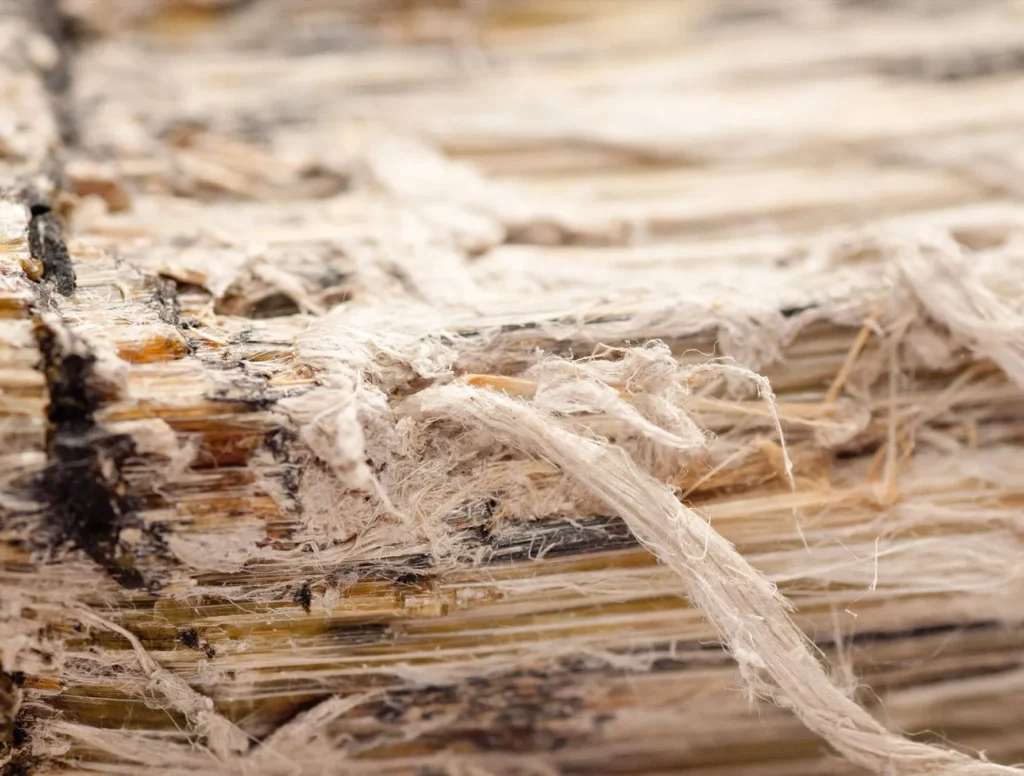
The regulation exists because disturbing asbestos-containing materials releases microscopic fibers into the air. Those fibers remain airborne for hours, and once inhaled, stay in lung tissue permanently — causing mesothelioma, asbestosis, and lung cancer, often decades after the original exposure. The Asbestos NESHAP is the regulatory framework designed to prevent that fiber release from happening during construction and demolition work.
A Brief Regulatory History
Asbestos was one of the first hazardous air pollutants addressed under the NESHAP program. It was identified as a hazardous pollutant in 1971, and the Asbestos NESHAP was officially established in 1973 — making it one of the oldest continuously enforced federal environmental regulations.
The regulation has been amended several times since:
- A major overhaul in November 1990 introduced stricter controls and expanded the scope of the rule
- Amendments in 1995 improved alignment with other environmental regulations and refined compliance measures
These updates reflected two decades of enforcement experience — the original rule had gaps, and renovation-related exposures were occurring outside its original scope.
Who NESHAP Applies To
The Asbestos NESHAP applies to owners and operators of demolition and renovation projects in:
- Commercial buildings — offices, retail, warehouses, industrial facilities
- Institutional buildings — schools, hospitals, government buildings
- Large-scale residential demolitions involving more than four dwelling units
Single residential buildings with four or fewer units are generally exempt from NESHAP notification requirements. That exemption does not apply when multiple small residential structures on the same site are demolished by the same owner, or when demolition is for commercial redevelopment.
If your project falls within scope, the regulation requires three things before work begins: a thorough inspection by a licensed inspector, advance state notification, and — if asbestos-containing materials will be disturbed — abatement by a licensed contractor.
The Key Requirements in Plain Language
Pre-Renovation Inspection
Before any demolition or renovation that could disturb suspect materials, a thorough inspection of the affected area must be conducted by a trained and accredited inspector. The inspection identifies all asbestos-containing materials (ACM) present — including materials in concealed spaces like pipe chases, above drop ceilings, and in mechanical rooms.
Advance Notification
For projects involving regulated asbestos-containing materials (RACM) — or any demolition regardless of ACM presence — the owner or operator must notify the appropriate state agency at least 10 working days before work begins. The notification includes the project location, building type, quantities and types of ACM, abatement contractor information, and planned start and completion dates.
Work Practice Standards
During abatement, specific controls are required: wetting ACM before and during removal to suppress fiber release, negative air pressure containment, HEPA filtration, and proper worker decontamination procedures when leaving the work area.
Waste Disposal
Asbestos waste must be sealed in clearly labeled, leak-tight containers and transported to a landfill permitted to accept asbestos waste. Waste shipment records must be retained. Georgia and South Carolina both have a limited number of permitted disposal facilities, so waste logistics are part of project planning from the start.
Trained Personnel On-Site
A trained, competent person must be present during all asbestos abatement activities. This person is responsible for identifying ACM, overseeing work practices, and monitoring the site to prevent fiber release. Their presence is not optional — it is a NESHAP requirement.
How NESHAP Applies in Georgia
In Georgia, the Environmental Protection Division (EPD) administers the Asbestos NESHAP program under a delegation agreement with the EPA, alongside Georgia’s own asbestos regulations under Chapter 391-3-14.
Key Georgia-specific requirements:
- Project notifications are submitted through the GEOS portal at least 10 business days before work begins
- Asbestos inspectors and abatement contractors must hold current Georgia EPD licenses — federal accreditation alone is not sufficient
- Notifications are required for demolition projects even when no ACM is found
- Georgia EPD conducts compliance monitoring at active demolition and renovation sites — documentation gaps are treated as violations
How NESHAP Applies in South Carolina
In South Carolina, SC DHEC Regulation 61-86.1 implements the Asbestos NESHAP alongside the state’s own requirements. The requirements are substantially similar to Georgia’s but run through a separate agency with separate licensing.
Key South Carolina-specific points:
- Written notification must be submitted to SC DHEC before work begins — Georgia EPD notifications do not satisfy this requirement
- SC DHEC licenses asbestos professionals separately from Georgia; inspectors working across the CSRA must hold both state licenses
- Demolition projects require SC DHEC notification even when no ACM is identified
What This Means for Your Project
For property owners and contractors working in pre-1980 buildings in Georgia or South Carolina, the practical implication of NESHAP is straightforward: you need a licensed inspector’s survey before renovation or demolition begins, and you need to allow time for the 10-business-day notification window before mobilizing a crew.
For the full step-by-step process — including what the survey report needs to contain, how to file state notifications, and how to coordinate abatement contractors — see the pre-renovation asbestos survey checklist for Georgia and South Carolina property managers.
Questions About NESHAP Compliance?
EnviroPro 360 provides asbestos inspections and testing for property owners and contractors across Georgia and South Carolina, including NESHAP-compliant survey reports and support for GEOS and SC DHEC notification submittals. If you have questions about how NESHAP applies to a specific project, the team is happy to help. Reach out any time.