Home renovations in Augusta and the CSRA come with a lot of moving parts. Budgets, contractors, permits, and timelines all compete for your attention before the first tool is picked up. Asbestos inspection is the step that often gets skipped because the risk is not visible and the consequences are not immediate. But if your home was built before 1980, the materials inside your walls, floors, and ceilings may contain asbestos, and disturbing those materials without knowing what is there creates serious problems: health risks for your family and workers, project shutdowns, abatement costs you did not plan for, and potential legal exposure. Getting a professional inspection before remodeling begins is not an extra precaution. It is the step that makes every other part of the project go more smoothly.
What Gets Disturbed During a Renovation
The hazard with asbestos is not the material sitting undisturbed in a wall or under a floor. The hazard is what happens when that material is cut, broken, sanded, drilled, or demolished. Common renovation projects that frequently disturb asbestos-containing materials include:
- Removing or resurfacing floor tiles and sheet vinyl, both of which were commonly manufactured with asbestos through the 1980s
- Knocking out walls or ceilings with texture, joint compound, or plaster that contains asbestos
- Replacing old pipe insulation or removing wrap around HVAC ducts or a boiler
- Pulling out popcorn ceiling texture, which was one of the most common applications of asbestos in residential construction
- Upgrading electrical panels in older homes, which sometimes involves cutting through asbestos board behind the panel
- Replacing roof shingles on homes built before 1980, since many asphalt shingles from that era were manufactured with asbestos filler
- Renovating a basement or utility room that contains original pipe wrap or ceiling tiles
None of these projects looks dangerous from the outside. The asbestos content is not visible to the eye. A contractor working without an inspection has no reliable way to know which materials are safe and which are not.
The Health Consequences of Disturbed Asbestos
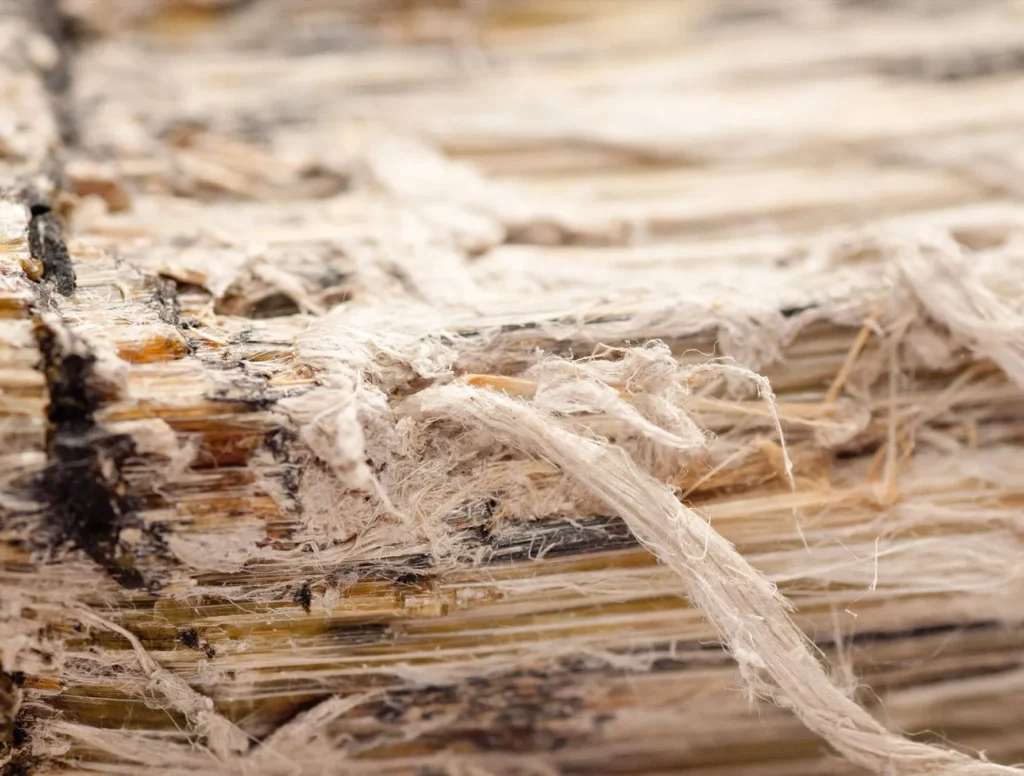
When asbestos-containing materials are disturbed, microscopic fibers become airborne. Those fibers are inhaled and lodge in the lungs, where they can cause irreversible damage over time. The EPA identifies asbestos as a known human carcinogen, and the diseases associated with asbestos exposure have long latency periods. Symptoms of asbestosis, mesothelioma, and lung cancer often do not appear until decades after exposure, which makes it easy to underestimate the risk in the moment.
The CDC’s National Institute for Occupational Safety and Health notes that there is no safe level of asbestos exposure that has been established. A single renovation project that disturbs asbestos-containing materials without proper controls can result in elevated fiber concentrations throughout the home for days after work is completed. Family members who were not present during the work are still exposed through contaminated dust that settles on surfaces and in HVAC systems.
What Your Contractor Is Required to Know
Under OSHA 29 CFR 1926.1101, contractors performing renovation work in structures that may contain asbestos are required to treat suspect materials as if they do contain asbestos unless sampling proves otherwise. This places a legal obligation on renovation contractors to identify materials before disturbing them. But in practice, the responsibility often falls to the homeowner to initiate testing before work begins.
If a contractor disturbs asbestos-containing material during renovation work without proper controls, and a worker is exposed, the contractor faces OSHA liability. But the homeowner may also face legal exposure, particularly if the presence of asbestos was known or if the conditions should have prompted testing. The clean separation between homeowner and contractor responsibility in these situations is not as clear as most people assume.
The Cost of Discovering Asbestos Mid-Project
If asbestos is discovered after demolition has started, the sequence of events that follows is expensive and disruptive. Work stops. The area must be contained to prevent further fiber spread. An emergency assessment is needed to determine the extent of contamination. If material has already been disturbed, air sampling may be required before workers can re-enter. Abatement has to be completed and cleared before renovation work resumes.
Emergency abatement on an active job site costs significantly more than planned abatement scheduled in advance. Contractor downtime during the stoppage may need to be negotiated or paid. If asbestos has spread through the HVAC system, the scope of remediation expands further. A pre-renovation inspection that identifies the problem in advance typically costs far less than the combination of emergency response, project delays, and contractor rescheduling that follows an unplanned discovery.
What an Asbestos Inspection Involves
A certified inspector visits the property and collects samples from suspect materials in the areas that will be affected by renovation work. Samples are sent to an accredited laboratory for analysis. Results typically come back within a few business days. The inspection report identifies which materials contain asbestos, the condition of those materials, and recommendations for how to handle them before work begins.
If materials test negative, renovation proceeds normally. If materials test positive, you have a clear picture of what needs to be addressed and where before any cutting or demolition starts. Abatement can be scheduled as part of the project plan rather than as an emergency response. Your contractor gets accurate documentation to scope the work correctly from the beginning.
Schedule an Inspection Before Your Renovation Begins
EnviroPro 360 provides certified residential asbestos inspections for homeowners across Augusta, North Augusta, Aiken, and the surrounding CSRA. Our inspectors sample suspect materials in the specific areas your renovation will touch and deliver a lab-backed report with clear findings. If abatement is needed, we can help you understand the scope and connect you with licensed abatement contractors.
If you are planning a kitchen update, bathroom renovation, basement conversion, or any other project in a home built before 1980, an asbestos inspection is the step that protects your family, your contractors, and your project timeline. Contact EnviroPro 360 to schedule your pre-renovation inspection.