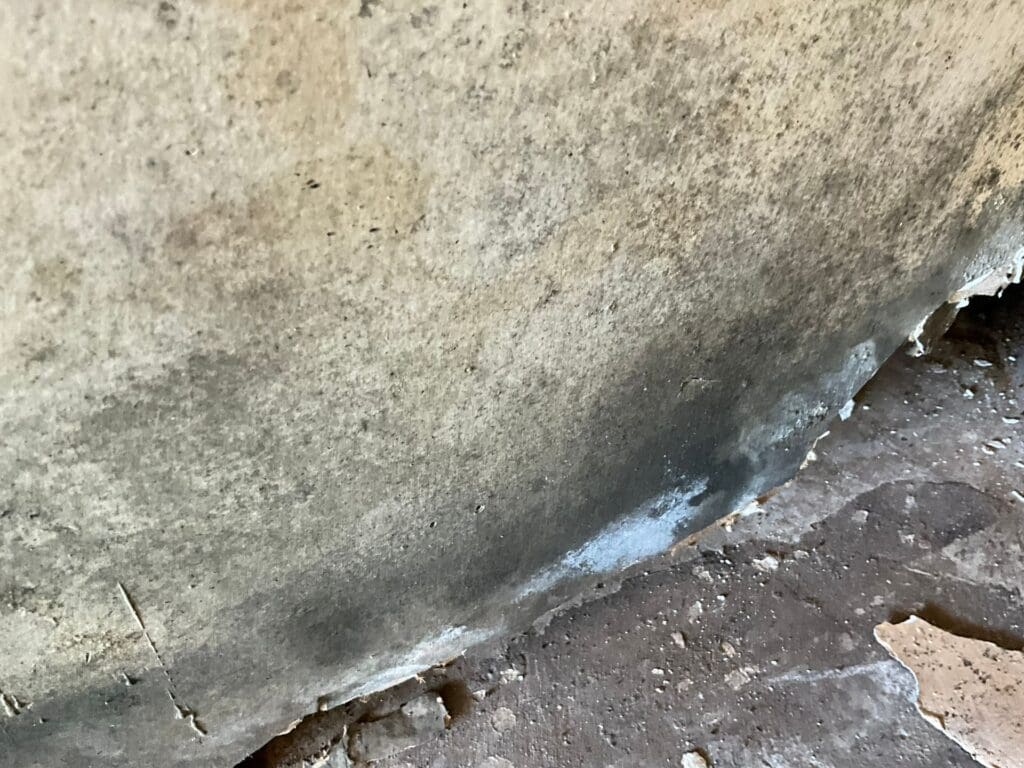
Mold that gets cleaned up and then comes back within a few weeks is not a sign of bad luck or a particularly stubborn mold strain. It is a sign that the moisture source was never fixed. This distinction matters because most mold recurrence can be prevented, but only if the response addresses the actual cause rather than the visible symptom.
Why Mold Returns
Mold is a fungus that requires three things to survive: moisture, an organic food source, and temperatures above freezing. Building materials like drywall, wood framing, and insulation supply the food. Interior temperatures are always in the growth range. This means moisture is the only variable that can actually be controlled.
The CDC notes that the key to mold control is moisture control — without addressing the moisture source, mold growth will recur regardless of how thoroughly the surface was cleaned. When mold reappears in the same location weeks or months after being wiped away, the moisture that originally fed it is almost certainly still present, whether from a slow leak, condensation, elevated humidity, or a drainage problem.
Cleaning vs. Remediation: Not the Same Thing
Wiping visible mold off a surface with bleach or a store-bought spray is cleaning. It addresses what you can see. Remediation addresses the underlying problem.
Proper mold remediation includes identifying the moisture source, removing materials that are porous and cannot be effectively cleaned (drywall, insulation, carpet padding), drying affected structural elements to confirmed low moisture levels, and verifying after the fact that airborne spore concentrations have returned to normal. Without all of those steps, the treatment is incomplete.
The EPA’s guidance on mold remediation notes that bleach is not recommended as the primary treatment on porous surfaces because it does not penetrate deeply enough to kill mold roots (hyphae) embedded in the material. Surface cleaning of porous materials typically leaves viable mold behind, which regrows once moisture returns.
Moisture Sources That Get Missed
The moisture source is not always obvious. Common sources that are frequently overlooked after an initial mold cleaning include:
- Slow supply line leaks behind toilets and under sinks that drip intermittently
- Condensate system issues on HVAC units, especially air handlers in attic or closet installations
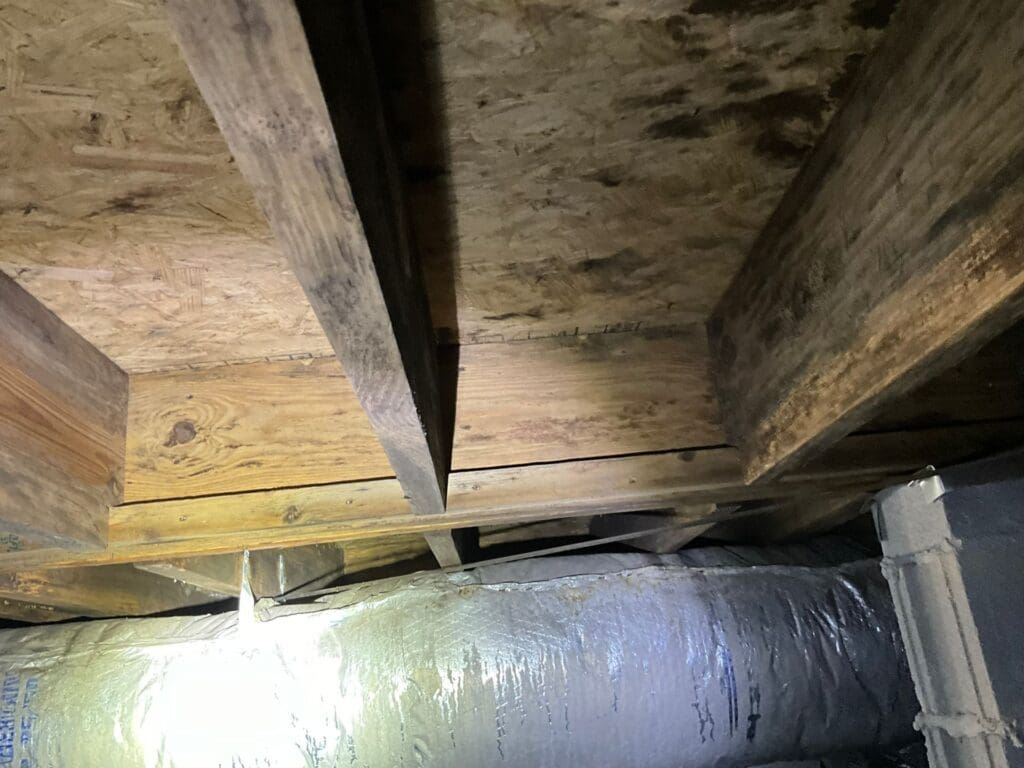
- Crawl space ground moisture rising through inadequate vapor barriers into subfloor framing
- Attic moisture from bathroom exhaust fans that terminate inside the attic instead of through the roof
- Roofing failures that allow intermittent moisture entry at penetrations or flashing
- Foundation drainage that routes water toward the building after heavy rain
In Augusta and the CSRA, ground moisture is a particularly persistent source. The region’s clay-heavy soils retain water after rain events, and crawl spaces without properly installed and maintained vapor barriers are in constant contact with that moisture. Mold on floor joists and subfloor sheathing is common and often goes undetected for years.
Why DIY Removal Commonly Fails
The most common failures in homeowner mold removal are improper containment and incomplete drying. Without containment barriers, cleaning disturbs mold colonies and spreads spores to areas that were previously unaffected. Without complete drying of structural materials, mold regrows from surviving roots within weeks.
A second failure mode is misidentifying the extent of the problem. Mold visible on one side of drywall frequently extends to the back side and into the wall cavity. A homeowner who patches and paints the visible surface may be sealing in a larger problem.
Post-Remediation Verification
The only way to confirm that mold remediation was successful is post-remediation verification testing — air sampling taken after the work is complete and compared against an outdoor baseline. If indoor spore concentrations have returned to acceptable levels relative to outdoor air, the remediation was effective. If they remain elevated, either work was incomplete or there is an unresolved source still contributing spores.
Verification testing is especially important when remediation was done without professional oversight, when visible mold was extensive, or when occupants experienced health symptoms prior to the work. Documentation from a third-party testing firm also provides a record for future real estate disclosure or insurance purposes.
Schedule a Mold Inspection
If you have dealt with recurring mold in your Augusta-area home, the problem is almost certainly an unresolved moisture source. EnviroPro 360 provides professional mold inspection and testing, moisture mapping with thermal imaging, and post-remediation verification across Augusta and the CSRA. We test — we do not remediate — which means our findings are independent. Contact EnviroPro 360 to schedule an inspection and find out where the moisture is actually coming from.