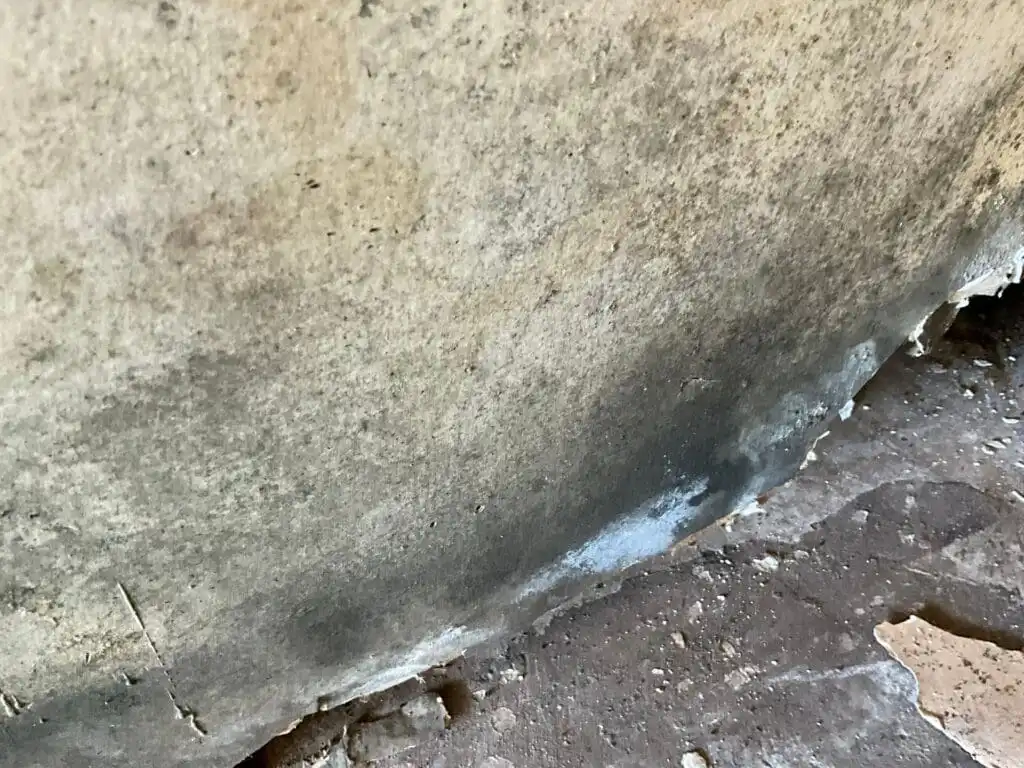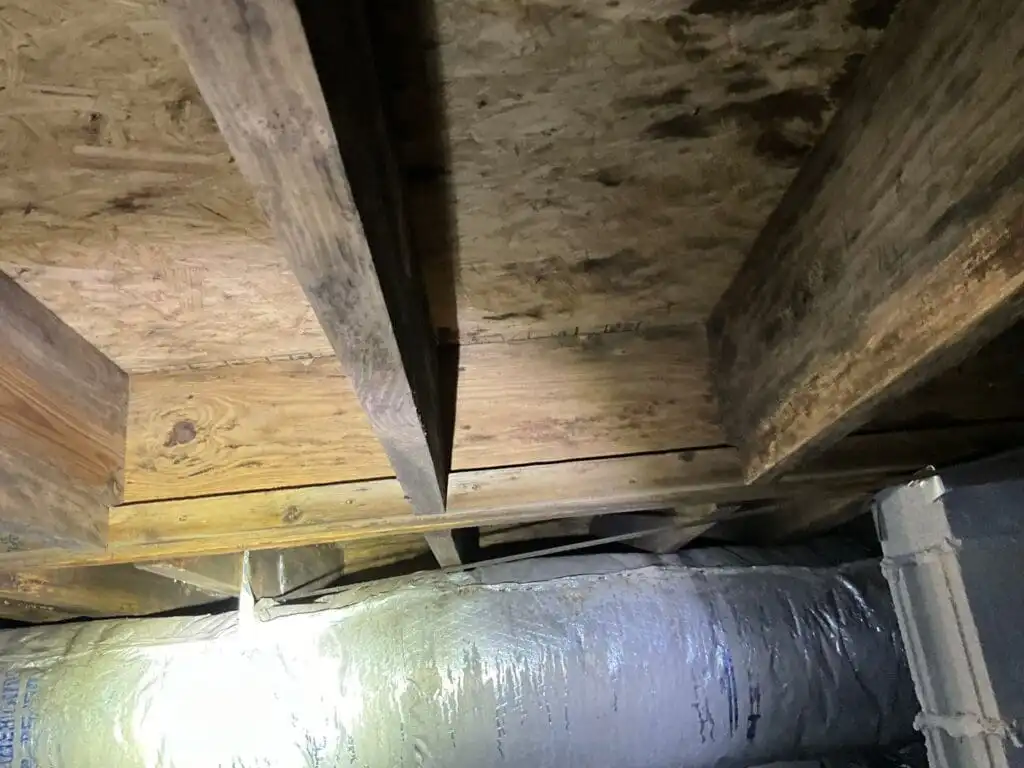
Mold can make people sick. This is not a myth, and it is not limited to the rare cases involving heavy black mold infestations. The health effects of mold exposure are well documented, the populations most at risk are clearly identified, and the mechanism is understood. What is less well understood by most homeowners is how exposure actually happens and why symptoms often get attributed to other causes for months before the source is identified.
How Mold Affects Health
Mold reproduces by releasing microscopic spores into the air. Those spores are inhaled and, depending on the species, the concentration, and the individual, can trigger a range of responses from mild irritation to significant respiratory illness.
The CDC documents that mold exposure can cause nasal and sinus congestion, coughing, wheezing, throat irritation, eye irritation, and skin rashes. In people with asthma, mold exposure can trigger attacks. In people with allergies, it can cause chronic allergic responses that do not respond to typical seasonal allergy treatment because the exposure is continuous — the source is inside the home.
Some mold species produce mycotoxins, chemical compounds that can cause additional effects beyond the allergic response. Stachybotrys chartarum is the most frequently cited example, though mycotoxin production is not consistent across all colonies of a given species and depends on environmental conditions. The EPA recommends treating all indoor mold growth as a problem worth addressing, regardless of species, because the relevant question for health is not which species is present but whether elevated spore concentrations are being inhaled consistently.
Who Is Most at Risk
Some populations are significantly more vulnerable to mold-related health effects:
- Children — whose developing respiratory systems are more susceptible to inflammatory responses and whose exposure per body weight is higher than adults in the same space
- Adults with asthma or COPD — for whom elevated indoor spore concentrations can worsen baseline symptoms and increase attack frequency
- People with allergies — particularly those with existing sensitivities to fungi, which are closely related to mold
- Immunocompromised individuals — including those on chemotherapy, organ transplant recipients, and people with HIV, who face risk of invasive fungal infections from species like Aspergillus that are normally benign
- Elderly adults — whose immune responses are reduced and who may spend more time indoors
Why Symptoms Get Missed
The symptoms of mold exposure closely resemble those of seasonal allergies, recurring colds, and sinus infections. Sinus congestion, fatigue, headaches, and coughing are not specific to mold — they occur with many common conditions. This overlap is why people live with a mold problem for months or longer without connecting their symptoms to their environment.
The pattern that distinguishes mold exposure from typical seasonal illness is location-dependence. Symptoms that consistently improve when leaving the home and return after spending time inside, or that worsen in specific rooms, point toward an indoor air quality problem rather than a general illness. This pattern is worth taking seriously and testing.
Where Mold Hides in Augusta-Area Homes
Augusta, North Augusta, Aiken, and the broader CSRA region sit in a humid subtropical climate. Summers are long and hot with high ambient humidity. Winter brings temperature swings that produce condensation on cold surfaces. This combination creates favorable conditions for mold growth year-round in locations that homeowners rarely inspect:
- Crawl spaces — the most common hidden mold source in this region, where ground moisture contacts wood framing without occupants ever noticing
- HVAC systems and ductwork — where condensation inside supply ducts or in the air handler can support mold that then gets distributed through the house when the system runs
- Behind bathroom and kitchen walls — where slow supply line leaks or failed caulking create sustained moisture behind finished surfaces
- Attics — particularly near bathroom exhaust fan terminations or roof penetrations with minor flashing failures
- Under sinks and behind appliances — refrigerator drip pans, washing machine supply lines, and under-sink connections are frequent sources of slow, undetected leaks
The key characteristic of all these locations is that mold can grow for months without any visible sign at a surface the homeowner would normally see. Spores from a moldy crawl space travel upward into the living space. Spores from moldy ductwork get blown into every room when the system runs. The exposure is real even when there is nothing visible to prompt concern.
What Testing Tells You That Visual Inspection Cannot
A professional mold inspection using air sampling can detect elevated indoor spore concentrations even when no visible mold is present. Air samples collected from the rooms of concern, compared against an outdoor control sample, show whether indoor spore levels are elevated relative to outdoor air and which species are present at elevated concentrations. This tells you whether there is an active indoor mold source and provides direction for where to investigate further.
This kind of testing is particularly useful when symptoms are present without visible growth, when a water event occurred in the past and materials were dried without verification, or when a building has not been assessed since purchase.
Schedule a Mold Inspection
If you or members of your household are experiencing symptoms that improve away from home, or if your home has a history of water events, high humidity, or persistent musty odors, EnviroPro 360 provides professional mold inspection and air sampling across Augusta, North Augusta, Aiken, and the CSRA. Contact EnviroPro 360 to schedule an inspection.