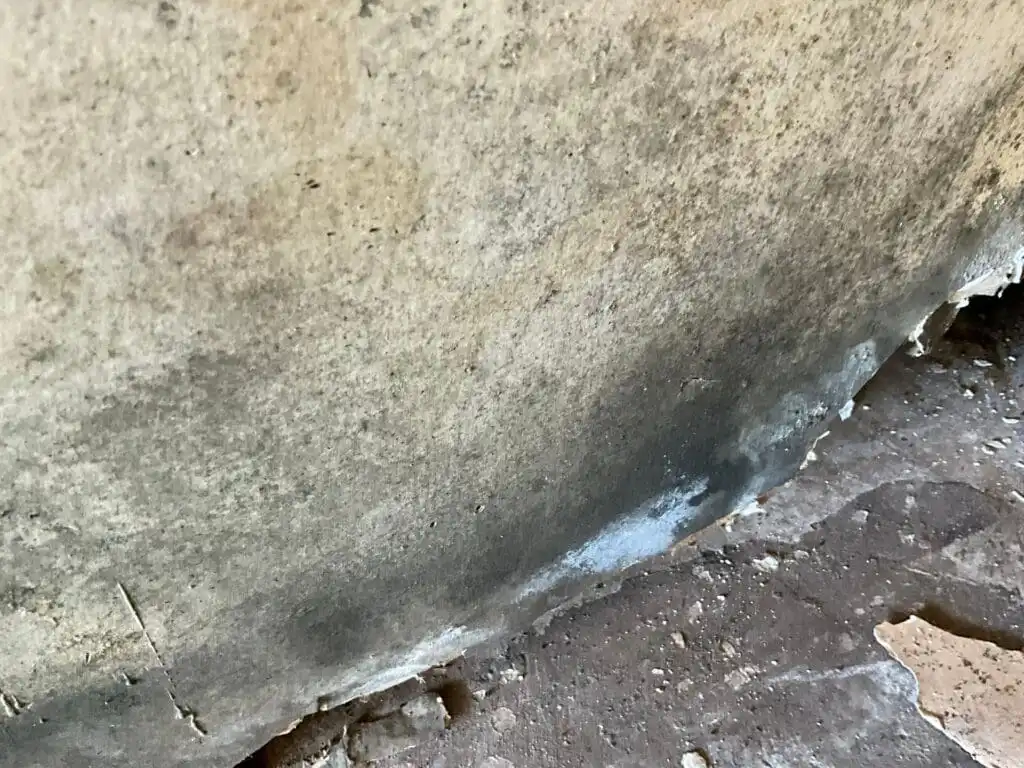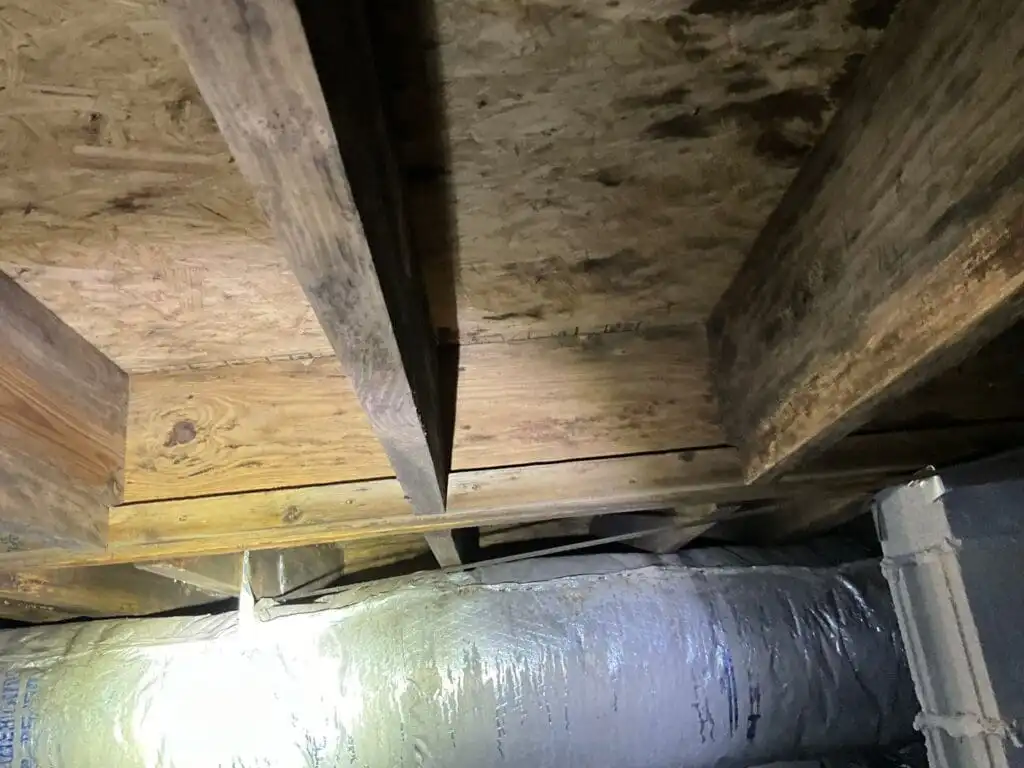
Discovering mold in your home raises an immediate question that most resources answer vaguely: is it safe to stay? The honest answer depends on several factors — how much mold is present, where it is, who is living in the house, and how long the exposure has already been ongoing. This post covers the decision framework clearly so you can make an informed choice rather than either panicking unnecessarily or dismissing a genuine risk.
The Factors That Determine Risk
Not all mold discoveries require immediate relocation. The risk to occupants depends on:
- Location of the mold. Mold on the grout around a bathroom sink presents different exposure risk than mold in HVAC ductwork, which distributes spores to every room in the house continuously while the system runs.
- Extent of growth. A two-inch patch on a bathroom ceiling tile is not the same situation as mold covering the back side of a wall cavity or extensive growth across crawl space floor joists.
- Whether the source is still active. Mold on a surface that was wet and dried out represents a different ongoing risk than mold being fed by a slow leak that is still running.
- Who is in the house. Healthy adults without respiratory conditions have more tolerance than infants, children, elderly adults, pregnant individuals, or anyone with asthma, COPD, allergies, or a compromised immune system.
- Symptom presence. If occupants are already experiencing respiratory symptoms, fatigue, or headaches that improve when away from home, continued exposure while arrangements are made carries meaningful health risk.
When Staying Is Likely Acceptable Short-Term
Staying in the home while making arrangements is generally lower-risk when all of the following are true: the visible mold is small (less than 10 square feet total), it is on a non-porous or semi-porous surface rather than inside a wall cavity or the HVAC system, the moisture source has been fixed, no occupants are experiencing symptoms, and no high-risk individuals are in the household.
Under these conditions, improving ventilation in the affected area, avoiding disturbing the visible mold (which spreads spores), and scheduling professional testing promptly is a reasonable approach.
When You Should Seriously Consider Leaving
The EPA recommends professional remediation when mold growth covers more than 10 square feet, and most professional guidance treats HVAC involvement as a separate high-priority concern regardless of visible area. Consider temporary relocation or staying elsewhere while remediation is arranged if:
- Mold is visible in or near the HVAC system, on air handler components, or on ductwork
- There is extensive mold growth behind drywall, in a crawl space, or in an attic
- Any occupant is already experiencing respiratory symptoms that worsen at home and improve when away
- There are infants, very young children, or immunocompromised individuals in the household
- The musty odor is strong and present in multiple rooms, indicating widespread active growth
- A water event occurred that soaked porous materials and they were not professionally dried
The CDC notes that people with allergies, asthma, or immune system conditions are at higher risk from mold exposure and should take exposure concerns more seriously than the general population. If anyone in this category is experiencing symptoms, the decision to stay should weigh that health risk explicitly.
The HVAC Problem Is Different from Visible Mold
Mold growing in HVAC ductwork or on air handler components is a category of its own because it eliminates the “stay in the unaffected rooms” option. Every time the system runs, spores from the contaminated component get pushed through supply ducts to every room in the house. Occupants are exposed throughout the entire living space, not just near the mold source.
In Augusta and the CSRA, where cooling systems run from April through October and heating systems cycle through winter, an HVAC mold problem means essentially continuous exposure during occupied hours. This is one situation where staying while arrangements are made carries real risk, particularly for children and anyone with respiratory conditions.
What Testing Tells You
Air sampling by a professional inspector takes the guesswork out of the decision. Samples collected from the affected and adjacent rooms, compared against an outdoor baseline, show whether indoor spore concentrations are elevated to levels that represent meaningful exposure risk. This gives you an objective basis for the stay-or-leave decision rather than relying on visual assessment alone, which consistently underestimates the extent of mold problems.
If testing shows indoor levels are not significantly elevated above outdoor air despite visible surface mold, the exposure risk is lower and staying while coordinating remediation is more defensible. If levels are substantially elevated, that confirms the urgency of the situation.
Schedule a Mold Inspection
If you have found mold in your Augusta-area home and need an objective assessment of the extent and exposure risk, EnviroPro 360 provides professional mold inspection and air sampling to give you the information needed to make informed decisions. Contact EnviroPro 360 to schedule an inspection.