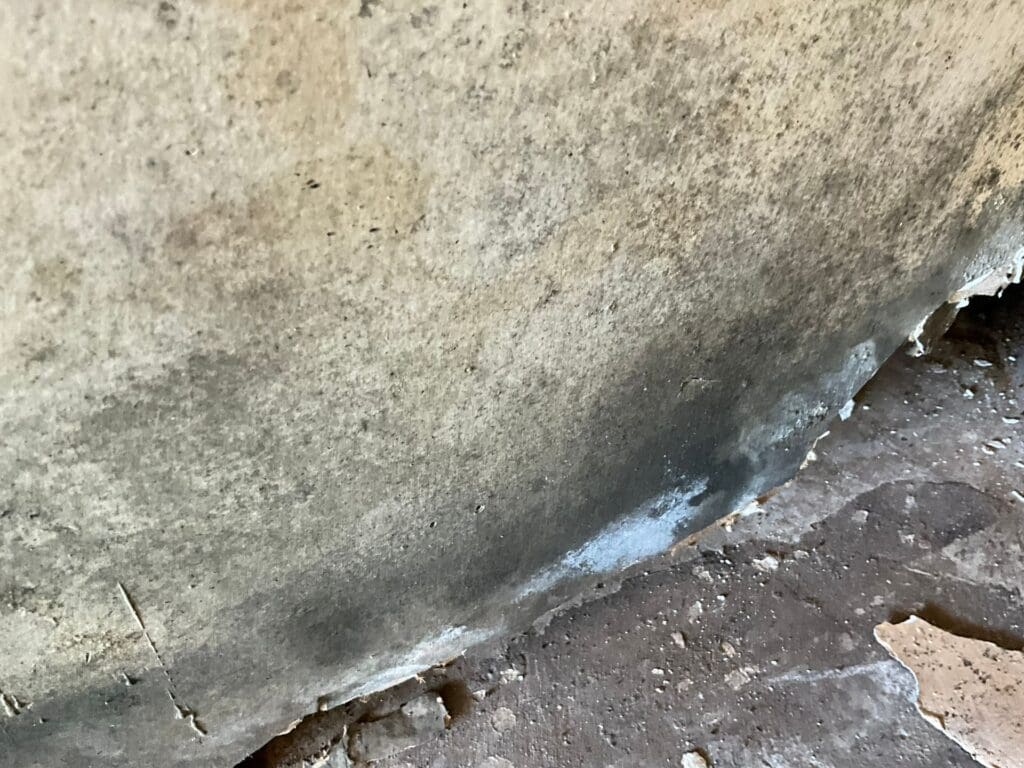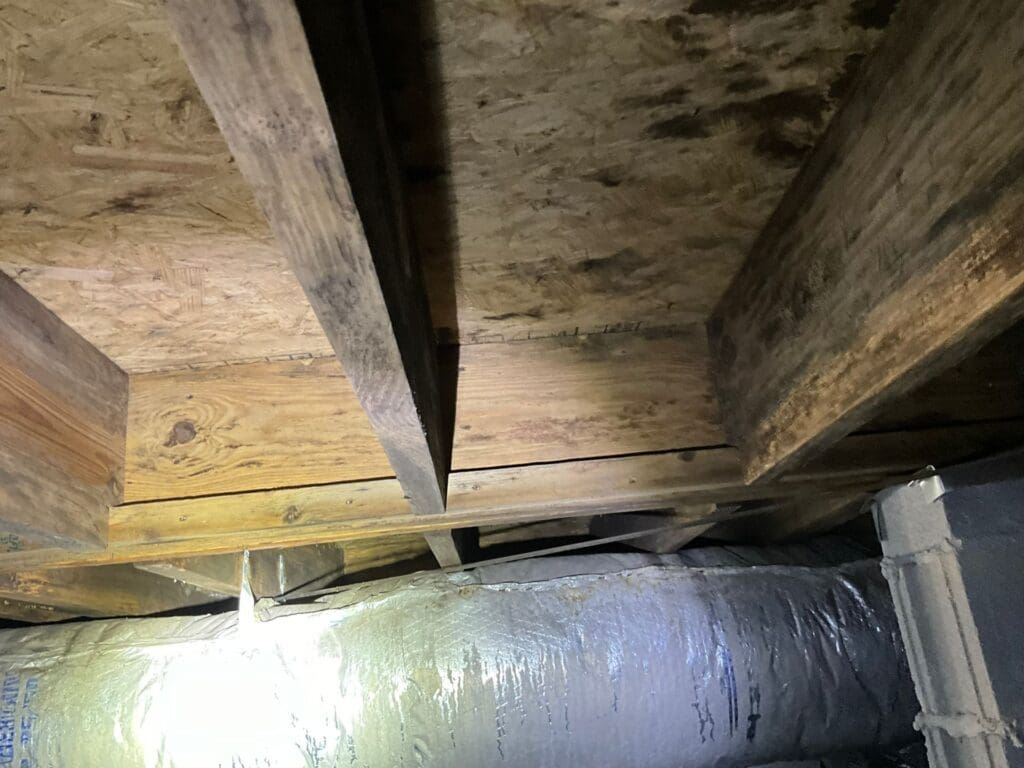
In Augusta and the CSRA, HVAC systems run for most of the year. Cooling begins in April and often does not stop until October. Heating fills the gap. That near-continuous operation, combined with the region’s humidity, creates ideal conditions for mold growth inside ductwork, drain pans, and air handler components — where the mold stays invisible while the system distributes spores to every room in the house.
If you or someone in your household has been coughing, dealing with persistent sinus congestion, or experiencing symptoms that improve when away from home, the HVAC system is one of the first places worth investigating.
Why HVAC Systems Develop Mold
An air conditioning system removes heat and moisture from indoor air. The moisture condenses on the evaporator coil and drains away through a condensate line. When any part of this system fails or is neglected, water accumulates where it should not:
- A clogged condensate drain line causes water to back up and overflow the drain pan, wetting insulation, drywall, and the air handler cabinet itself
- An overflowing drain pan from a cracked pan or misaligned unit allows water to pool beneath the air handler for days or weeks
- Condensation on supply ductwork in humid attic spaces or crawl spaces forms when cold conditioned air passes through ducts surrounded by warm, humid outdoor air
- Dirty evaporator coils or restricted airflow cause the coil to freeze and then flood when it thaws
Once water reaches insulation, duct liner, or the fibrous materials inside an air handler, mold can establish within 24 to 48 hours. Unlike mold on a bathroom wall, HVAC mold does not stay in one place. The system itself distributes spores through every supply duct to every room it serves. Occupants are exposed continuously during all occupied hours.
Signs of Mold in Your HVAC System
HVAC mold often produces recognizable patterns before it becomes extensive enough to see:
- A musty or earthy odor that appears specifically when the system starts running and fades when it stops
- Respiratory symptoms — coughing, sneezing, sinus congestion, throat irritation — that improve noticeably when occupants leave home and return when they are back inside
- Dark staining around supply vent covers on ceilings or walls
- Visible discoloration on the air filter after a short period of use
- Condensation or water staining around the air handler or on supply ducts in the attic or crawl space
The location-dependent symptom pattern — worse at home, better away — is the most reliable behavioral indicator that an indoor air quality problem is present, regardless of whether HVAC mold is confirmed.
Health Effects of HVAC Mold Exposure
The EPA notes that mold in HVAC systems is a recognized indoor air quality concern because of the system’s role in distributing contaminated air throughout the building. The health effects depend on the species present, the concentration of spores, and the susceptibility of the occupant.
The CDC documents that mold exposure can cause nasal and sinus congestion, coughing, wheezing, throat irritation, and eye irritation. People with asthma are at particular risk — mold spore exposure is a recognized asthma trigger, and an HVAC system moving contaminated air means exposure occurs throughout the home during all occupied hours rather than only in proximity to visible mold growth.
Children, elderly adults, and people with compromised immune systems face higher health risk from the same exposure levels that might produce only mild symptoms in healthy adults.
What to Do If You Suspect HVAC Mold
Several actions are useful while arranging professional inspection:
- Check and replace the air filter — a heavily contaminated filter can be both a symptom of and a contributing factor to system mold problems
- Check the area around the air handler for water staining, standing water, or visible mold on adjacent surfaces
- If symptoms are severe or an immunocompromised person is in the household, consider reducing system use until an inspection can confirm whether the HVAC is involved
- Do not spray bleach or other chemicals into vents or ductwork — this disperses spores without addressing the source and can damage duct liner
What Professional Testing Determines
Air sampling by a certified inspector compares indoor spore concentrations to an outdoor baseline and can identify whether spore levels are elevated and which species are present. HVAC-specific testing can include surface sampling inside the air handler, sampling at supply registers while the system is running, and moisture mapping with thermal imaging to locate condensation or hidden water in ductwork and surrounding materials.
This testing establishes whether elevated exposure is occurring and where the source is — information necessary for effective remediation rather than surface cleaning that leaves the underlying moisture problem unresolved.
Schedule an HVAC Mold Inspection
EnviroPro 360 provides professional mold inspection and air sampling across Augusta and the CSRA, including HVAC-specific testing, drain pan and air handler inspection, and thermal imaging for hidden moisture in ductwork. Contact EnviroPro 360 to schedule an inspection.