An Atlanta veteran went into the hospital for care and never made it home.
In the days before his death, he developed pneumonia, and later tested positive for Legionella, the water‑borne bacteria that can cause a severe, sometimes fatal form of pneumonia called Legionnaires’ disease.
In response, the Atlanta VA Medical Center cleared an entire floor of patients and launched emergency disinfection and testing of its water systems, even though tests on that same floor had been negative for the past two years. This was not a failing, rural facility. It was a major federal medical center that routinely monitored its building systems, and Legionella still found a way in.
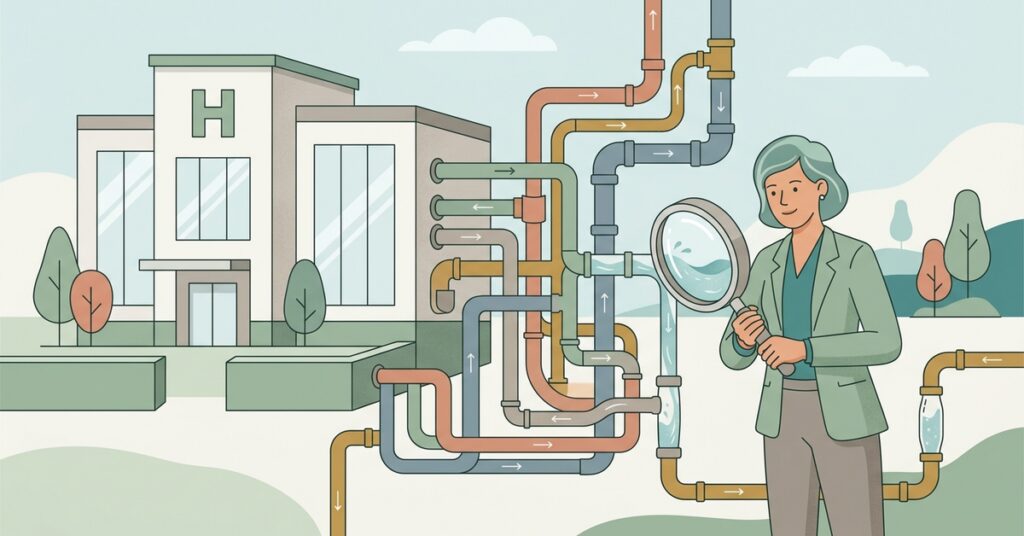
For hospitals, senior living communities, hotels, and commercial properties across Augusta and the rest of Georgia, that should hit close to home. If a highly resourced medical center can be caught off‑guard, any building that relies on complex plumbing, cooling, and hot‑water systems needs to ask a simple question: “How confident am I that Legionella isn’t quietly growing here right now?
What Is Legionella and How Does It Spread?
Legionella is a type of water‑borne bacteria that lives naturally in freshwater but becomes dangerous when it multiplies inside man‑made building water systems. When water containing Legionella turns into a fine mist or spray—from a showerhead, faucet, cooling tower, decorative fountain, hot tub, or even certain ice machines—people can breathe in tiny droplets and potentially develop a serious lung infection called Legionnaires’ disease.
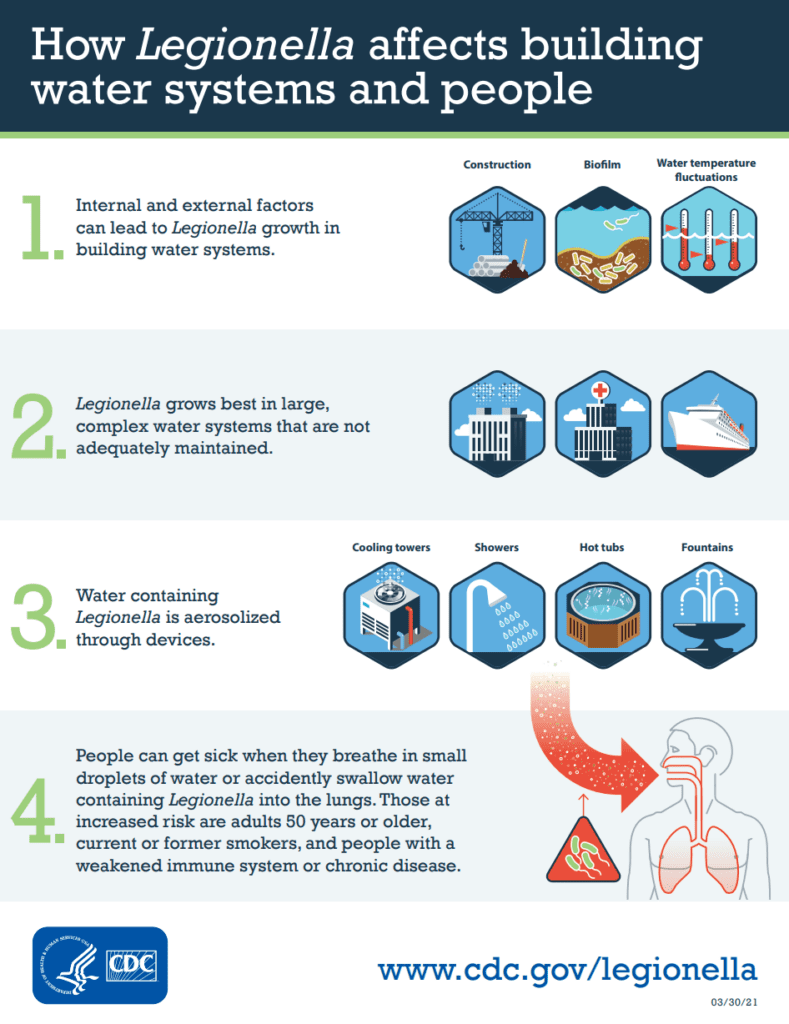
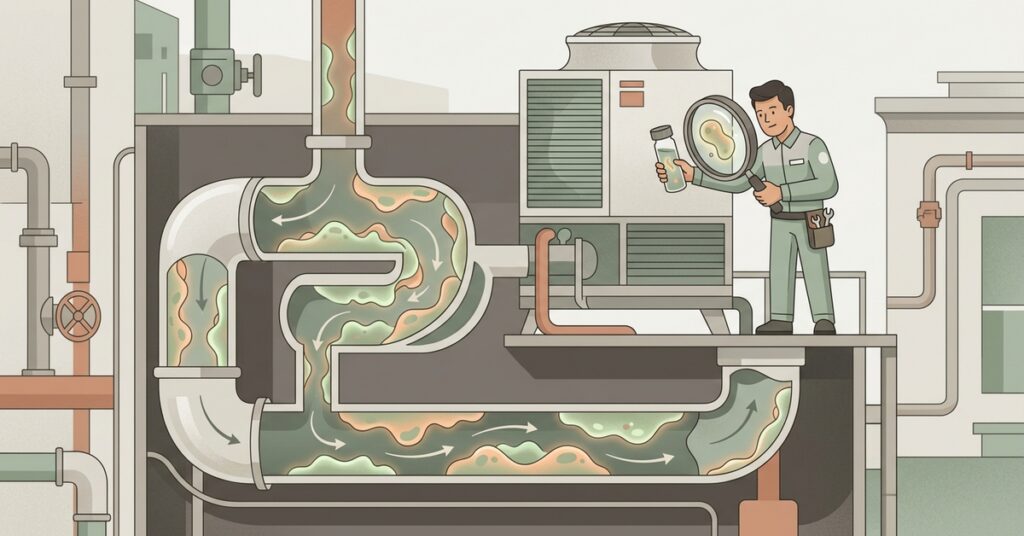
These bacteria thrive in warm, stagnant water and in areas with scale, rust, or biofilm, which is why large, complex plumbing systems are a particular concern. In real‑world buildings, that includes everyday fixtures like showers and sinks, hot and cold-water tanks, cooling towers, decorative water features, humidifiers and misters, and ice machines that can aerosolize contaminated water.
Most healthy people exposed to Legionella do not get sick, but certain groups are much more likely to develop Legionnaires’ disease if they inhale contaminated droplets. People at highest risk include adults over 50, current or former smokers, and anyone with a weakened immune system or chronic conditions such as cancer, chronic lung disease (including COPD), diabetes, kidney failure, or liver disease. For hospitals, VA facilities, nursing homes, and senior living communities, that profile describes many of the people they serve every day; which is why understanding and testing for Legionella is so critical.
Why “Negative Last Year” Isn’t Good Enough
On paper, the Atlanta VA did a lot of things right: the hospital reports that routine tests of the water system on the floor where the veteran was treated had been negative for Legionella for the last two years. Yet an immunocompromised patient on that same floor still developed pneumonia and later tested positive for Legionella, forcing the VA to relocate patients and hyper‑chlorinate the affected area. That contrast makes one thing clear for any facility manager: a clean result from last year—or even last quarter—does not guarantee that today’s water is low‑risk.
Water systems are dynamic, not static. Conditions that keep Legionella in check can quietly shift with building changes, like renovations that create “dead legs” of unused piping, partial shut‑downs, or wings that sit empty for weeks. Stagnant or slow‑moving water allows disinfectant levels to drop and temperatures to drift into the ideal Legionella growth range, which CDC notes can significantly increase the risk of growth and spread. Seasonal swings in occupancy, such as off‑peak hotel seasons or reduced use of certain hospital rooms, have the same effect: more water sitting in pipes, more time for biofilm to form, and more opportunity for a small amount of Legionella to multiply into a serious problem.
Even in well‑managed buildings, Legionella can sometimes be detected, which is why CDC emphasizes that routine testing is best used to check whether a water management program is working and to track trends over time; not as a one‑time box to tick. A single negative test only describes the sample you took at that moment; it doesn’t account for tomorrow’s construction project, next month’s occupancy dip, or an unnoticed lapse in flushing or temperature control. For medical facilities that serve high‑risk populations, that reality argues for ongoing Legionella surveillance and responsive maintenance, not comfort in old test results.
From Emergency Cleanups of Legionella to Everyday Prevention
When Legionella shows up in a vulnerable patient, buildings are forced into crisis mode: moving people off affected floors, shutting down fixtures, shocking the plumbing with high levels of disinfectant, and scrambling to communicate with families and regulators—as the Atlanta VA had to do after the veteran’s death. This kind of emergency response is disruptive, costly, and reputationally damaging, and it still comes too late for the person who got sick.
A prevention‑first approach flips that script. Instead of waiting for illness to reveal a hidden problem, facilities put a water management program in place that controls temperature, maintains disinfectant levels, flushes low‑use outlets, and includes routine Legionella testing as a performance check. Public health guidance from CDC emphasizes that environmental testing is a powerful way to verify that a water management plan is working as intended and to spot Legionella growth trends before they translate into disease. Regular sampling and lab analysis turn your water system from a mystery into a measurable, manageable risk; so adjustments can be made while the threat is still on paper, not in your ICU.
How EnviroPro 360 Helps Protect Georgia and South Carolina Facilities
When you’re responsible for a hospital, senior living community, hotel, campus, or commercial building, you need a partner who understands real‑world building systems—not just lab reports. EnviroPro 360 is a locally based environmental testing firm in the Augusta area, working with property owners and facility teams across Georgia and South Carolina on issues like indoor air quality, mold, asbestos, and other environmental health risks, so Legionella testing fits naturally into the expertise we already bring to complex buildings.
A typical Legionella engagement starts with a focused site review: walking the property, identifying high‑risk fixtures and loops (showers, patient rooms, cooling towers, decorative water features, ice machines, low‑use outlets), and talking through how the building is actually used day to day. From there, EnviroPro 360 develops a targeted sampling plan that balances thoroughness with practicality: selecting representative locations, timing samples around operational realities, and coordinating with your team so there are no surprises.
Collected samples are then sent to accredited laboratories that use recognized Legionella testing methods, and the raw lab data is translated into clear, decision‑ready reporting. Instead of pages of numbers with no context, facility managers receive a plain‑language summary of where Legionella was found (if at all), what the results mean for risk levels, and prioritized next‑step recommendations—such as additional flushing, temperature adjustments, secondary disinfection options, or follow‑up testing intervals.
For facility leaders in Augusta, Aiken, Columbia, Savannah, Atlanta, and beyond, EnviroPro 360 is positioned to be an ongoing partner rather than a one‑time vendor: helping design testing schedules, documenting your preventative efforts, and updating sampling plans as your buildings change. If you manage a hospital, senior living community, hotel, school, or large commercial property anywhere in Georgia or South Carolina and want to know what’s really happening inside your water system, now is the time to schedule a Legionella risk review and testing plan with EnviroPro 360—before your next headline writes itself.