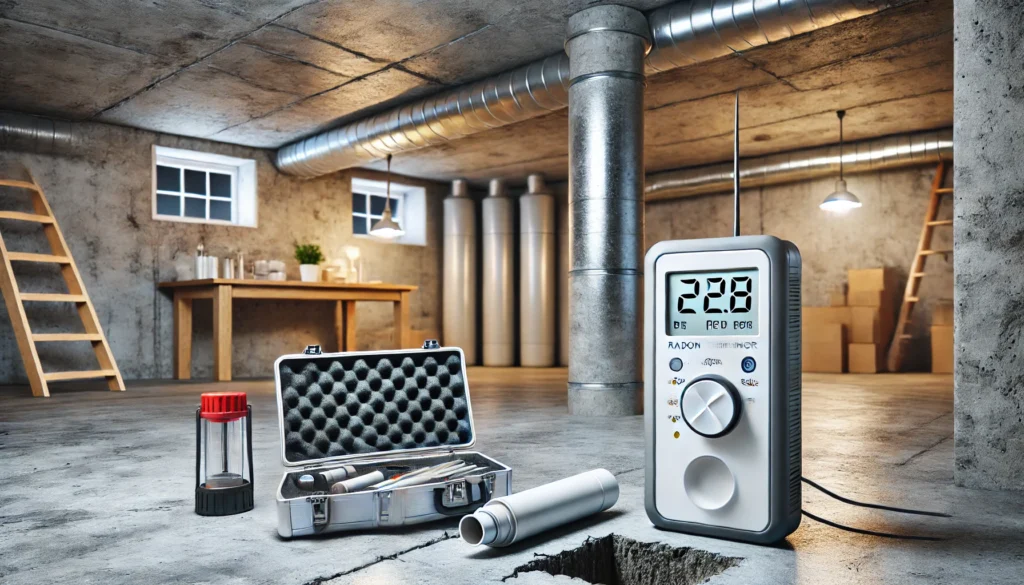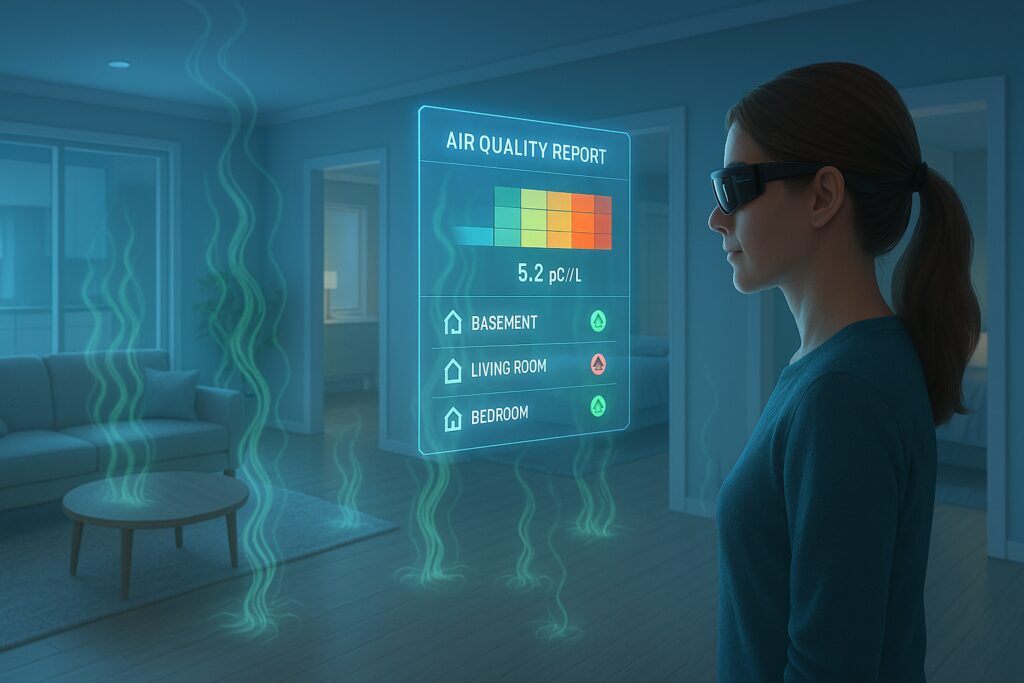
Here’s an example scenario: a family in Columbia County ran a 48-hour charcoal canister test last October. The result came back at 2.8 pCi/L (picocuries per liter, the standard unit for radon measurement), comfortably below the EPA action level of 4.0 pCi/L. They felt good about the number and moved on.
Eight months later, during a home sale, the buyer ran a long-term test. The result was 6.4 pCi/L. Same house, same basement, more than double the reading.
Neither test was wrong. They measured different things. Understanding why is the difference between making a decision based on a snapshot and making one based on the full picture.
What Short-Term and Long-Term Tests Actually Measure
Radon levels in a home fluctuate constantly. The concentration in your basement at 3:00 a.m. on a rainy Tuesday in February looks almost nothing like the concentration at 2:00 p.m. on a dry Sunday in July. Weather, wind direction, how often you open doors, whether the HVAC is running, even the barometric pressure, all change how much radon moves from the soil into your living space.
A short-term test (anything running 2 to 90 days) captures a slice of this variation. Most short-term tests use passive devices like charcoal canisters or alpha-track detectors that sit in the lowest livable level of your home for 48 hours to 7 days. They tell you what radon levels were during that specific window.
A long-term test (longer than 90 days, typically 3 to 12 months) averages those fluctuations across seasons. According to the EPA’s Citizen’s Guide to Radon, long-term tests are more likely to give you a reading that reflects your year-round average exposure. That is the number that actually matters for your lung cancer risk.
Why the Season Matters in Georgia
Radon concentrations tend to peak in winter and drop in summer. In the CSRA, where most homes use central heating and close up tight from November through February, radon gets trapped inside more than it does when windows are open and the HVAC is cycling less. A short-term test run in January will almost always read higher than the same test run in July.
That means if you are relying on a single short-term test, the season you chose matters:
- Winter short-term test: Likely reflects your worst-case scenario. Good for catching problems.
- Summer short-term test: Likely reflects your best-case scenario. Easy to get a falsely reassuring number.
- Long-term test: Averages both and gives you your actual annual exposure.
Georgia’s red clay soil and widespread use of basements and crawl spaces across the CSRA make radon variability especially pronounced. Homes in counties flagged as Zone 1 by the EPA (predicted average indoor radon levels above 4 pCi/L) can see swings of 3 to 4 pCi/L between seasons in the same house.
When to Use Each Type of Test
Both tests have legitimate uses. The right one depends on what you are trying to accomplish.
Use a Short-Term Test When:
- You need a result fast. Real estate transactions in Georgia typically require a result within the inspection period, which is usually 7 to 14 days. A long-term test is not practical here.
- You are screening a home you have never tested. A short-term test can tell you quickly whether you have a potential problem worth investigating further.
- You are following up after mitigation. After a radon mitigation system has been installed, a short-term test confirms the system is reducing levels below the EPA action level. Many radon professionals recommend a short-term test 24 hours to 30 days after the system starts running.
Use a Long-Term Test When:
- Your short-term test came back borderline. Anything between 2.0 and 4.0 pCi/L is in a gray zone. A long-term test gives you a more reliable number to base a decision on.
- You want to know your actual exposure risk. If you are concerned about radon but not in the middle of a transaction, a long-term test is the gold standard.
- You have a finished basement or daily-occupied lower level. Cumulative exposure matters more than peak exposure. If your family spends significant time in a below-grade space, a year-long reading tells you more than a 48-hour snapshot.
The Two-Test Approach
The EPA’s guidance for accuracy is often to do both. Start with a short-term test. If the result is at or above 4.0 pCi/L, do a follow-up test before spending money on mitigation. You can follow up with either a second short-term test (for speed) or a long-term test (for accuracy). The CDC also recommends retesting to confirm elevated results before acting on them.
If your follow-up is a short-term test and it confirms elevated levels, the EPA recommends mitigation. If your follow-up is a long-term test averaging above 4.0 pCi/L, mitigation is clearly warranted.
Common Testing Mistakes That Skew Results
Even the best test can give you bad data if the conditions are wrong. For either test type, keep these rules in mind:
- Place the test in the lowest livable level. A basement bedroom counts. A basement that is only used for storage and has no air circulation to the rest of the house does not.
- Close the house up for 12 hours before and during short-term tests. Windows closed, exterior doors used only for normal coming and going. Heavy ventilation during the test will artificially lower the reading.
- Do not place the test in a kitchen, bathroom, or laundry room. Humidity and airflow in these rooms distort charcoal canister readings.
- Keep the test 20 inches above the floor and at least 4 inches from walls. The standard is about breathing height for a seated adult.
- Run short-term tests for the full recommended period. Pulling a canister at 36 hours instead of 48 can produce an unreliable reading.
What the Number Means Once You Have It
The EPA’s action level is 4.0 pCi/L. Above that, the agency recommends mitigation. Between 2.0 and 4.0 pCi/L, the EPA suggests you “consider” mitigation because no level of radon is risk-free. Below 2.0 pCi/L, retesting every two years or after major changes to your home (renovations, HVAC replacement, foundation work) is still a good idea.
One test result is data. A pattern across tests is truth. If you tested once a decade ago and nothing has changed, the reassurance you felt then does not necessarily apply now. Homes shift, foundations crack, HVAC systems get replaced, and radon levels change with them.
Your Next Steps
- If you have never tested your home, start with a short-term test during a season when the house is typically closed up (late fall through early spring in Georgia gives you the most useful reading).
- If your short-term result is above 2.0 pCi/L, follow up with a long-term test or a second short-term test before deciding on mitigation.
- If you are in an active real estate transaction, use a short-term test from a professional tester to meet inspection deadlines, then plan a long-term test after closing to confirm the reading.
If you have questions about which radon test is right for your situation, or you want help interpreting a result you already have, the EnviroPro 360 team is happy to talk you through it. Reach out any time.