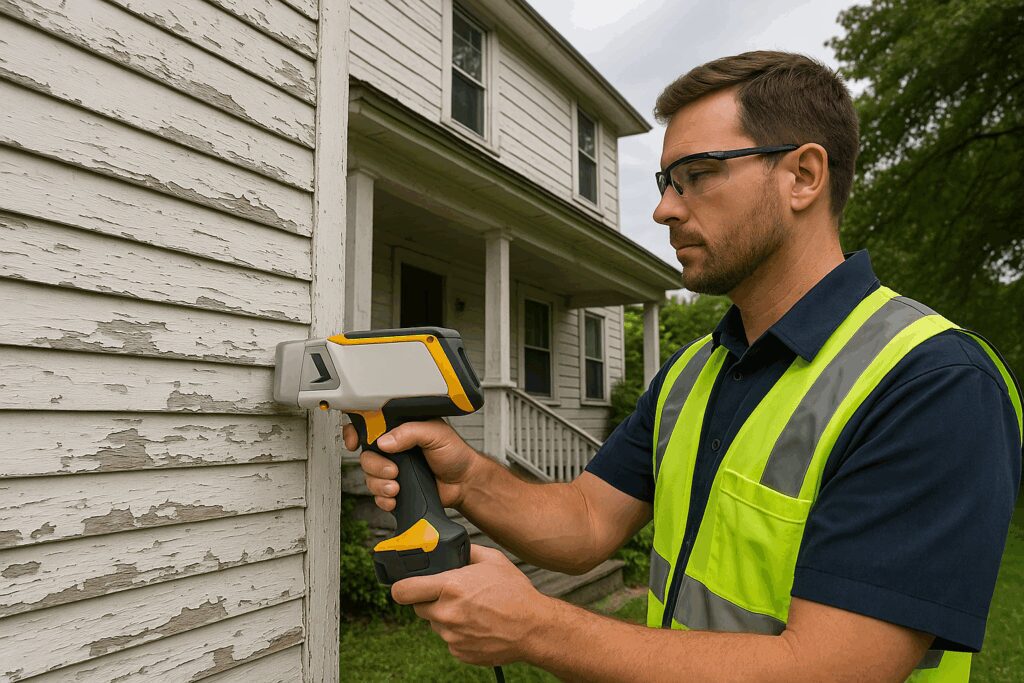
Here’s an example scenario: a landlord in Augusta owns three rental houses, all built in the early 1960s. He’s rented them for years without mentioning lead paint to any tenant. He doesn’t think much of it because he’s never tested and doesn’t know for sure whether lead paint is present. Then a tenant’s child is diagnosed with elevated blood lead levels. The county health department traces the exposure to deteriorating paint in the rental. The landlord now faces a federal disclosure violation, potential treble damages in a civil lawsuit, and the cost of lead hazard remediation across all three properties.
He didn’t know the paint was lead. He also didn’t know that not knowing doesn’t matter. The federal disclosure law requires landlords to share what they know, but the law also makes clear that ignoring the issue doesn’t provide legal protection when a tenant is harmed.
The Federal Disclosure Requirement
The EPA and HUD’s Section 1018 Disclosure Rule requires landlords of pre-1978 residential housing to take specific steps before a new tenant signs a lease. The rule applies to virtually all rental housing built before 1978, with narrow exceptions for housing exclusively for elderly or disabled persons (where children under 6 are not expected to reside), studio apartments, and short-term vacation rentals of 100 days or less.
For every covered lease transaction, landlords must:
Disclose known lead-based paint. If you know that lead-based paint is present in the unit (from previous testing, a prior owner’s disclosure, or any other source), you must inform the tenant.
Provide available records. Any existing reports, inspection results, or documentation related to lead-based paint in the property must be provided to the tenant.
Give the EPA pamphlet. Every new tenant must receive a copy of “Protect Your Family From Lead in Your Home,” the EPA’s standardized information pamphlet about lead hazards.
Include the disclosure form. The lease must include or be accompanied by a lead paint disclosure form, signed by both landlord and tenant, documenting that these obligations have been met.
The rule does not require landlords to test for lead paint. It does not require landlords to remove lead paint. It requires disclosure of what you know and provision of standard information so tenants can make informed decisions.
Ongoing Maintenance Obligations
The disclosure rule addresses what happens at lease signing. But landlords have additional obligations regarding the ongoing condition of lead-based paint in their properties, particularly under HUD regulations and state housing codes.
Maintaining paint in good condition. In most jurisdictions, landlords must maintain rental properties in habitable condition. Peeling, chipping, or deteriorating paint in a pre-1978 home creates a lead hazard. Georgia’s landlord-tenant laws require landlords to maintain rental premises in a fit and habitable condition, which includes addressing deteriorating painted surfaces.
Response to identified hazards. If a tenant reports deteriorating paint, or if a child in the home is identified with elevated blood lead levels and the property is identified as the exposure source, the landlord has an obligation to address the hazard. The CDC considers any deteriorating lead-based paint in housing where children under 6 reside to be a lead hazard requiring intervention.
HUD-assisted housing. Landlords who receive any HUD assistance (Section 8 vouchers, project-based subsidies) face additional requirements under HUD’s Lead Safe Housing Rule (24 CFR Part 35). These include visual assessments for deteriorating paint before each new tenancy, paint stabilization of any deteriorating surfaces, and ongoing monitoring. Failure to comply can result in loss of HUD assistance.
The EPA’s RRP Rule for Rental Maintenance
When landlords or their contractors perform maintenance, repair, or painting work that disturbs painted surfaces in pre-1978 rental housing, the EPA’s Renovation, Repair, and Painting (RRP) Rule applies.
This means that work disturbing more than 6 square feet of interior painted surface or 20 square feet of exterior painted surface must be performed by or supervised by an EPA-certified renovator using lead-safe work practices. This includes common maintenance activities like window replacement, door hanging, plumbing repairs that require opening walls, and exterior scraping and repainting.
Many landlords are unaware that the RRP Rule applies to routine maintenance, not just major renovation. Sending an uncertified handyman to scrape and repaint a window in a 1965 rental house violates the RRP Rule if the paint contains lead and the disturbance exceeds the threshold.
Liability Exposure
Landlords who fail to comply with lead paint requirements face exposure on multiple fronts:
Federal civil penalties. EPA and HUD can impose penalties of up to $19,507 per violation of the disclosure rule. Each lease transaction without proper disclosure is a separate violation.
Treble damages. Tenants who suffer harm from undisclosed lead hazards can sue for up to three times their actual damages under Section 1018.
Personal injury claims. If a child develops lead poisoning traced to a landlord’s property, the landlord faces potential negligence claims. These claims can be substantial, as the developmental and neurological effects of childhood lead poisoning are well-documented, permanent, and costly.
Property condemnation. In severe cases, local code enforcement can condemn a property with uncontrolled lead hazards, making it unleasable until remediation is complete.
What Georgia Landlords Should Know
Georgia does not have a state lead paint law that goes beyond federal requirements. The federal disclosure rule is the governing standard. However, Georgia’s general landlord-tenant statute requires landlords to maintain rental premises in a fit and habitable condition, and deteriorating lead-based paint in a home where children reside is a habitability issue.
In the CSRA, much of the affordable rental housing stock dates from the 1950s and 1960s, precisely the era when lead paint use was most prevalent. Landlords with properties in older neighborhoods of Augusta, Waynesboro, Sandersville, and surrounding communities should be particularly attentive.
What Landlords Should Do
-
Include the disclosure form in every lease. Make it a standard part of your lease package for any pre-1978 property. It takes five minutes and protects you legally. Keep signed copies in your files permanently.
-
Inspect paint condition between tenants. Before each new tenancy, walk through and check for peeling, chipping, or deteriorating paint on all surfaces, especially window sills, door frames, and exterior trim. Address any deterioration before the new tenant moves in.
-
Consider proactive testing. While not required, knowing whether your properties contain lead-based paint gives you clear information to disclose and allows you to plan for maintenance and remediation proactively. Testing typically costs $300 to $600 per unit.
If you own pre-1978 rental properties and want to understand your lead risk, or if you need lead testing to make informed decisions about your portfolio, the EnviroPro 360 team can help. Get in touch and we’ll help you get a clear picture.