If your home was built before 1978, lead-based paint may be present somewhere in the structure. The EPA estimates that lead-based paint is present in approximately 87% of homes built before 1940 and in about 24% of homes built between 1960 and 1977. Lead paint that is intact and undisturbed typically does not pose an immediate hazard. The risk begins when that paint deteriorates, is disturbed during renovation, or is sanded and scraped in ways that generate dust and particles. Knowing whether your home contains lead paint, and where, is the starting point for managing that risk.
How Lead Paint Becomes a Health Hazard
Lead was added to paint because it improved durability, adhesion, and drying time. It was used extensively in residential construction until it was banned for residential use by the EPA in 1978. In older homes, lead paint was applied to interior trim, window frames, doors, walls, and exterior surfaces. Over time, that paint can deteriorate through weathering, friction from windows and doors, or simple aging. As it deteriorates it produces lead dust and paint chips.
Lead dust is the primary exposure route for both children and adults. It settles on floors, windowsills, and horizontal surfaces where it can be ingested or inhaled. The CDC notes that there is no safe blood lead level in children and that lead exposure causes neurological damage that is not reversible. In adults, lead exposure is associated with hypertension, kidney damage, and reproductive effects. The hazard is not the presence of lead paint itself but the generation of lead dust and its accumulation in living spaces.
Signs That Lead Paint May Be Present
There is no way to identify lead paint visually with certainty. Age of construction is the most reliable indicator. If your home was built before 1978, suspect that lead paint may be present on any painted surface until testing proves otherwise. Specific conditions that increase the likelihood of lead paint exposure include:
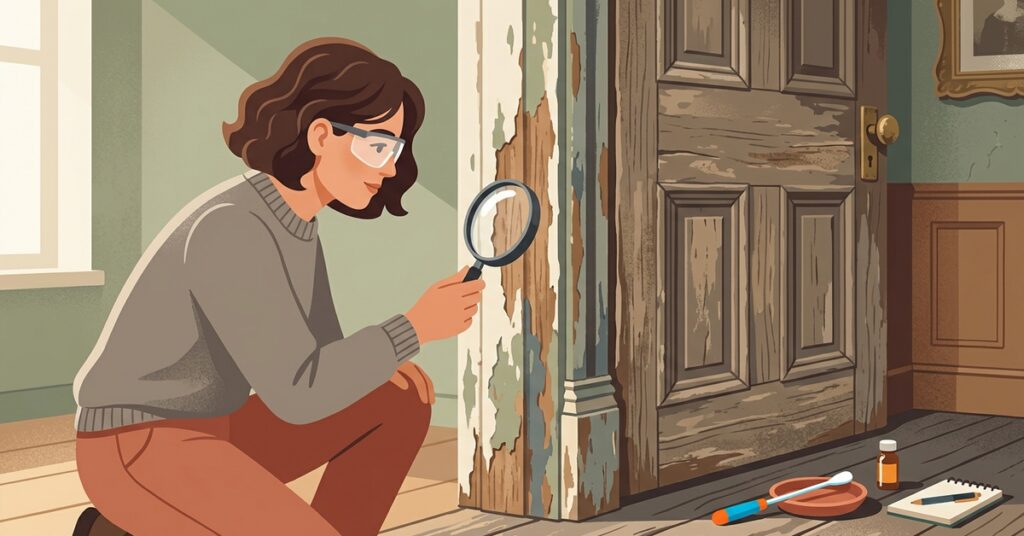
- Paint that is peeling, chipping, chalking, or cracking, particularly on friction surfaces like windows and doors
- Paint with an alligator-skin texture pattern, which is characteristic of aged oil-based paint that may contain lead
- Visible dust accumulation on windowsills, door frames, or baseboards in areas where paint is deteriorating
- A history of renovation work that involved sanding, scraping, or demolishing painted surfaces without lead-safe work practices
- Children in the household who have had elevated blood lead levels identified by a physician
These signs indicate that testing is warranted, but their absence does not confirm the home is lead-free. The only way to know whether a surface contains lead paint is to test it.
Testing Options: DIY Kits vs. Professional Testing
Hardware store lead test swabs are inexpensive and fast, but they have significant limitations. They produce false negatives on multi-layered paint where lead paint is buried beneath newer coats, and they cannot tell you where lead is concentrated, what percentage of painted surfaces are affected, or what your actual exposure risk is. A positive result tells you lead is present somewhere; it cannot tell you where or how much.
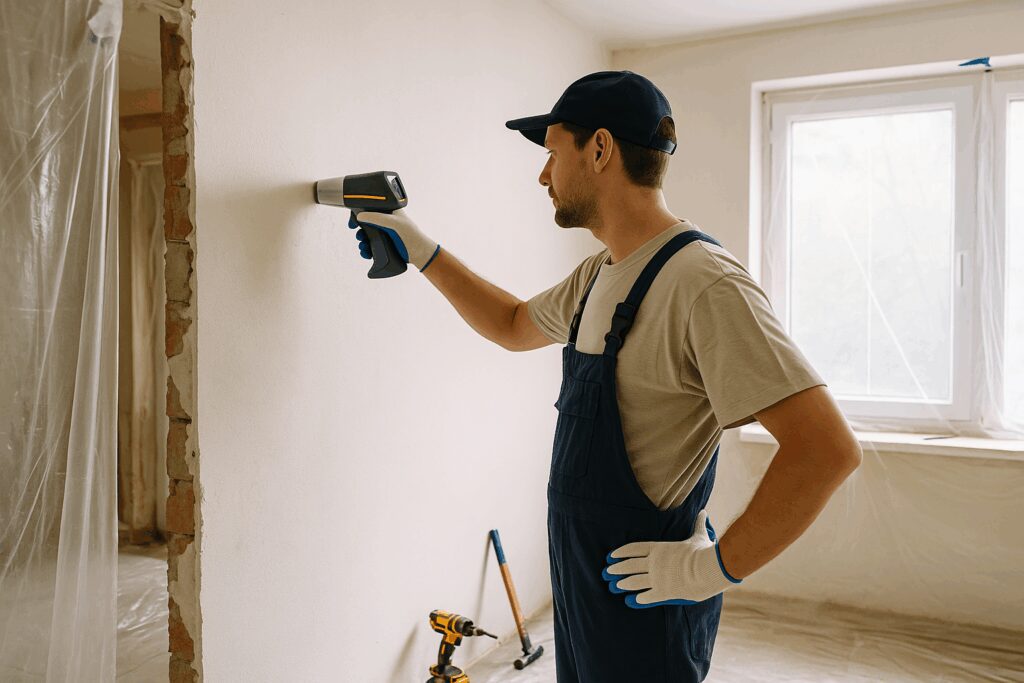
Professional lead paint testing uses two methods. XRF (X-ray fluorescence) analysis uses a handheld device to scan painted surfaces without damaging them and provides immediate results for every surface tested. Paint chip sampling involves collecting small samples of painted material and sending them to an accredited laboratory for analysis. Both methods provide results that meet regulatory and legal documentation standards. Professional testing gives you a complete inventory of which surfaces contain lead, their condition, and their risk level, which is the information you need to make decisions about renovation, encapsulation, or removal.
The EPA RRP Rule and What It Means for Renovation
If your home contains lead paint and you plan any renovation, repair, or painting work that will disturb painted surfaces, the EPA’s Renovation, Repair, and Painting (RRP) Rule applies. Under this rule, contractors working in homes built before 1978 where children under six or pregnant women reside must be certified by the EPA and follow lead-safe work practices. Those practices include containment of work areas, use of HEPA vacuums, wet methods to suppress dust, and proper disposal of lead-containing debris.
Homeowners who hire uncertified contractors for work in pre-1978 homes risk exposure to lead dust generated without proper controls. If you are planning renovation work, confirming whether lead paint is present before work begins allows you to hire appropriately certified contractors and scope the work correctly. It also protects you from liability if the renovation work generates lead exposure for occupants or neighboring properties.
What to Do If Lead Paint Is Found
Finding lead paint in your home does not require immediate action in every case. The appropriate response depends on the condition of the paint and whether renovation will disturb it:
- Lead paint in good condition on surfaces that will not be disturbed can be left in place and monitored periodically for deterioration
- Lead paint on friction and impact surfaces, such as window channels and door frames, is more likely to generate dust and may warrant encapsulation or removal even if not currently deteriorating
- Encapsulation with a specialized sealant is an option for paint in fair condition that is not on high-friction surfaces — it prevents dust generation without the disturbance of removal
- Removal is required when paint is significantly deteriorated, when the surface will be disturbed during renovation, or when the condition cannot be stabilized through encapsulation
Any removal work in a home with children under six or pregnant women must be performed by an EPA RRP-certified contractor following lead-safe practices. Post-abatement clearance testing verifies that lead dust levels have been reduced to acceptable levels before occupants return to the area.
Schedule Lead Paint Testing in Augusta and the CSRA
EnviroPro 360 provides professional lead paint testing for homeowners, property managers, and buyers throughout Augusta, North Augusta, Aiken, and the surrounding CSRA. Our inspectors use professional-grade testing methods and deliver results with the documentation needed for renovation planning, property transactions, and regulatory compliance.
If your home was built before 1978 and you are planning renovation work, purchasing a pre-1978 property, or have concerns about paint condition in a home with young children, testing is the step that gives you accurate information. Contact EnviroPro 360 to schedule lead paint testing for your property.