Here’s an example scenario: a couple in Augusta closes on a 1965 ranch home. Six months later, their toddler’s routine blood test comes back with elevated lead levels. The pediatrician asks about paint condition in the home. The parents notice peeling paint around window sills in the child’s bedroom. They go back through their closing paperwork and find a lead paint disclosure form that the seller signed, checking the box that says “no known lead-based paint.” The seller knew about the peeling paint. They just didn’t know it was lead, and they never tested.
Federal law has required lead paint disclosure in residential real estate transactions since 1996, but many buyers and sellers still don’t understand what the law actually requires, what it doesn’t, and where the liability sits.
The Rule
The Residential Lead-Based Paint Hazard Reduction Act, commonly called Title X (Title Ten), was passed by Congress in 1992. The EPA and HUD jointly issued the implementing regulation, known as the Section 1018 Disclosure Rule, which took effect in 1996.
The rule applies to the sale or lease of any residential housing built before 1978, the year the federal government banned the use of lead-based paint in residential properties. According to the EPA, approximately 87% of homes built before 1940 contain some lead-based paint, as do about 69% of homes built between 1940 and 1959, and 24% of homes built between 1960 and 1977.
In the Augusta area, with its significant inventory of mid-century housing, this rule affects a substantial number of real estate transactions.
What Sellers Must Do
The disclosure rule places several specific obligations on sellers of pre-1978 housing:
Disclose known information. Sellers must tell buyers about any known lead-based paint or lead-based paint hazards in the property. This includes results from any previous lead inspections or risk assessments. “Known” means information the seller actually has, not information they should have sought out. There is no requirement to test.
Provide available records. Any reports, inspection results, or documentation related to lead-based paint in the property must be provided to the buyer.
Provide the EPA pamphlet. Sellers must give buyers a copy of the EPA’s pamphlet “Protect Your Family From Lead in Your Home.” This is a standardized document that explains the risks of lead-based paint and how to protect against exposure.
Include the disclosure form. The sales contract must include a specific lead paint disclosure form, signed by both parties, documenting that the seller has met their obligations and that the buyer has received the required information.
Allow a testing period. Buyers must be given a 10-day period to conduct a lead-based paint inspection or risk assessment at their own expense. This period can be adjusted by mutual agreement, but the buyer cannot be denied the opportunity to test. The buyer can also waive this right.
What Sellers Do NOT Have to Do
The disclosure rule does not require sellers to test for lead paint. It does not require sellers to remove lead paint. It does not require sellers to remediate lead hazards. It only requires them to share what they already know and to give buyers the opportunity to find out for themselves.
This is where many sellers get into trouble. “I didn’t know” is a valid defense only if it’s true. If a seller has been told by a contractor, inspector, or previous owner that lead paint is present, failing to disclose that information violates federal law.
What Buyers Should Do
The disclosure rule gives buyers the right to test, but the decision to exercise that right is theirs. Here’s why testing matters, especially in the CSRA market:
Homes built before 1978 are common. Augusta and the surrounding communities have a large stock of mid-century homes where lead paint is statistically likely to be present.
Lead paint is most dangerous when deteriorating. Intact lead paint on a wall is not an immediate hazard. But paint that is peeling, chipping, cracking, or chalking creates lead dust, which is the primary exposure pathway. Window sills and door frames are particularly problematic because the friction of opening and closing creates dust from any paint layers present.
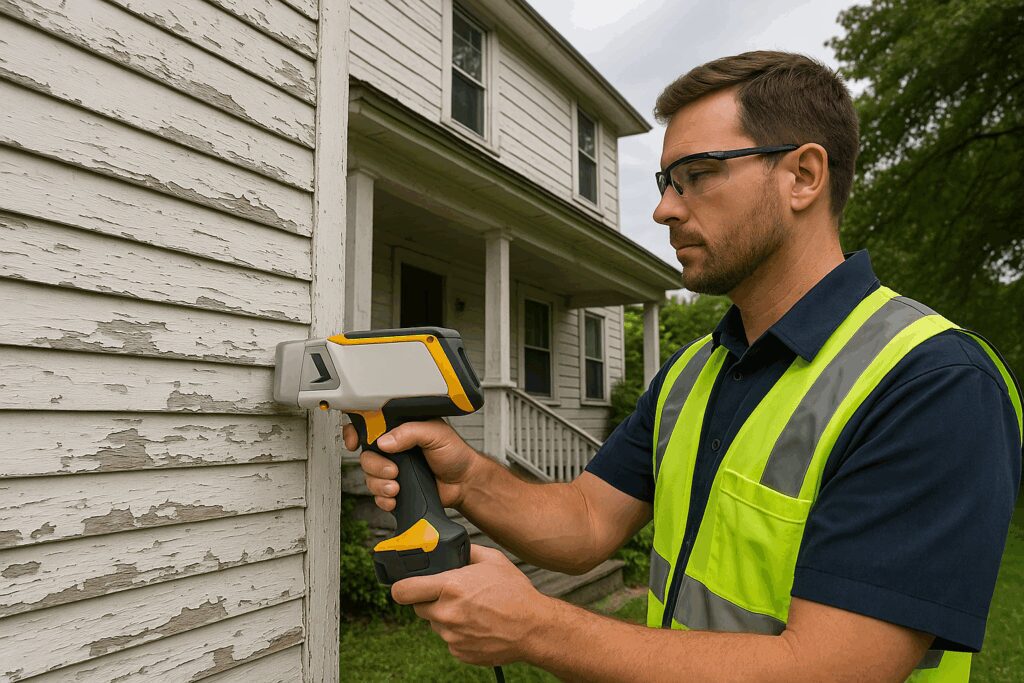
Testing is straightforward. A certified lead inspector uses either an XRF analyzer (a handheld device that detects lead through paint layers without disturbing the surface) or collects paint chip samples for laboratory analysis. Results identify which surfaces contain lead-based paint and at what concentration.
Results give you negotiating power. If lead paint is found, you can negotiate for remediation, price reduction, or walk away from the deal entirely within your contingency period.
Penalties for Non-Compliance
Sellers and their agents who fail to comply with the disclosure rule face significant consequences. HUD and EPA can impose civil penalties of up to $19,507 per violation (adjusted periodically for inflation). Sellers can also be held liable for treble damages (three times the actual damages) in private lawsuits brought by buyers.
Real estate agents have their own obligations under the rule. Agents must ensure that sellers are aware of their disclosure requirements and that the proper forms are included in the transaction. An agent who knowingly allows a transaction to proceed without proper disclosure shares in the liability.
Georgia-Specific Considerations
Georgia does not have a state lead paint disclosure law that goes beyond the federal requirement. The federal Section 1018 rule is the governing standard. However, Georgia’s real estate contracts typically incorporate the federal disclosure form as a standard part of the closing package.
The Georgia Department of Public Health tracks childhood lead exposure data and can provide information about lead risk in specific communities. In older neighborhoods throughout Augusta, Evans, Martinez, and other CSRA communities, pre-1978 housing is common and testing before purchase is a practical precaution.
What to Do
-
If you’re selling a pre-1978 home, complete the lead paint disclosure form honestly. If you’ve had any testing done or been told about lead paint by any contractor, inspector, or prior owner, disclose it. The penalty for non-disclosure far exceeds the cost of honesty.
-
If you’re buying a pre-1978 home, exercise your right to a lead inspection during the 10-day window. This is especially important if you have young children or plan to renovate, as both situations increase the risk of lead exposure.
-
If you’re a real estate agent, make sure the disclosure form is in every pre-1978 transaction file. Confirm that your sellers understand their obligations. This protects your clients and protects you.
If you need lead paint testing as part of a real estate transaction, or you want to understand the lead risk in a property you already own, the EnviroPro 360 team can help. Get in touch and we’ll get you the answers you need.