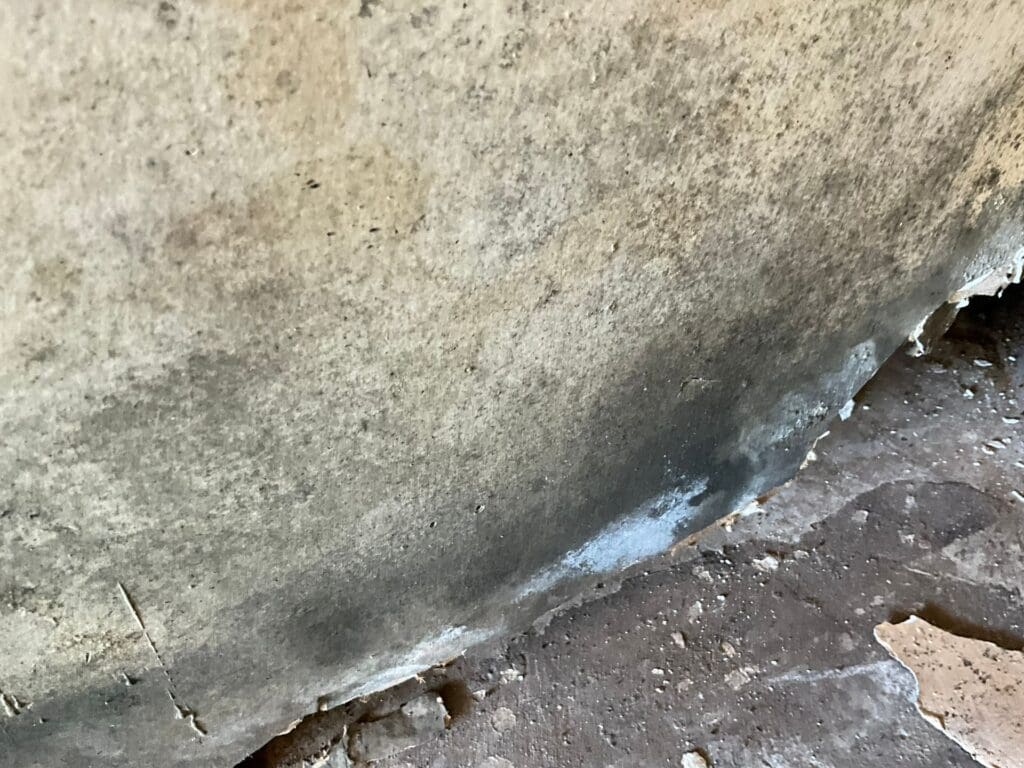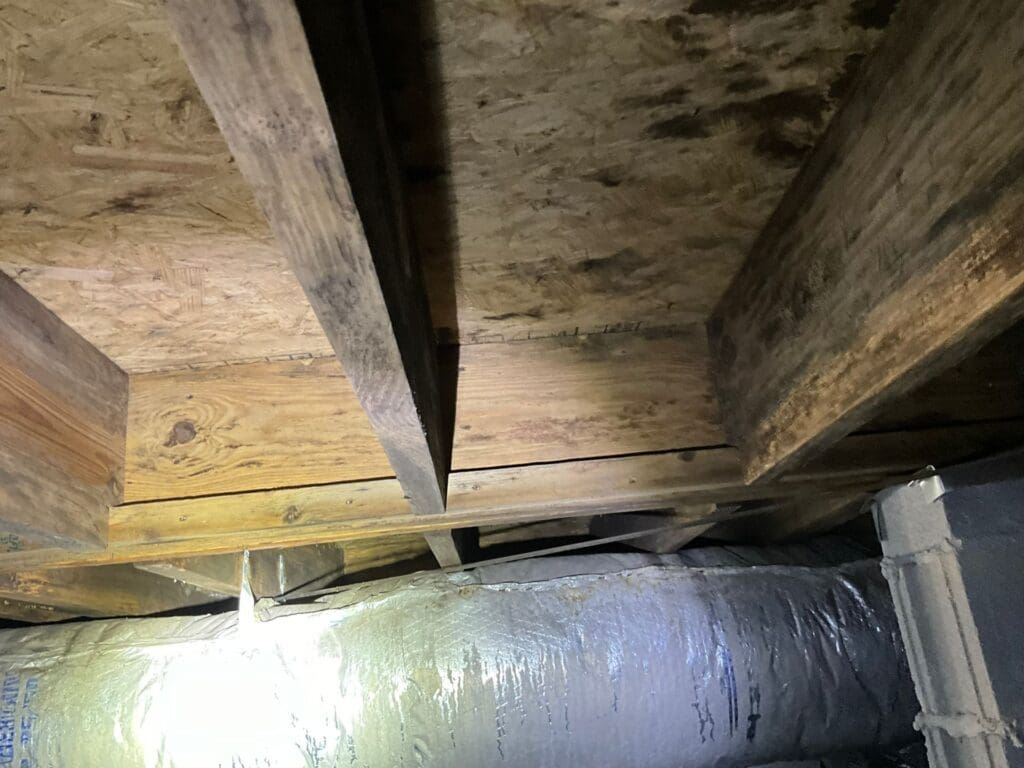
Here’s an example scenario: a homeowner in Augusta pulls up a section of carpet and finds black staining on the subfloor. The house smells musty, but only in certain rooms. An inspection reveals the crawl space underneath is sitting at 85% relative humidity, with visible mold colonies spreading across the floor joists. This scenario plays out in homes across the CSRA every summer, and the root cause is almost always the same: uncontrolled moisture in the crawl space.
Georgia’s climate and geology create a near-perfect environment for mold growth beneath your home. Understanding why it happens is the first step toward fixing it. The CDC notes that people with asthma, allergies, or weakened immune systems face elevated health risks from indoor mold exposure, and crawl space mold is particularly insidious because it circulates upward through the living space before most homeowners are aware of it.
How Georgia’s Climate Feeds Crawl Space Mold
Mold needs three things to grow: organic material (wood framing qualifies), temperatures above 40 degrees Fahrenheit, and moisture. In the Augusta area, two of those three are guaranteed year-round. The third, moisture, is practically guaranteed too.
The CSRA averages around 70% outdoor relative humidity annually, with summer months regularly pushing above 80%. According to the EPA’s guide to mold and moisture, indoor relative humidity should stay below 60% to prevent mold growth, and ideally between 30% and 50%. A vented crawl space in Augusta during July is fighting physics to stay below that threshold.
Here is what happens in a typical vented crawl space during summer: warm, humid outdoor air enters through foundation vents. It hits the cooler surfaces inside the crawl space, including the underside of your floor, ductwork, and pipes. When warm air meets a cool surface, it releases moisture through condensation. That condensation collects on wood framing and insulation, and mold colonizes within 24 to 48 hours under the right conditions.
The Red Clay Factor
Georgia’s red clay soil compounds the problem. Clay is dense and holds water far longer than sandy or loamy soils. After a heavy rain, clay-heavy soil around your foundation can stay saturated for days or weeks. That moisture migrates upward through the exposed dirt floor of your crawl space through a process called capillary action, where water moves through tiny spaces in the soil against gravity.
If your crawl space has a bare dirt floor with no vapor barrier, your home is sitting on top of a continuous moisture source. The EPA notes that ground moisture is one of the primary contributors to elevated indoor humidity and subsequent mold growth.
The Ventilation Debate: Vented vs. Sealed Crawl Spaces
For decades, building codes required crawl space vents on the assumption that airflow would remove moisture. Research has shown this approach often makes the problem worse in humid climates like Georgia’s.
Why Vented Crawl Spaces Fail in the Southeast
Vented crawl spaces work well in dry climates. In the Southeast, they invite the very moisture you are trying to remove. During summer, opening vents pulls in air carrying 18 to 20 grams of water per kilogram of air. That humid air condenses on cooler crawl space surfaces, and you end up with more moisture than you started with.
A study by Advanced Energy, a building science nonprofit, found that sealed crawl spaces in the Southeast maintained significantly lower humidity levels than vented ones, often 15 to 20 percentage points lower during peak summer months.
The Case for Sealed (Encapsulated) Crawl Spaces
Crawl space encapsulation involves sealing vents, covering the dirt floor and walls with a heavy-duty vapor barrier (typically 12 to 20 mil polyethylene), and controlling humidity with a dehumidifier or conditioned air supply. The approach treats the crawl space as part of your home’s conditioned envelope rather than an outdoor space.
A properly encapsulated crawl space typically maintains relative humidity between 45% and 55%, well within the range the EPA recommends for mold prevention.
Warning Signs of Crawl Space Moisture Problems
You do not need to crawl under your house to spot the early signs. Watch for these indicators:
- Musty odors on the first floor. Air from your crawl space migrates upward through a process called the stack effect, where warm air rises through your house and pulls crawl space air in behind it. If the crawl space smells like mold, your living space will too.
- Cupping or buckling hardwood floors. Moisture from below causes wood flooring to swell unevenly.
- Condensation on windows or cold surfaces. Elevated indoor humidity shows up first on the coldest surfaces in your home.
- Higher than expected cooling bills. Your HVAC system works harder to remove excess moisture from the air. A humid crawl space can add 15% or more to your cooling costs.
- Visible mold on floor joists or subfloor. If you do look under the house, check where wood meets the foundation wall. That is where condensation collects first.
Standing Water: A Different Problem
If your crawl space has standing water after rain events, you have a drainage issue that encapsulation alone will not solve. Standing water requires grading corrections around the foundation, French drains, or a sump pump system before any moisture barrier work makes sense. Address the bulk water first, then the vapor.
What HVAC Systems Have to Do With It
Your heating and cooling system interacts with your crawl space in ways you might not expect. Many homes in the Augusta area have ductwork running through the crawl space. When that ductwork is poorly insulated or has leaks, two things happen.
First, condensation forms on the outside of cold supply ducts during summer, dripping water directly into the crawl space. Second, leaky return ducts pull humid crawl space air into your HVAC system and distribute it throughout your home. The Department of Energy estimates that duct leaks can reduce HVAC efficiency by 25 to 40 percent.
If your crawl space has ductwork, sealing and insulating those ducts is as important as addressing the crawl space moisture itself.
Relative Humidity: The Number That Matters
Mold does not care whether your crawl space looks wet. It cares about relative humidity (RH), the percentage of moisture in the air relative to the maximum it can hold at that temperature. Here are the thresholds that matter:
- Below 50% RH: Low mold risk. This is your target.
- 50% to 60% RH: Moderate risk. Some mold species can grow at the upper end of this range.
- Above 60% RH: High risk. The EPA considers this the threshold above which mold growth becomes likely.
- Above 70% RH: Active mold growth is probable within days.
A simple hygrometer (a device that measures humidity) placed in your crawl space can tell you where you stand. Digital versions cost under $20 and will tell you more about your crawl space health than a visual inspection alone.
What to Do About It
If you suspect a moisture problem in your crawl space, here are concrete steps to take:
1. Get a Professional Moisture and Mold Assessment
Before spending money on encapsulation or dehumidifiers, find out what you are dealing with. A professional inspection measures relative humidity at multiple points, checks for active mold growth, identifies water intrusion sources, and evaluates your current vapor barrier (if you have one). Surface sampling or air sampling can determine what mold species are present and whether spore counts are elevated compared to outdoor levels.
2. Address Water Intrusion First
If water is entering your crawl space from outside, fix the source before sealing anything in. Common fixes include regrading soil away from the foundation (the ground should slope at least six inches over the first ten feet), extending downspouts, and installing interior or exterior French drains.
3. Install or Upgrade Your Vapor Barrier
A minimum 6-mil polyethylene vapor barrier on the dirt floor is code-required in most jurisdictions, but thicker is better. For full encapsulation, a 12 to 20-mil reinforced liner covering the floor and extending up the walls to above the exterior grade line is the standard approach. Seams should overlap by at least 12 inches and be sealed with tape or adhesive.
After encapsulation, a crawl space dehumidifier sized for the square footage keeps humidity in check year-round. Units designed for crawl spaces are built to operate in tight, low-clearance areas and drain continuously through a condensate line.
Take the First Step
If your Augusta-area home has musty odors, moisture stains, or you have never had your crawl space inspected, now is the time to find out what is going on down there. A professional assessment gives you the information you need to make smart decisions about repairs. EnviroPro 360 provides mold and moisture inspections for homes across the CSRA. contact us to schedule an assessment and get a clear picture of your crawl space conditions.