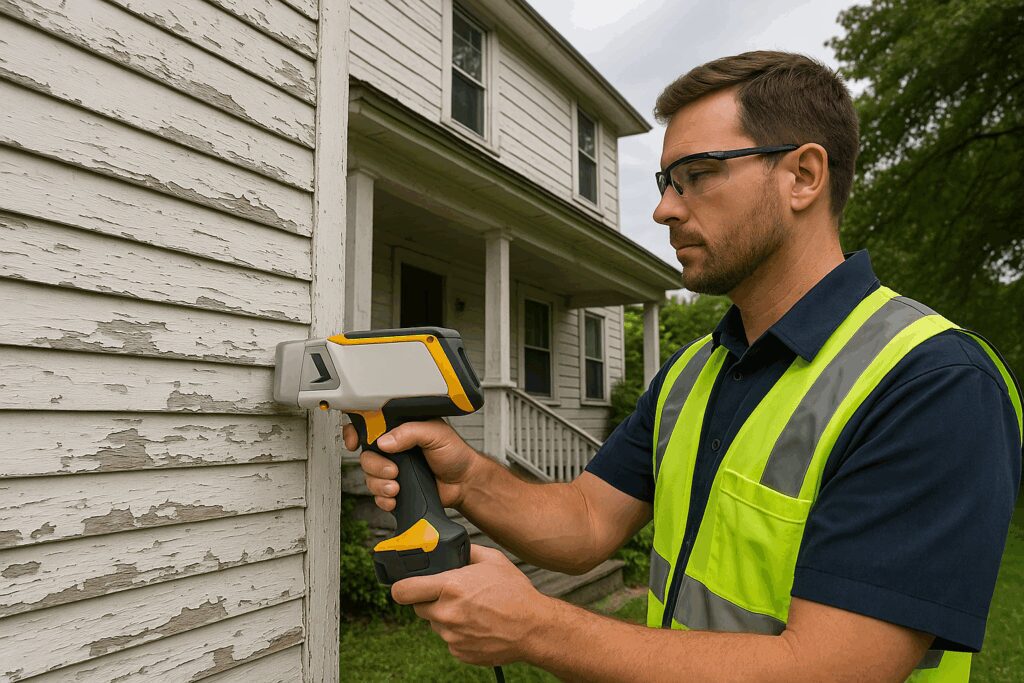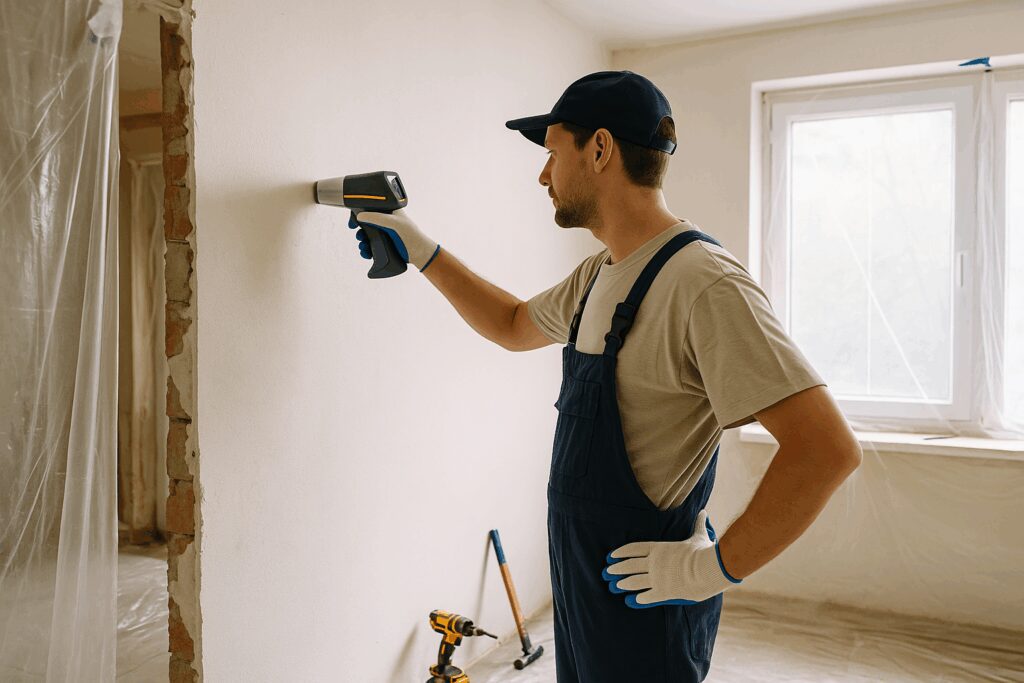
Here’s an example scenario: a pediatrician in Richmond County orders blood lead testing for a two-year-old whose parents had done everything right. Their older home had been professionally deleaded before they moved in. Every interior surface was covered with encapsulated or replaced paint. They tested the water. They bought a HEPA vacuum. The test result comes back elevated, well above the CDC’s blood lead reference value of 3.5 µg/dL.
The parents were stunned. Where was their child being exposed? The pediatrician asked one question that unlocked the answer: does your child play in the yard?
The soil around that house tested positive for lead contamination — well above the EPA’s hazard threshold of 400 ppm for areas where children play. Decades of lead paint flaking off the exterior, decades of leaded gasoline particles settling out of the air before the 1986 phaseout, and the original lead-based primer on the soffits had all ended up in the top few inches of soil. Every afternoon that child dug with a plastic shovel in a mulch bed, he was coating his hands in a hazard his parents never thought to check.
It’s a documented risk in the Augusta area. According to Georgia Health News, Richmond County has three of the top 20 ZIP codes in Georgia for elevated blood lead levels in children. The source isn’t always inside the home.
Soil is the exposure path most homeowners overlook. It is often the one that matters most for young children.
Why Soil Around Older Homes Is So Often Contaminated
Two main sources contribute to lead-contaminated soil in residential yards, and the CSRA has plenty of both.
Exterior Paint Weathering and Flaking
Homes painted with lead-based paint before the 1978 federal ban on residential lead paint shed paint chips and paint dust into the soil around the foundation for decades. Exterior lead paint typically weathers more aggressively than interior paint because of sun, rain, and temperature cycling. A house painted with lead-based exterior paint from 1952 onward has had 74 years of paint weathering into the surrounding yard.
The highest soil lead concentrations are usually within 3 to 10 feet of the home’s foundation, directly under eaves, windows, and drip lines. In Augusta, homes built before 1978 with wood siding painted in the original era are prime candidates.
Leaded Gasoline Fallout
Between the 1920s and 1986, gasoline sold in the United States contained tetraethyl lead to improve engine performance. Tailpipe emissions deposited lead dust across every populated area, with concentrations highest near roads, highways, and urban cores. The EPA estimates that leaded gasoline deposited over four million metric tons of lead into soil nationally before the phaseout was complete.
If your home is within 100 feet of a street or road that has been in use since before the 1980s, your soil likely carries some legacy lead from gasoline exhaust. Homes within 100 feet of historically high-traffic corridors in the Augusta area can have elevated soil lead even if the house itself was never painted with lead paint.
Other Sources
Additional soil contamination can come from:
- Old industrial activity nearby, including smelters, battery recycling, and lead-based manufacturing
- Urban gardening in former industrial zones
- Lead shot around historic target shooting areas
- Contaminated fill dirt brought in during landscaping
Why Soil Lead Hits Children Hardest
Young children get more lead from soil for a handful of very physical reasons:
- They play close to the ground. Crawling, digging, sitting in the grass.
- Hand-to-mouth behavior is constant between roughly 10 months and 6 years old.
- Their bodies absorb more of what they ingest. Children absorb roughly 40 to 50% of the lead they ingest from soil and dust, compared to about 10% in adults, according to CDC toxicological profiles.
- Their developing brains are more sensitive. Even the same dose does more damage to a 2-year-old than to a 25-year-old.
The CDC explicitly identifies contaminated soil and dust as one of the most common pathways for childhood lead exposure, often more significant than drinking water or paint intact on a wall.
What Elevated Soil Lead Looks Like in Numbers
The EPA has set hazard standards for lead in soil in children’s play areas:
- 100 ppm or less: not considered a hazard
- Above 100 ppm in play areas for children: hazard level as defined under TSCA Sections 402 and 403
- Above 400 ppm: EPA considers the soil a hazard in most residential contexts
For context, naturally occurring background lead in Georgia soils is generally 10 to 30 ppm. Any reading significantly above that indicates human-caused contamination.
The state of Georgia follows federal guidance and does not impose a lower standard, but pediatric practice in the area follows the CDC reference value of 3.5 µg/dL of blood lead as the concern threshold. Any soil lead that can contribute to a child’s blood lead reaching that level is worth addressing, even if it is below the federal cleanup trigger.
Simple Ways to Reduce Soil Lead Exposure Now
If your home was built before 1978, or sits near a historic road, you can reduce exposure even before you test. These are practical, low-cost steps:
- Keep bare soil covered. Grass, mulch, landscape fabric with pea gravel, or simply topdressing with 6 inches of clean soil and sod. Lead in soil cannot be inhaled or ingested if it is not on the surface.
- Create a dedicated play area with known-clean materials. A sandbox with clean sand, a raised bed with purchased topsoil, or a mulched play zone away from the foundation.
- Take shoes off at the door. This single habit significantly reduces how much outdoor lead dust tracks into your home and onto the floor where children crawl.
- Wash hands and toys frequently. Hand-to-mouth exposure is the dominant pathway. Soap and water interrupts it.
- Grow edibles in raised beds with tested or clean soil, not in-ground beds within 10 feet of an older foundation or near a historic roadway.
- Keep the foundation perimeter mulched or grassed, especially under windows and eaves.
These steps do not solve contamination, but they substantially reduce the dose your family actually receives from it.
When Testing Soil Makes Sense
Soil testing is usually worth doing if:
- Your home was built before 1978, especially before 1960, and has original exterior paint that has weathered visibly
- You plan to do yard renovation, landscaping, or build a new play area
- You plan to grow vegetables in-ground
- A child in the household has had an elevated blood lead result
- You bought the property recently and want to understand what is under your feet
A proper soil test involves collecting samples from multiple locations at consistent depths (typically 0 to 2 inches, the zone children actually contact) and running them through an accredited laboratory. Cheap DIY soil test kits are often unreliable for lead. Professional testing is the standard for anything you plan to act on.
Your Next Steps
- Walk the perimeter of your home today and note any areas of bare soil within 10 feet of the foundation, especially under eaves and windows. These are the highest priority areas to cover or test.
- If you have a child under 6 in the home, ask your pediatrician whether blood lead testing is recommended based on your home’s age and location. In Georgia, testing is routine at 12 and 24 months for children on Medicaid and recommended for many private-insured children in older housing.
- If you are considering soil testing, focus first on the play area, the foundation perimeter on the sides with the most exterior paint weathering, and any in-ground vegetable garden location.
If you want to understand whether soil lead is a concern at your specific property, or you have a child with an elevated blood lead result and need to find the source, the EnviroPro 360 team is happy to help. Reach out any time.