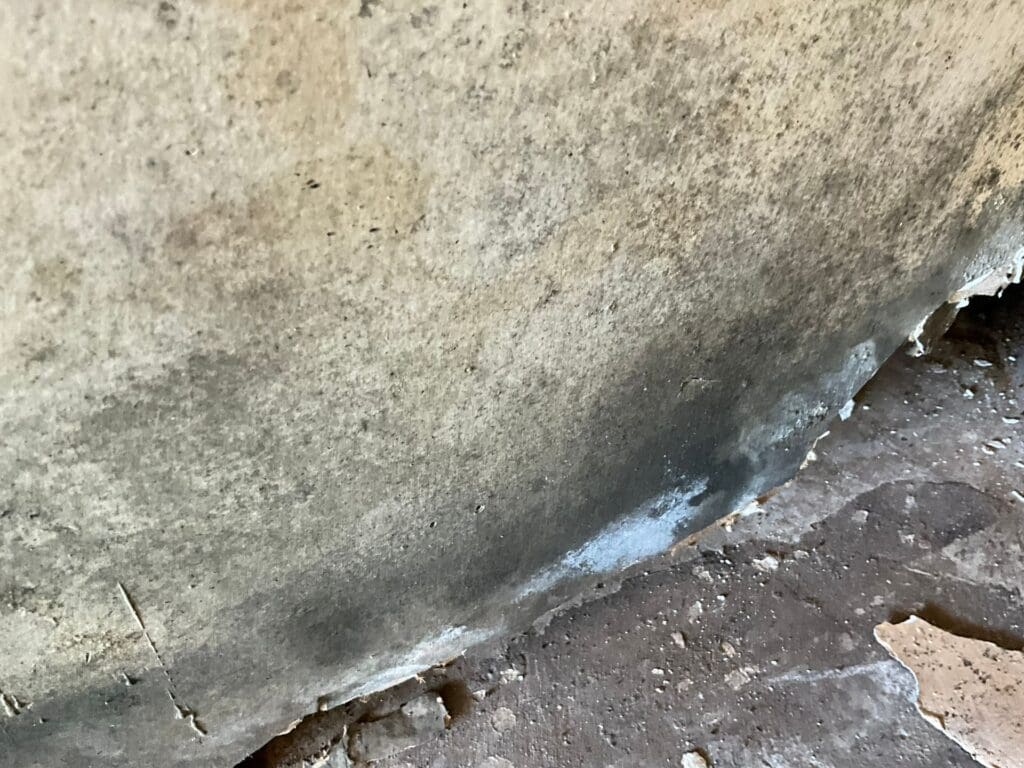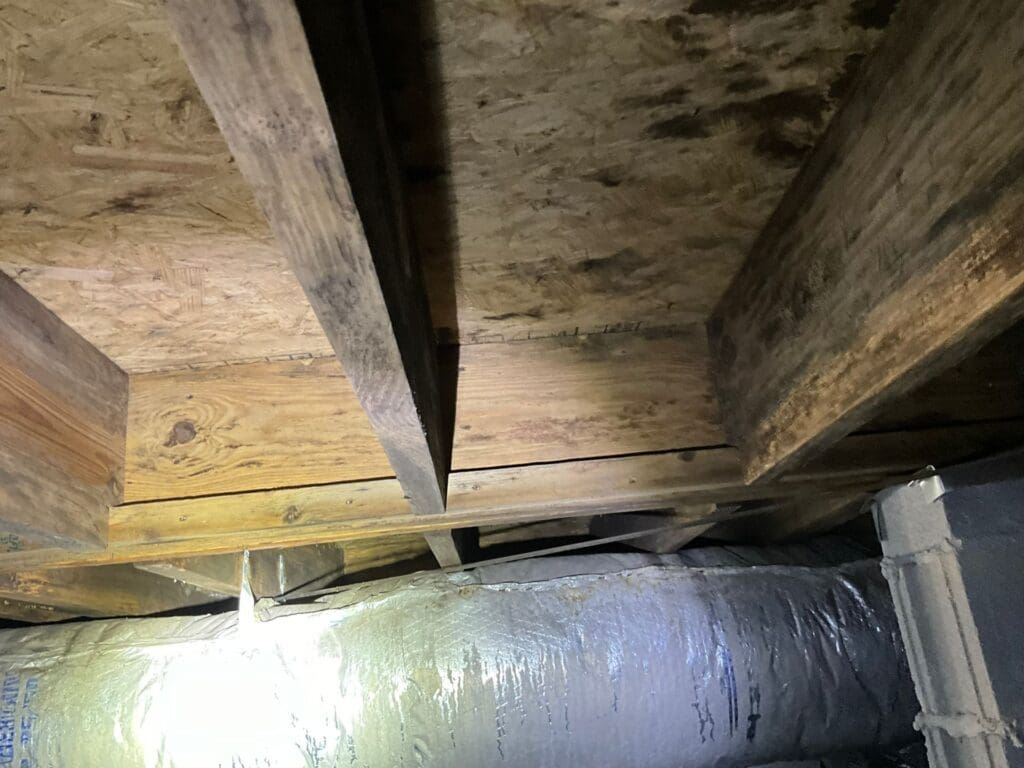
Here’s an example scenario: a homeowner in Evans kept getting headaches in her home office. She blamed her monitor, then her posture, then allergies. A mold test in the office came back clean. So did the tests in the bedroom and the living room. Every room read normal. So she had an HVAC specialist come out to look at the system.
What they found: the cooling coil inside the air handler was covered in black biological growth. The drain pan had standing water. Every time the system kicked on, it was pushing mold spores through every supply register in the house. The room-by-room air tests had missed it because the spores were diluted across the whole house. She was not working in a moldy office. She was living in a building with a moldy lung.
HVAC systems are mold distribution engines when conditions are right. In the humid climate of the CSRA, conditions are right more often than most homeowners realize.
Why Your HVAC Is a Natural Home for Mold
Mold needs three things to grow: moisture, a food source, and a temperature between about 40 and 100 degrees Fahrenheit. Your HVAC system provides all three on a regular basis.
Moisture comes from the cooling process itself. When warm, humid Georgia air crosses a cold evaporator coil, water condenses on the metal fins and drips into a drain pan. During summer months in Augusta, an air conditioner can produce 5 to 20 gallons of condensate per day. If the drain line clogs, if the pan is not pitched correctly, or if the coil is dirty enough that water pools in unexpected places, that moisture stays where it does not belong.
Food sources are everywhere inside an air handler. Dust that bypasses the filter, pollen drawn in from outside, skin cells, pet dander, and accumulated organic debris all coat the interior surfaces of the unit and the ductwork. Mold does not need much. A thin biofilm of dust on a wet surface is plenty.
Temperatures inside your HVAC system sit in the mold growth sweet spot during most of the year. The supply side runs cool in summer and warm in winter, but the return side and the drain pan rarely drop below 60 degrees or rise above 90 degrees.
The EPA’s guidance on mold in HVAC systems is clear: if mold is present inside the system, it needs to be addressed, because the system will continue to distribute whatever is growing inside it throughout the building.
The Signs Your HVAC Might Be the Source
A contaminated HVAC system produces symptoms that feel diffuse and hard to pin down. That is the hallmark. The problem is not in one room because the problem is everywhere.
Watch for:
- Symptoms that track with when the system runs. Headaches, sinus pressure, coughing, or fatigue that gets worse after the unit has been cycling and improves when you open windows or leave the house.
- A musty smell coming from supply registers. Especially noticeable on the first blast of air after the system has been off for a while. Lean close to a register and sniff. If it smells like a damp basement, the system is contributing to your indoor air.
- Visible growth around the supply register itself. Black, gray, or greenish staining on the register grille or on the ceiling or wall immediately around it. This is a strong indicator that moisture is condensing at the register and feeding mold growth there.
- Dust that looks unusually dark or fibrous. Heavy dust accumulation on a supply register that looks black or streaked rather than gray can indicate mold particles being deposited along with normal dust.
- Allergy or asthma symptoms that got worse after an HVAC change. New system, new ductwork, or a duct cleaning can sometimes make things worse rather than better if the work stirred up existing contamination without removing it.
The CDC’s guidance on mold exposure notes that sensitivity varies widely. Someone with asthma or existing respiratory conditions may react strongly to levels that do not bother a healthy adult. If one person in the household is consistently sick when the HVAC runs, that is a signal worth taking seriously.
Where Mold Actually Grows Inside the System
Knowing where to look matters. Mold concentrates in specific zones of an HVAC system:
The Evaporator Coil and Drain Pan
This is the most common location. The coil stays wet during operation, the pan catches condensate, and both can accumulate enough biofilm to support visible growth. A dirty coil holds moisture longer, so dust accumulation and mold growth feed each other.
The Blower Compartment
The blower wheel spins inside a housing that collects everything the filter missed. If the filter is low quality, missing, or bypassed because it does not fit properly, the blower wheel becomes a collection point for dust. Add any moisture intrusion and you get mold growth coating the fan blades themselves, which then aerosolize spores into every cubic foot of supply air.
The Supply Plenum and First 10 Feet of Duct
Condensation at the plenum (the large duct immediately attached to the air handler) is common when insulation is damaged or missing. The first 10 feet of ductwork downstream of the plenum is where most mold growth shows up in duct systems.
Flex Duct Runs That Sag
Flexible ductwork that droops between supports creates low points where moisture can collect. Once the inner liner of flex duct gets wet and dusty, it is essentially impossible to clean. Replacement is usually the answer.
Air Duct Cleaning Is Not a Cure-All
There is a persistent belief that duct cleaning solves HVAC mold problems. It rarely does, and in some cases it makes them worse. The EPA explicitly warns against duct cleaning as a default response because:
- Cleaning does not address the underlying moisture source that allowed mold to grow in the first place.
- Aggressive cleaning methods can damage duct liners and push mold deeper into the system.
- Biocides and antimicrobial fogs applied without proper source removal can leave chemical residues while leaving the mold sources intact.
Effective remediation of HVAC mold starts with identifying and eliminating the moisture source, not with spraying something down the ducts. If the coil is constantly wet because the drain line is clogged, no amount of cleaning will stop regrowth until the drainage is fixed.
What Inspection and Testing Looks Like
A proper HVAC mold investigation involves more than a quick peek inside the air handler. It usually includes:
- Visual inspection of the coil, blower, drain pan, plenum, and accessible duct sections
- Moisture meter readings on duct insulation and interior surfaces
- Air sampling at multiple locations, including at supply registers while the system runs and with the system off
- Surface sampling of any suspicious biological growth for laboratory identification
Comparing on-system versus off-system air samples is the key diagnostic. If spore counts jump significantly when the HVAC is running, the system is either distributing spores from inside itself or from another contaminated space connected to the return.
Your Next Steps
- Check your air handler today. Pop the access panel (with the system off and power cut at the breaker) and look at the coil and drain pan. Standing water, biofilm, or visible growth is a call-your-HVAC-tech or call-a-mold-professional moment.
- Confirm your condensate line is flowing. Find where it drains outside or into a floor drain. If nothing is coming out during summer operation, it is probably clogged.
- If symptoms are tracking with the system, get proper mold testing done. Room-by-room air sampling will miss a distributed HVAC source. You need a test designed to evaluate the system itself.
If you suspect your HVAC system is the reason your home does not feel right, the EnviroPro 360 team can help you figure out whether it is the source and what to do about it. Reach out any time.