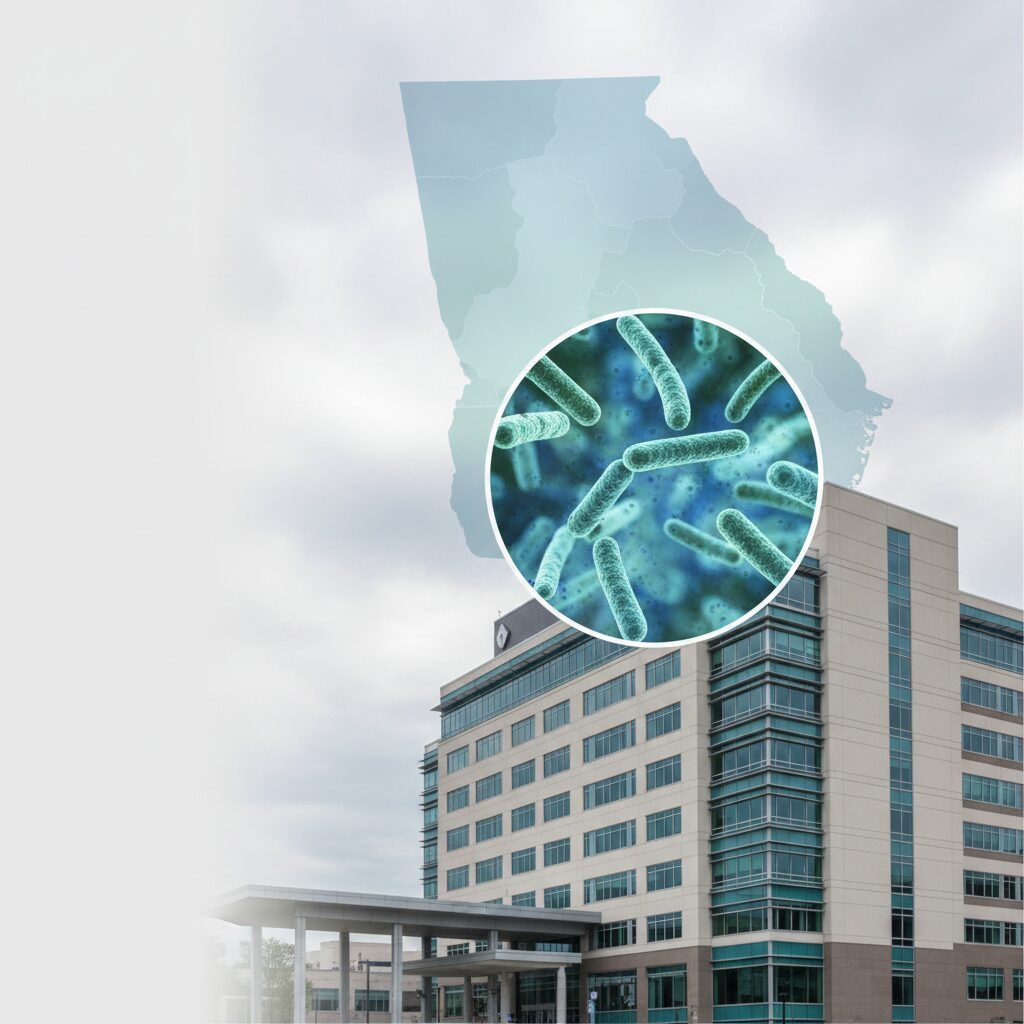
In the summer of 2019, the Sheraton Atlanta Hotel became the site of the largest Legionella outbreak in Georgia history. One person died. Twelve cases were lab-confirmed, and another 63 were classified as probable. Georgia DPH and the CDC traced the source to the hotel’s cooling tower and a decorative atrium fountain. Legionella pneumophila had been multiplying in the warm, stagnant water for months. Nobody tested it. Nobody checked. The hotel’s water management controls had not kept pace with the risk.
According to the CDC, Legionnaires’ disease cases in the United States have grown nearly nine-fold since 2000. That increase is not just about better reporting. It reflects aging building infrastructure, deferred maintenance, and a general lack of awareness about where this bacterium lives and how it spreads.
If you manage a commercial building in Augusta or the CSRA, your water systems deserve attention. Here is what you need to know.
What Is Legionella and Why Should You Care?
Legionella pneumophila is a naturally occurring freshwater bacterium. In rivers and lakes, concentrations stay too low to cause harm. The problem starts when Legionella enters engineered water systems, the pipes, tanks, and towers inside your building, where warm temperatures and stagnant conditions let it multiply to dangerous levels.
When contaminated water becomes aerosolized (broken into tiny droplets that people breathe in), it can cause two illnesses. Legionnaires’ disease is a serious form of pneumonia that kills roughly one in ten people who contract it. Pontiac fever is a milder flu-like illness that resolves without treatment.
You cannot catch Legionnaires’ disease from drinking contaminated water or from person-to-person contact. Inhalation of contaminated water droplets is the transmission route.
The Building Systems Where Legionella Thrives
Cooling Towers
Cooling towers are the single highest-risk system for Legionella in commercial buildings. These large units sit on rooftops or beside buildings and reject heat from HVAC systems by evaporating water. That evaporation process creates aerosols, fine mists that can travel significant distances downwind.
Cooling towers hold large volumes of warm water, receive constant airflow, and accumulate organic material that feeds bacterial growth. Without chemical treatment and regular cleaning, they become ideal breeding grounds.
The CDC’s toolkit for controlling Legionella in cooling towers recommends maintaining biocide levels, monitoring water chemistry at least weekly, and performing physical inspections quarterly at minimum.
Domestic Hot Water Systems
Your building’s hot water heaters, storage tanks, and distribution piping are the second major risk area. Legionella thrives in water between 77 and 113 degrees Fahrenheit. Many building hot water systems operate right in that danger zone, especially at points far from the heater where water cools in the pipes.
Dead legs (sections of piping that no longer serve active fixtures but remain connected to the system) are particularly dangerous. Water sits stagnant in these pipes for days or weeks, reaching the perfect temperature for bacterial growth.
Buildings with large, complex plumbing systems, think hospitals, hotels, senior living facilities, and multi-story office buildings, face the highest risk because water spends more time sitting in pipes before reaching a faucet.
Decorative Fountains and Water Features
Lobby fountains, outdoor water displays, and similar features aerosolize water continuously. If the water is not properly treated, these become exposure sources for everyone walking past.
Humidifiers and Misters
Some HVAC systems use water-based humidifiers that spray fine mists into ductwork. Outdoor misting systems at restaurants and patios also create aerosols. Any device that turns water into breathable droplets is a potential Legionella delivery system if the water source is contaminated.
Understanding Biofilm: The Hidden Problem Inside Your Pipes
Biofilm is a slimy layer of microorganisms that forms on the interior surfaces of pipes, tanks, and cooling tower fill. Think of it as a living mat of bacteria, algae, and organic material held together by a sticky substance the organisms produce.
Legionella does not just float freely in water. It colonizes biofilm, where it feeds on other microorganisms (particularly amoebae) and is shielded from disinfectants. Chemical treatments that kill free-floating bacteria in the water column often cannot penetrate biofilm effectively.
This is why simply adding chlorine to your cooling tower or hot water system is not sufficient. You need a program that addresses biofilm through physical cleaning, consistent disinfectant levels, and temperature management.
In Augusta’s warm, humid climate, biofilm formation accelerates. Our long summers mean cooling towers run harder and longer, creating more opportunity for bacterial growth. Hot water systems in older commercial buildings downtown often have extensive pipe networks with multiple dead legs from past renovations.
The Temperature Danger Zone
Legionella growth follows a predictable temperature pattern:
- Below 68 degrees F: Bacteria survive but do not multiply significantly
- 77 to 113 degrees F: Active growth range. This is the danger zone
- Above 122 degrees F: Bacteria begin to die
- Above 158 degrees F: Bacteria are killed rapidly
The CDC recommends maintaining hot water heater output at 140 degrees F or higher and ensuring water at the furthest fixtures reaches at least 122 degrees F. At the same time, you need scald protection (mixing valves at fixtures) to prevent burns.
For cooling towers, keeping the basin water temperature as low as practical and maintaining effective biocide treatment reduces risk.
Testing Methods and What They Tell You
Culture Testing
Culture testing remains the gold standard. A lab grows Legionella from your water sample on specialized media over 10 to 14 days. Results are reported in colony-forming units per liter (CFU/L). The CDC considers any detectable Legionella in a building water system a sign that your water management program needs review.
PCR Testing
Polymerase chain reaction (PCR) testing detects Legionella DNA in water samples and returns results in one to two days. PCR is faster but cannot distinguish between live and dead bacteria. A positive PCR result with a negative culture may indicate that your disinfection is working but dead bacterial DNA is still present.
When and How Often to Test
The ASHRAE Standard 188, referenced by the CDC as the framework for building water management programs, calls for routine testing as part of ongoing verification. At minimum, consider:
- Cooling towers: Monthly during operating season. In Augusta, that means April through October at least, and often year-round for systems that run continuously
- Hot water systems: Quarterly, with additional testing after any maintenance, temperature excursions, or water outages
- After any reported illness: Immediate testing if a building occupant is diagnosed with Legionnaires’ disease
Building a Water Management Program
The CDC’s water management program toolkit outlines a team-based approach:
- Assemble a water management team that includes building management, maintenance staff, and water treatment professionals
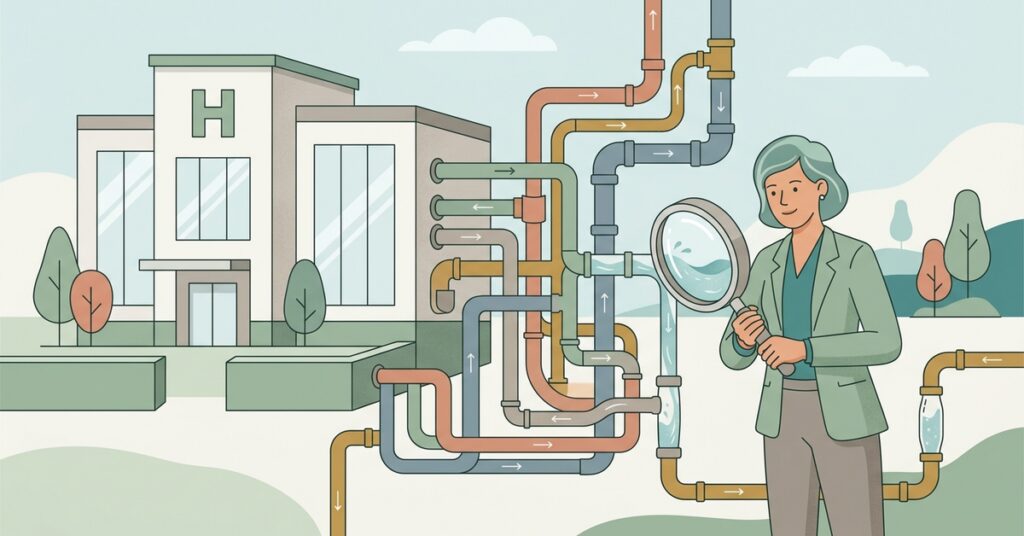
- Map your building’s water systems, identifying all points where water is stored, heated, or aerosolized
- Identify hazardous conditions like dead legs, low-flow areas, and temperature control failures
- Establish control measures with specific targets for temperature, disinfectant levels, and cleaning schedules
- Monitor, test, and document everything. Recordkeeping protects you legally and helps identify trends
What You Should Do Next
If you manage a commercial building with cooling towers, large hot water systems, or decorative water features, take these steps:
- Get a baseline assessment. Have your water systems tested for Legionella so you know your current risk level. This is especially important for older buildings in the CSRA where plumbing systems may have been modified multiple times over the decades.
- Review your water temperatures. Check hot water output at the heater and at the fixtures furthest from the heater. If water at distant fixtures drops below 122 degrees F, you have a problem to address.
- Start or update your water management program. Even a basic, documented program is far better than none. The CDC toolkit is free and walks you through each step.
Legionella testing is straightforward when you have the right partner handling sample collection and lab coordination. If you manage a commercial property in Augusta or the surrounding CSRA and want to understand your building’s risk, reach out to our team. We will walk through your water systems, collect samples from the right locations, and give you clear results you can act on.