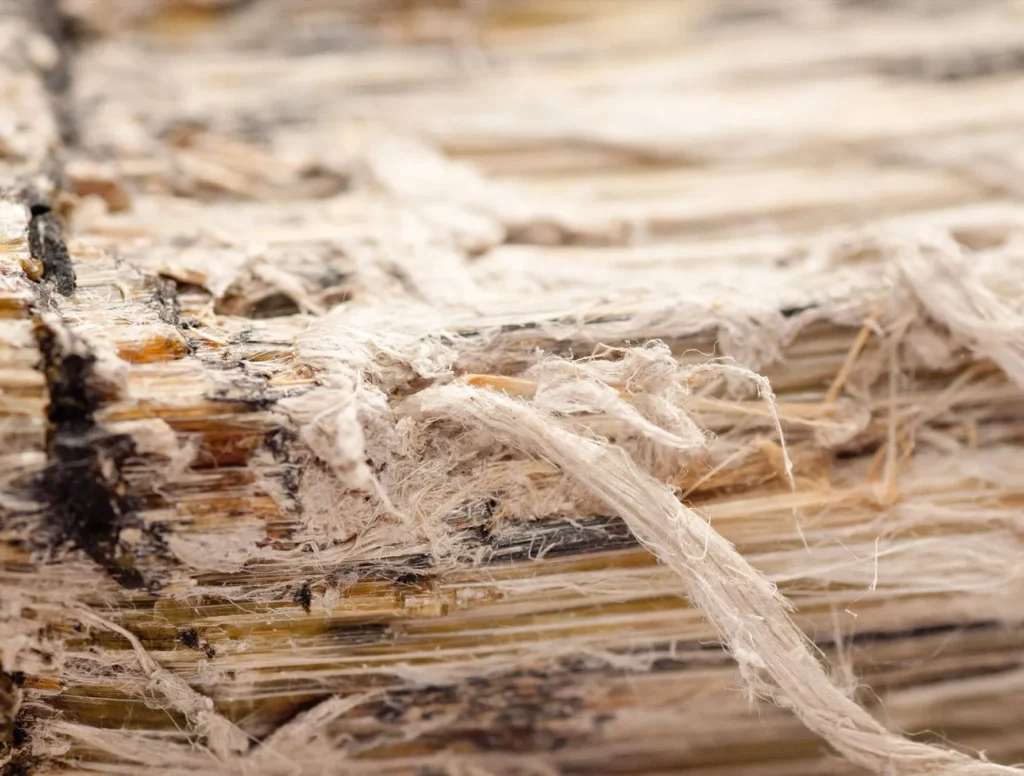
A demolition contractor in South Carolina tears into a commercial building without conducting an asbestos survey. The building was constructed in 1968. Pipe insulation, floor tiles, and ceiling material all contain asbestos. By the time anyone realizes the mistake, friable asbestos debris is spread across the site, workers have been exposed without respiratory protection, and neighbors have called the state environmental agency about dust blowing off the property.
The contractor is now facing federal NESHAP violations, OSHA citations for worker exposure, state enforcement action, a contaminated site requiring professional remediation, and potential personal injury claims that could surface decades from now — because asbestos-related diseases have latency periods of 20 to 50 years.
Understanding how these regulatory frameworks work — separately and together — is the starting point for avoiding that outcome. This post covers the architecture of asbestos regulation in the United States and what it means specifically for projects in Georgia and South Carolina. For a step-by-step practical compliance guide for renovation and demolition projects, see our post on building a NESHAP-ready asbestos plan for Georgia and South Carolina.
Why there are multiple asbestos laws
Asbestos is regulated by three separate federal frameworks, each created by a different agency under a different statute. They are not redundant — they address different problems and protect different populations. All three can apply to the same project simultaneously.
- EPA NESHAP (Clean Air Act, 40 CFR Part 61 Subpart M) — protects the general public from asbestos fibers released into outdoor air during demolition and renovation
- OSHA 29 CFR 1926.1101 (Occupational Safety and Health Act) — protects workers who encounter asbestos during construction activities
- EPA TSCA (Toxic Substances Control Act) — governs the manufacture, import, processing, distribution, and use of asbestos as a chemical substance
State agencies — Georgia EPD and South Carolina DHEC — operate parallel programs under state law that largely mirror the federal requirements but add accreditation, licensing, and notification systems specific to each state. Compliance with federal law does not automatically satisfy state requirements, and vice versa.
EPA NESHAP: the public protection framework
The Asbestos NESHAP, promulgated in 1973 and significantly revised in 1990, is the oldest and most comprehensive federal asbestos regulation for building work. Its purpose is to prevent the release of asbestos fibers into outdoor air during demolition and renovation of facilities.
Who NESHAP covers
NESHAP applies to owners and operators of any “facility” — defined to include commercial, industrial, institutional, and public buildings, and residential structures with more than four dwelling units. Residential buildings of four or fewer units are exempt from most NESHAP requirements, but that exemption does not apply when those structures are demolished as part of a commercial or public project.
The inspection mandate
Before any demolition of a covered facility, the owner or operator must have the entire building thoroughly inspected for asbestos-containing material by an accredited inspector. Before renovation, the area to be affected must be inspected. An ACM is any material containing more than 1% asbestos as determined by accredited laboratory analysis.
This inspection requirement is unconditional for demolition — it cannot be waived because the owner believes the building is asbestos-free. The inspection must happen before work begins.
Notification thresholds
Demolition of any covered facility requires written notification to the appropriate EPA Regional Office and state agency at least 10 working days before work begins — regardless of whether ACM is present. This is one of the most frequently misunderstood aspects of NESHAP: the notification obligation is triggered by the demolition itself, not by the finding of asbestos.
For renovation projects, notification is required only when the quantity of ACM to be disturbed exceeds regulatory thresholds:
- 260 linear feet of ACM on pipes
- 160 square feet of ACM on other surfaces (walls, ceilings, floors)
- 35 cubic feet of ACM removed from facility components where the length or area cannot be measured
Projects below these thresholds are not exempt from the inspection requirement — they are only exempt from the advance notification requirement. The survey must still be completed before renovation begins.
Work practice standards
NESHAP specifies required work practices for removing regulated ACM — any friable material and any non-friable material that will become friable during work. Key requirements include:
- Adequate wetting of all ACM during removal and until containerized
- No visible emissions during removal, handling, or loading
- Double-bagging in 6-mil polyethylene bags or equivalent sealed containers
- Labeling with NESHAP and OSHA required asbestos warning labels
- Transport to a permitted landfill; waste shipment records retained for at least two years
NESHAP penalties
Civil penalties under the Clean Air Act, adjusted annually under the Federal Civil Penalties Inflation Adjustment Act, currently reach up to $70,117 per day per violation. Because NESHAP violations — missing notification, skipping the inspection, improper disposal — are each counted separately, a single poorly managed demolition project can generate multiple simultaneous penalty actions.
Criminal prosecution is available for knowing violations. Individuals, not just companies, can face criminal liability under the Clean Air Act — including fines and imprisonment for violations committed with knowledge that the conduct is unlawful.
OSHA 29 CFR 1926.1101: the worker protection framework
While NESHAP focuses on public exposure through outdoor air, OSHA’s construction asbestos standard focuses entirely on the workers performing the work. The two regulations run in parallel — a project that complies with NESHAP must still independently comply with OSHA, and OSHA compliance does not satisfy NESHAP obligations.
Exposure limits
The permissible exposure limit (PEL) is 0.1 fibers per cubic centimeter (f/cc) as an 8-hour time-weighted average. The excursion limit is 1.0 f/cc over any 30-minute period. Employers must keep worker exposures below these limits through engineering controls, work practices, and respiratory protection — in that priority order.
Work classifications and their requirements
OSHA classifies asbestos construction work into four classes based on risk level. Each class carries progressively lighter requirements:
Class I — Thermal system insulation removal. The highest-risk classification. Includes removal of pipe insulation, boiler insulation, and duct insulation. Requires full containment or glove-bag methods, supplied-air or full-face respirators with P100 filters, three-stage decontamination units, competent person on-site continuously, and air monitoring. Workers must hold 40-hour AHERA Operations and Maintenance training at minimum; supervisors require additional accreditation.
Class II — Other ACM removal. Covers floor tile, roofing, siding, and wall board. Requires regulated areas, engineering controls, appropriate respiratory protection, and a competent person. Training requirements vary by material type.
Class III — Repair and maintenance with incidental disturbance. Activities where ACM may be encountered and disturbed in small quantities. Requires a competent person, PPE, and 16-hour operations and maintenance training for workers.
Class IV — Custodial work near disturbed ACM. Cleanup activities in areas where asbestos work has occurred. Requires two-hour asbestos awareness training, HEPA vacuums, and appropriate PPE.
Employer obligations beyond exposure limits
The standard places broad obligations on employers whose workers may encounter ACM, including:
- Initial exposure assessment: Before work begins, the employer must assess whether workers may be exposed above the action level (0.1 f/cc) through objective data, historical records, or initial air monitoring
- Presumed ACM designation: Pre-1981 thermal system insulation and surfacing material must be treated as asbestos-containing unless the employer has laboratory analysis demonstrating otherwise
- Medical surveillance: Workers exposed above the PEL or who perform Class I or II work for 30 or more days per year must be enrolled in a medical surveillance program with periodic physical examinations
- Competent person: A designated individual who is capable of identifying asbestos hazards, authorized to take corrective action, and present during all Class I and II operations
- Recordkeeping: Exposure monitoring records retained for 30 years; medical surveillance records retained for the duration of employment plus 30 years
OSHA penalties
OSHA penalties for asbestos violations can reach $16,131 per serious violation and up to $161,323 per willful or repeated violation. OSHA inspections of asbestos projects are complaint-driven and also occur as part of targeted enforcement initiatives. An OSHA citation for a willful violation — where the employer knew of the hazard and failed to address it — becomes part of the company’s public inspection history and can affect future bidding on public contracts.
EPA TSCA: the product and substance framework
The Toxic Substances Control Act gives EPA authority over asbestos as a chemical substance — distinct from NESHAP’s focus on demolition emissions or OSHA’s focus on worker exposure. TSCA’s asbestos provisions matter primarily in three contexts:
Product bans and restrictions. TSCA has been used to ban or restrict specific asbestos-containing products over time, including spray-applied surfacing materials, pipe insulation, and certain flooring products. In 2024, EPA finalized a rule under TSCA banning chrysotile asbestos — the only form of asbestos still commercially imported and used in the United States. This ban phases out remaining uses in chlor-alkali facilities and other industries.
Asbestos in schools (AHERA). The Asbestos Hazard Emergency Response Act, enacted as Title II of TSCA in 1986, requires Local Education Agencies to inspect school buildings for ACM, develop management plans, and conduct periodic re-inspections and surveillance. AHERA is administered separately from NESHAP and OSHA and has its own inspection, training, and recordkeeping requirements.
Manufacturer and importer reporting. TSCA Section 8(a) requires manufacturers and importers of asbestos-containing products to report exposure and use data to EPA. This reporting requirement affects product suppliers, not building owners, but the data feeds EPA’s ongoing risk evaluation process.
Georgia EPD: the state enforcement layer
Georgia EPD administers asbestos regulation under the Georgia Rules for Air Quality Control, Chapter 391-3-1, operating as a delegated state program under the federal NESHAP framework. Georgia’s program closely tracks federal requirements but adds a state-specific accreditation and licensing system that must be satisfied independently of federal compliance.
Accreditation requirements
Georgia requires state accreditation for five disciplines:
- Inspector — conducts surveys and inspections of buildings for ACM
- Management planner — develops AHERA management plans for schools
- Project designer — prepares specifications and designs for abatement projects above certain thresholds
- Contractor/supervisor — oversees abatement operations on-site
- Worker — performs hands-on abatement activities
Each discipline requires completion of an EPA-approved initial training course (ranging from 3 days for workers to 5 days for inspectors and management planners), passing a state-administered exam, and annual refresher training to maintain accreditation. Accreditation is non-transferable — a person accredited in another state must obtain Georgia accreditation to work on Georgia projects. Hiring or using an unaccredited person to perform any of these functions is itself a violation, separate from any work practice issues.
Notification and project oversight
Georgia EPD requires project notification via the GEOS online system at least 10 working days before any demolition, renovation disturbing ACM, or abatement project begins. For demolition, notification is required even if no ACM was found. EPD staff may conduct unannounced site inspections at any point during a project.
Georgia EPD maintains a public database of accredited professionals and licensed contractors. Before engaging any inspector or abatement contractor for a Georgia project, verify their current accreditation status in that database. Accreditation that has lapsed — even by days — means the work does not meet state requirements.
Georgia EPD enforcement
Georgia EPD enforcement actions for asbestos violations can include compliance orders, consent orders requiring corrective action on a defined timeline, civil penalties, and referral to the Georgia Attorney General for criminal prosecution in egregious cases. EPD enforcement activity is driven by complaints from the public, contractor reports, and agency inspections triggered by permit and notification review.
Consent orders — the most common resolution for first-time violations — typically include a negotiated penalty, a corrective action plan, and a requirement for enhanced monitoring or reporting on future projects. The process takes months and imposes ongoing compliance obligations. Published consent orders become public record and are searchable.
South Carolina DHEC requirements
South Carolina DHEC regulates asbestos under Regulation 61-86.1, which closely parallels federal NESHAP with additional state-specific requirements. Key differences from Georgia that affect cross-border projects in the Augusta/CSRA area:
- Licensing vs. accreditation: South Carolina uses a licensing framework. Inspectors, project designers, contractors, supervisors, and workers must hold current DHEC licenses for their discipline. Georgia-accredited individuals are not automatically licensed in South Carolina.
- Project designer requirement: South Carolina requires a licensed project designer to prepare abatement specifications and provide project oversight for projects above certain size thresholds. This requirement has no direct parallel in Georgia’s program and is often missed by contractors who primarily work in Georgia.
- Air sampling professional: South Carolina requires that clearance air sampling be conducted by a licensed air sampling professional — a separate license from the inspector or contractor license. Georgia does not have an equivalent standalone license category.
- Notification: Written pre-project notification to DHEC is required under Regulation 61-86.1, with requirements substantially parallel to Georgia’s 10-working-day advance notice.
Projects that span the Georgia-South Carolina state line — or contractors who work in both states — must satisfy both states’ licensing requirements independently. There is no reciprocity agreement between Georgia EPD and South Carolina DHEC accreditation and licensing systems.
How the frameworks interact on a single project
On a commercial demolition or renovation project in Augusta or the CSRA, all of the following may apply simultaneously:
- EPA NESHAP — pre-demolition inspection, 10-day advance notification to Georgia EPD as the delegated state agency, work practices during removal, waste disposal
- OSHA 1926.1101 — employer exposure assessment, worker training by class of work, competent person designation, air monitoring, medical surveillance
- Georgia EPD — state accreditation of all inspection and abatement personnel, GEOS notification, potential site inspection
- EPA TSCA/AHERA — if the project involves a school building, separate AHERA inspection and management plan obligations apply
Compliance with one framework does not satisfy the others. A project that files a perfect NESHAP notification but uses unaccredited workers violates Georgia EPD requirements. A project that uses fully accredited workers but fails to file advance notification violates NESHAP. The checklist is cumulative.
Common compliance failures and their consequences
No pre-demolition survey. The most costly and most common failure. Proceeding without a survey violates NESHAP regardless of whether asbestos is actually present. It also eliminates the OSHA presumed ACM defense — an employer who does not survey cannot claim the material was presumed clean.
Using unaccredited or unlicensed personnel. Hiring an inspector or abatement contractor without verifying current state accreditation. The building owner shares liability — not just the contractor — when unaccredited personnel perform regulated work on their property.
Missing notification deadlines. Failing to file 10-day advance notification before demolition or large-scale renovation. Even projects with perfect work practices face penalty exposure if notification was not filed or was filed late.
Improper waste handling. Asbestos waste placed in general construction dumpsters, transported in uncovered vehicles, or disposed at facilities not permitted for asbestos waste. Each step of the chain — packaging, labeling, transport, disposal — is a separate compliance requirement with separate penalty exposure.
Overlooking the SC project designer requirement. Georgia-based contractors working in South Carolina who do not engage a licensed SC project designer for qualifying projects. This is one of the most frequent cross-border compliance gaps in the Augusta area.
FAQ
Does NESHAP apply if the asbestos survey finds no ACM?
For renovation projects below the notification thresholds, the practical answer is that no further NESHAP action is required if the survey finds no ACM — but the survey itself is still required. For demolition of a covered facility, advance notification to Georgia EPD is required regardless of survey results.
We’re a Georgia contractor doing a project across the river in North Augusta, SC. Do we need South Carolina licenses?
Yes. South Carolina requires DHEC licensure for inspectors, project designers, contractors, supervisors, and workers performing asbestos work on South Carolina projects. Georgia EPD accreditation does not satisfy this requirement. You must hold current South Carolina licenses for each discipline before performing regulated work in South Carolina.
What triggers an OSHA inspection on an asbestos project?
OSHA inspections are most commonly triggered by worker complaints, which can be filed anonymously. Referrals from state agencies, reports from other contractors or building occupants, and OSHA’s own targeted inspection programs also generate inspections. OSHA does not announce inspections in advance for safety and health complaints.
Can an individual be personally liable for NESHAP violations, or only the company?
Both. The Clean Air Act imposes liability on “owners and operators,” which courts have interpreted to include individuals who exercise control over the violating activity — not just corporate entities. Criminal liability under the CAA can attach to individuals who knowingly violate the statute, regardless of whether they acted on behalf of a company.
How long do we have to keep asbestos project records?
NESHAP requires waste shipment records for at least two years. OSHA requires exposure monitoring records for 30 years and medical surveillance records for the duration of employment plus 30 years. Georgia EPD and South Carolina DHEC may have additional retention requirements under state law. Best practice is to keep the complete project file — survey, notification, abatement records, air clearance, and waste manifests — permanently with the facility’s environmental records.
What is a consent order and how does it affect future projects?
A consent order is a negotiated settlement between a facility owner or contractor and the regulatory agency resolving an enforcement action. It typically includes a penalty, a corrective action plan, and ongoing reporting requirements. Consent orders are public documents — they appear in agency databases and can be reviewed by prospective clients, lenders, and insurers. Some public contracts require disclosure of prior environmental enforcement actions, so a consent order can affect bidding eligibility on government projects.
EnviroPro 360: Licensed asbestos surveys and compliance support in Augusta and the CSRA
EnviroPro 360 provides certified asbestos inspections for commercial, industrial, and residential projects across Augusta, GA and the Central Savannah River Area. Our inspectors hold current Georgia EPD accreditation and South Carolina DHEC licensure — covering both sides of the river — and produce reports that satisfy the inspection requirements of NESHAP, OSHA, and both states’ notification systems.
- Pre-demolition and pre-renovation asbestos surveys
- NESHAP-compliant inspection reports for Georgia GEOS and South Carolina DHEC notification
- AHERA school inspections and management plan documentation
- Contractor notification packages for abatement project bidding
- Post-abatement clearance air sampling coordination
- Add-on testing: mold, radon, lead paint, and Legionella
If you have an upcoming demolition or renovation project in the CSRA and need a survey that satisfies both Georgia and South Carolina requirements, contact EnviroPro 360 to schedule with an accredited inspector.