Renters in Georgia and South Carolina often face a specific challenge with radon: landlords are not legally required to test or disclose radon levels, so the conversation may never happen unless the tenant initiates it. This post is a practical guide for tenants who want to raise radon concerns without creating unnecessary conflict with their landlord.
Understanding Your Legal Position
Neither Georgia nor South Carolina has a statewide law requiring landlords to test rental properties for radon or to disclose test results to tenants. Most private residential rentals in the CSRA are not subject to any mandatory radon testing requirement. This puts the burden on tenants who want to know their radon levels.
That said, tenants have meaningful leverage without needing to cite legal authority. A landlord presented with certified test data documenting elevated radon levels is in a different position than one who simply receives a complaint. Documented evidence of a health risk creates practical and liability-related pressure to act, even in the absence of a specific legal mandate.
When to Raise the Question
According to the EPA, radon is the second leading cause of lung cancer in the United States after smoking. Ground-floor and basement units carry the highest radon exposure risk because radon accumulates in the lowest levels of a structure. If you live on the ground floor or below grade in a building that has never been tested, radon is a reasonable health concern to raise.
Good timing for the conversation includes lease signing or renewal, during a maintenance discussion when you are already in contact with the landlord, or when you notice signs of foundation issues or poor ventilation that might increase radon entry. Raising it in the context of an existing conversation keeps it lower-stakes than a standalone written complaint.
How to Ask Without Creating Conflict
The framing matters. Approaching radon as a straightforward health question, rather than an accusation of negligence, produces better outcomes in most cases.
A direct, neutral way to start: “Has this unit ever been tested for radon? I read that it is worth checking in ground-floor units.” If the landlord has documentation, they can share it. If they do not, the conversation naturally moves to whether testing would be possible.
If the landlord is open to it, offer to coordinate with a certified testing provider. Many landlords will agree to testing when the tenant is willing to handle the logistics and the cost is modest. Professional testing typically runs $150 to $250 and produces certified documentation that the landlord can retain for their records as well.
Put the request in writing after any verbal conversation. A brief email summarizing what was discussed and what was agreed creates a record that protects both parties. If the landlord agrees to testing or to addressing elevated results, written confirmation of that agreement is worth having.
If the Landlord Declines
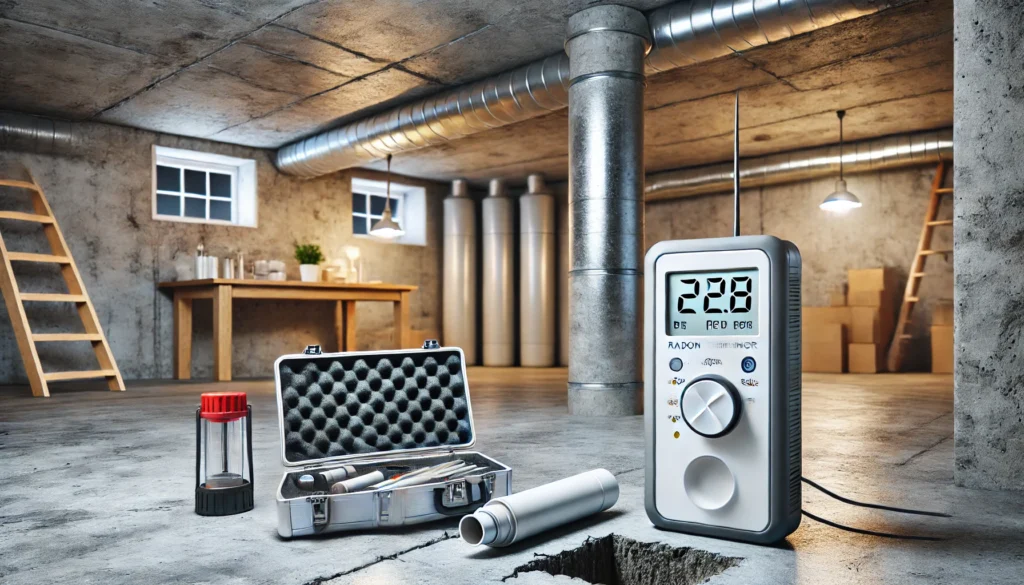
If a landlord declines to test or to allow testing, you still have options. Tenants do not need a landlord’s permission to place a certified radon test in a unit. Short-term kits are available at hardware stores and produce results within two to seven days. Professional testing provides more accurate results and certified documentation.
If your test reveals levels at or above the CDC-referenced action level of 4.0 pCi/L, share the certified results with your landlord in writing and request mitigation. At that point, you are presenting documented evidence of a health hazard, which carries more weight than an initial inquiry and may prompt action that a general request did not.
If elevated radon remains unaddressed, options include contacting the local health department for guidance, consulting a tenant rights organization, or factoring the situation into a lease renewal decision. All of these positions are stronger when you have certified test documentation in hand.
What Professional Testing Provides
Professional radon testing from a certified provider produces a documented result on official letterhead with the tester’s credentials. This is more defensible than a DIY kit result in any landlord conversation or, if needed, a legal context. The test is non-invasive, requires no drilling or modification to the unit, and can typically be scheduled within a few days.
EnviroPro 360 provides certified radon testing throughout Augusta, Evans, Martinez, Grovetown, North Augusta, Aiken, and surrounding areas of Georgia and South Carolina. If you are a renter who wants documented radon results to support a conversation with your landlord, contact us to schedule testing.