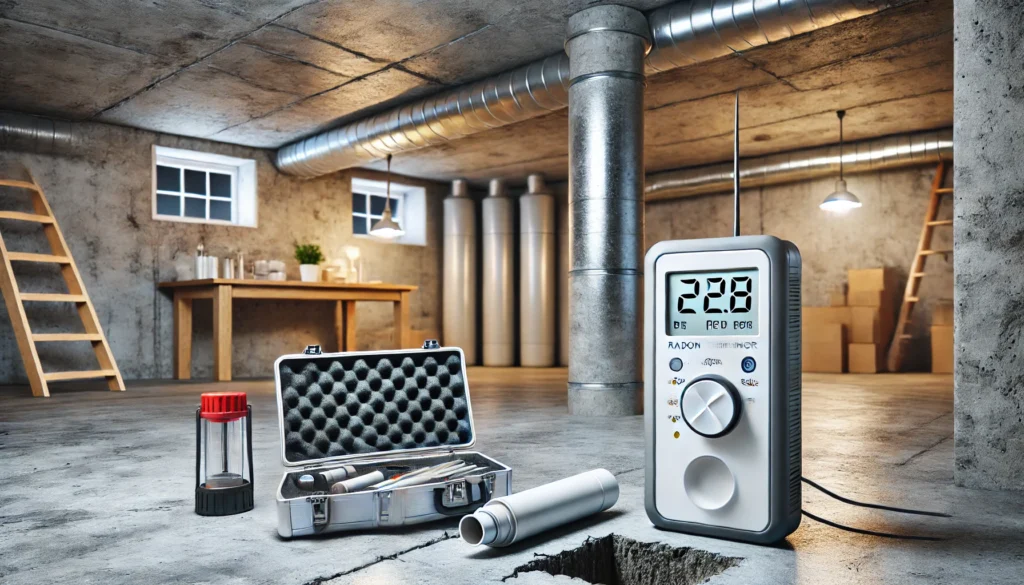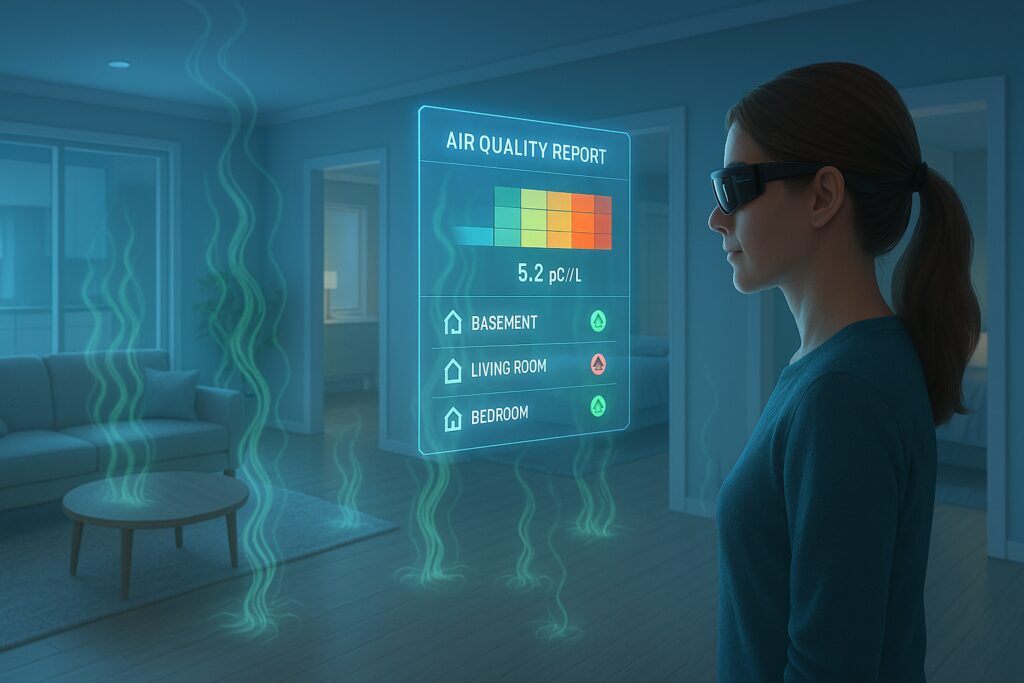
Radon concentrations in homes are not constant. They fluctuate with weather conditions, ventilation patterns, and seasonal changes in how a home is occupied and sealed. Of all the variables that affect indoor radon levels, cold weather is one of the most consistent drivers of elevated readings. If you are scheduling a radon test and want the most accurate picture of your actual risk, winter is the right time to do it.
Why Radon Levels Rise in Winter
Two mechanisms drive radon higher in cold weather, and they work together.
The first is reduced ventilation. During warm months, windows and doors open frequently, outdoor air dilutes indoor radon, and air exchange keeps concentrations from building up. In winter, homes are sealed. Windows stay closed for months at a time. Radon that enters through the foundation accumulates in the indoor air rather than being displaced by fresh air from outside.
The second is the stack effect. Warm indoor air is lighter than cold outdoor air. As heated air rises through the structure and exits through upper levels, it creates a low-pressure zone in the lower levels of the home. That pressure differential draws soil gas, including radon, in through foundation cracks, sump pits, and utility penetrations from below. The greater the temperature difference between inside and outside, the stronger this suction effect. In a CSRA winter, when homes are kept warm and outdoor temperatures drop into the 30s and 40s, this effect can be significant.
The combination of reduced outdoor air dilution and increased negative pressure at the foundation means that indoor radon concentrations in winter can be noticeably higher than the same home would show in July or August.
Why Winter Testing Gives You a More Accurate Risk Picture
The purpose of radon testing is to understand your actual long-term exposure, not just a snapshot of one week in favorable conditions. If you test only in summer, when windows are occasionally open and stack effect is weaker, you may record a result that is meaningfully lower than what you are exposed to during the six or seven months of the year when the home is sealed and heating systems run continuously.
The EPA recommends closed-house conditions for radon testing regardless of season, but winter naturally produces those conditions. Residents are not opening windows or running whole-house fans. The home operates the way it does for the majority of the year. A test conducted during this period reflects risk more accurately than one conducted in conditions that are unrepresentative of normal use.
For families with children, winter testing is particularly important. School-age children and adults who work from home spend significantly more time indoors during winter months. The overlap between elevated radon concentrations and increased indoor occupancy time represents the highest exposure period of the year.
Long-Term Tests for the Most Accurate Results
Short-term radon tests, which run for two to seven days, are useful for a quick assessment, particularly during real estate transactions. But because radon levels vary day to day based on barometric pressure, precipitation, and HVAC operation, a single short-term result represents a narrow slice of time rather than an average.
Long-term tests, which run for 90 days or more, average out these fluctuations and give a result that reflects your actual annual exposure. Starting a long-term test in late fall or early winter means the monitoring period covers the highest-radon months of the year, producing a result that is weighted toward the conditions that matter most for your health risk.
According to the CDC, radon is the second leading cause of lung cancer in the United States after smoking. Long-term exposure drives the risk, and long-term exposure is highest during the months when homes are most tightly sealed and radon concentrations are highest.
What to Do If Your Winter Test Comes Back Elevated
The EPA recommends mitigation for homes testing at or above 4.0 pCi/L. If your result is between 2.0 and 3.9 pCi/L, the EPA suggests considering mitigation, particularly if household members include children, pregnant women, or anyone with respiratory conditions.
Radon mitigation is handled by licensed contractors who install sub-slab depressurization systems or crawl space ventilation. EnviroPro 360 handles the testing side of this process. We provide certified radon measurements, document results, and help you understand what your numbers mean and what questions to bring to a mitigation contractor if your levels are elevated.
EnviroPro 360 serves Augusta, Evans, Martinez, Grovetown, North Augusta, Aiken, and surrounding communities throughout Georgia and South Carolina. If you have not tested recently, or if you want to test during the season when your results will be most informative, contact us to schedule a test this winter.