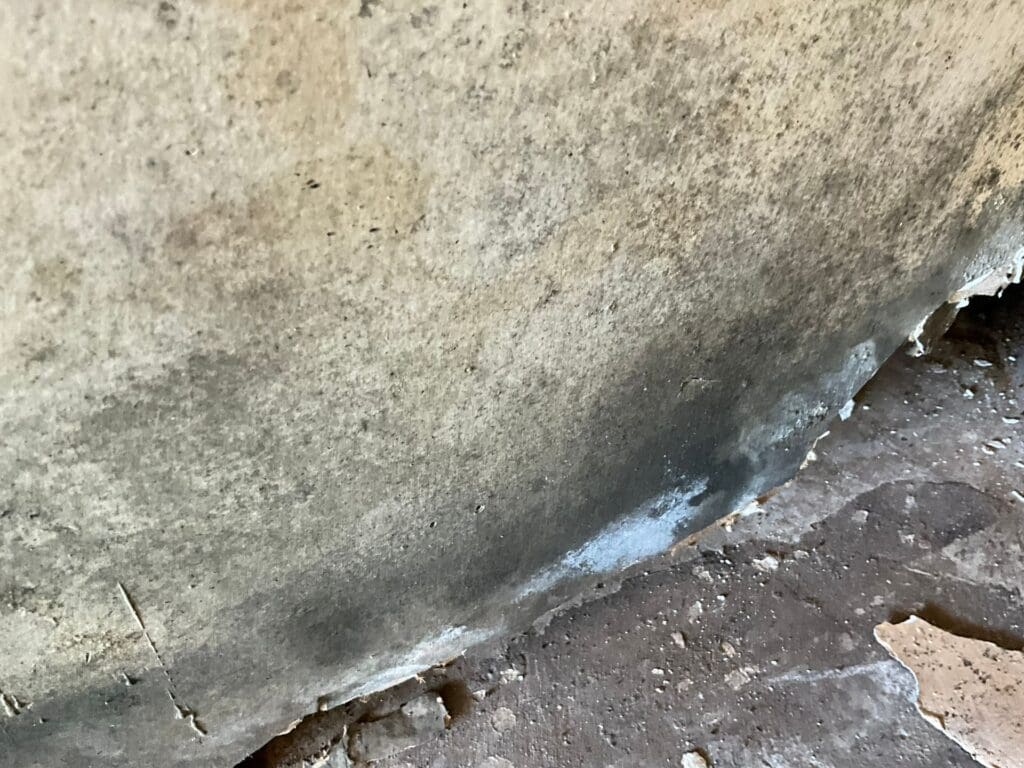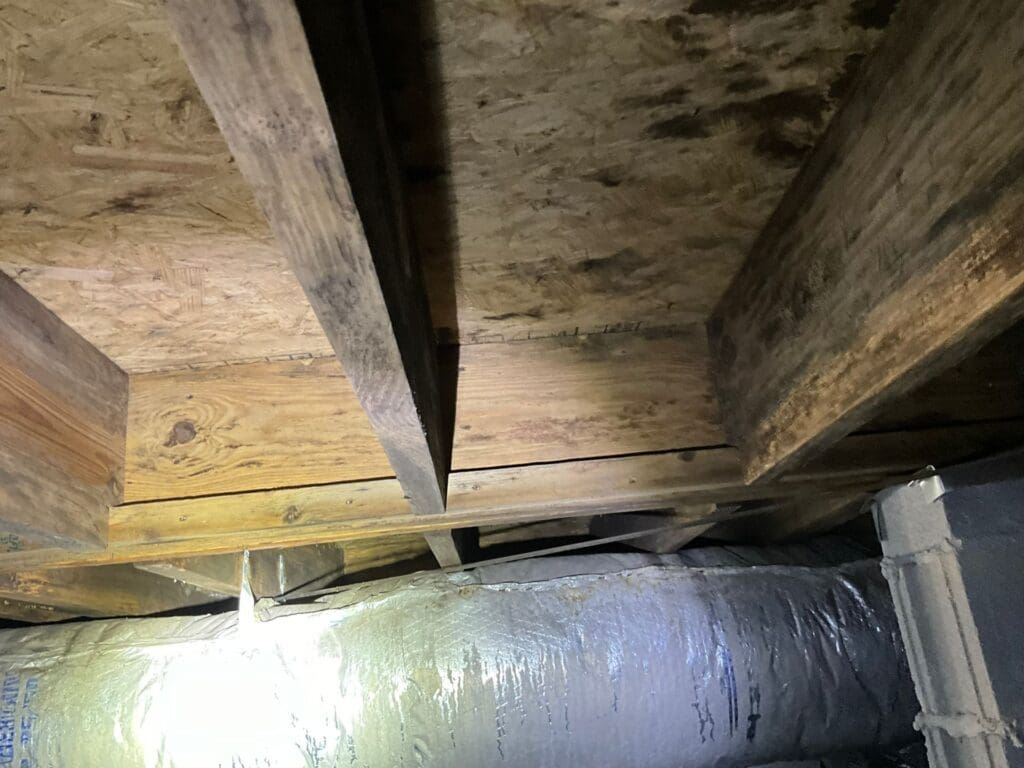
The bathroom exhaust fan is one of the more overlooked contributors to mold problems in CSRA homes. Its job is to remove humid air from the bathroom before it condenses on surfaces and migrates into wall cavities. When the fan is undersized, clogged, or vented incorrectly, it does not accomplish that — and moisture accumulates exactly where it should not.
In Augusta and surrounding areas, where homes run cooling systems for six months and bathrooms tend toward higher baseline humidity than homes in drier climates, a fan that is only partly functional creates conditions for mold growth faster than homeowners typically expect.
The Attic Venting Problem
One of the most common exhaust fan failures in older CSRA homes is not fan failure at all — it is improper termination. Many exhaust fans installed before the 1990s, and some installed since, vent into the attic space rather than through the roof or soffit to the exterior. This means humid bathroom air is being discharged into the attic, where it condenses on roof sheathing and framing, creating attic mold that has nothing to do with a leak.
If you have not confirmed that your bathroom fan duct exits through the exterior of the home, that is the first thing to verify. A duct that terminates inside the attic insulation or at an interior soffit is not functioning as intended regardless of how well the fan itself works.
Signs the Fan Is Not Controlling Moisture
These indicators suggest the exhaust fan is not removing enough moisture from the bathroom:
- Mirror remains fogged more than 10 minutes after the shower ends. A properly sized and working fan should clear mirror fog within 10 minutes of running after a shower.
- Paint or drywall near the ceiling is bubbling, peeling, or soft. These are signs of moisture accumulation in the ceiling substrate above the shower.
- Musty odor that returns after cleaning. Surface mold that keeps coming back indicates a moisture condition that has not been resolved — cleaning removes the visible growth but not the conditions driving it.
- Condensation dripping from the fan grille. Water dripping from the fan housing means humid air is condensing inside the duct, often because the duct runs through a cold attic space and the air does not exit before cooling.
- Visible mold on the ceiling above the shower or in corners. This is the end-stage indicator — the moisture has already found a surface to colonize.
How to Test Fan Performance
A basic airflow test: hold a single sheet of tissue paper flat against the fan grille while the fan is running. If the tissue does not press firmly against the grille and stay there, the fan is not moving enough air. Bathroom exhaust fans are rated in CFM (cubic feet per minute). The general guideline is one CFM per square foot of bathroom floor area, with a minimum of 50 CFM for small bathrooms. Most older fans installed in residential construction are rated well below current recommendations.
Also check the fan cover itself. Dust and lint buildup on the grille significantly reduces airflow. A grille that looks like a gray lint trap is blocking a meaningful percentage of the fan’s capacity.
Operating Habits That Help
Even a properly installed and sized fan will not keep up with moisture if it is not run long enough. Running the fan only during the shower is not sufficient — the moisture released during a hot shower continues to evaporate from wet surfaces for 15 to 20 minutes after the water stops. The fan needs to run through that period.
In homes where occupants shower in the morning and close the bathroom door when leaving, humidity can remain elevated for hours. A timer switch or humidity-sensing fan switch can ensure the fan runs the necessary duration without requiring manual operation.
What a Failing Fan Does to Wall Cavities
The EPA notes that moisture intrusion into wall and ceiling assemblies is a primary driver of indoor mold growth, and that controlling humidity at the source is the most effective prevention strategy. When bathroom humidity is not exhausted to the exterior, it migrates through ceiling drywall and into the framing above. In CSRA homes with minimal attic insulation separating bathroom ceilings from the attic deck, this moisture pathway is direct.
Mold growing in ceiling joists above a bathroom is not visible from the bathroom itself and will not be detected by cleaning the visible bathroom surfaces. It becomes detectable through odor, through inspection from the attic side, or through professional air sampling.
When Professional Testing Is Needed
The CDC documents that mold exposure can cause respiratory symptoms, eye irritation, and worsened asthma, with more severe effects in sensitive individuals. If mold in a bathroom keeps recurring after cleaning, if occupants have ongoing respiratory symptoms that improve when away from home, or if the bathroom has had a fan venting into the attic for years, professional air sampling and inspection is the appropriate next step.
EnviroPro 360 provides mold inspection and air sampling across Augusta, North Augusta, Evans, Aiken, and the CSRA, including thermal imaging to identify hidden moisture in ceiling assemblies and wall cavities. Contact EnviroPro 360 to schedule an inspection.