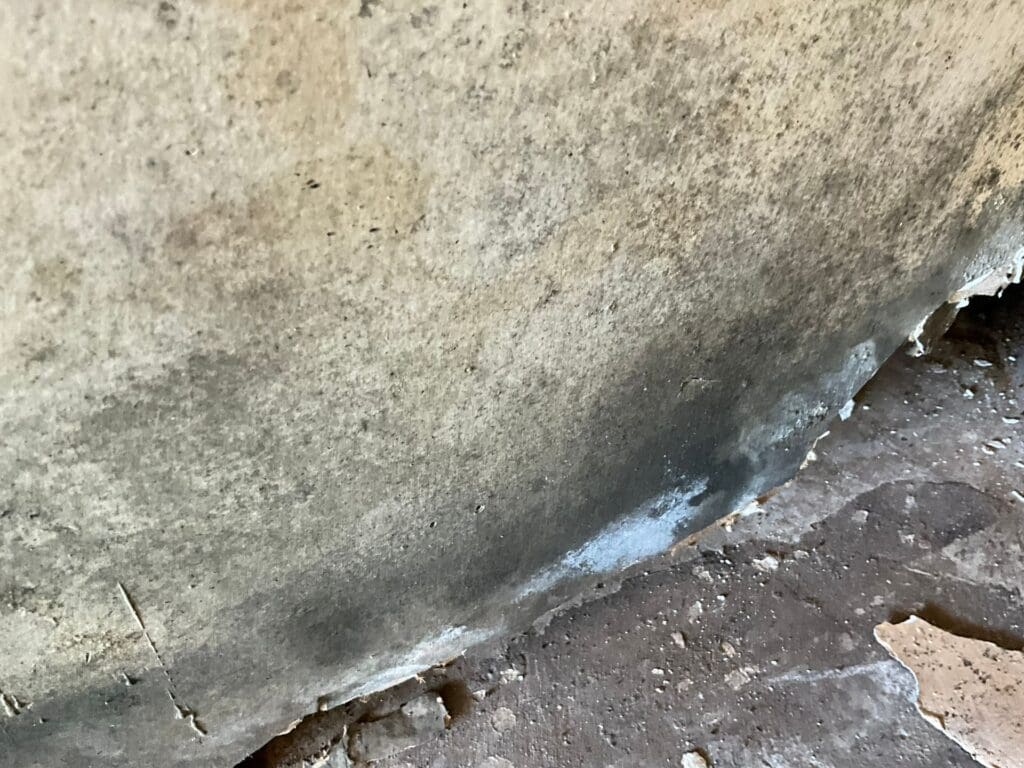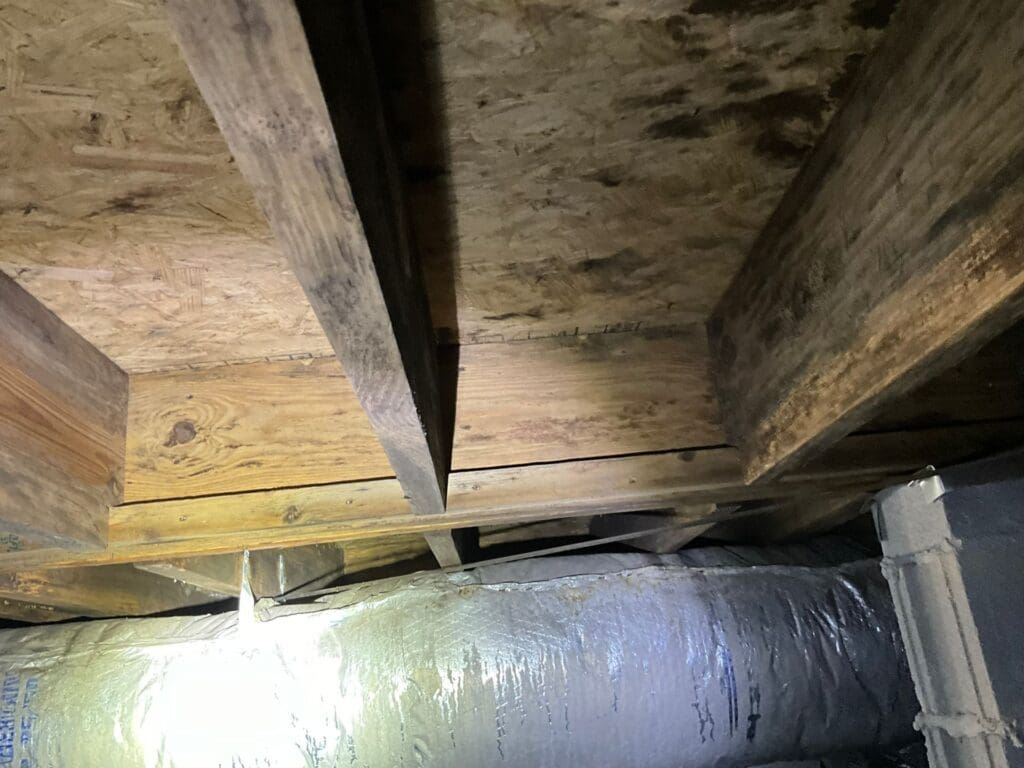
In Augusta and the CSRA, winter does not bring the heavy snow or ice that causes dramatic roof failures in northern climates. It brings something harder to detect: sustained rainfall, temperature swings between cold nights and mild afternoons, and the gradual degradation of roof components that allows water to enter slowly and silently into attic insulation and structural framing.
A roof leak that begins in December may not produce visible ceiling staining until March. By the time the stain appears, months of moisture have been depositing into insulation, wood framing, and wall cavities, and mold colonies have had time to establish through the warming of late winter and early spring.
Why Winter Roof Leaks Go Undetected
Several factors cause winter roof leaks to remain invisible for extended periods in CSRA homes:
- Insulation absorbs and holds moisture: Attic insulation batts wick water from a drip or seep and hold it against wood framing, preventing moisture from reaching the ceiling drywall below where it would become visible as a stain. The insulation can remain wet for weeks before saturation is sufficient to cause visible damage.
- Cooler temperatures slow mold visibility: Mold growth slows at cooler temperatures, so early-stage colonization on wet insulation or roof decking produces no visible discoloration or detectable odor during the coldest months. As temperatures warm in late February and March, growth accelerates and the problem becomes apparent quickly.
- Reduced attic access in winter: Most homeowners enter their attic infrequently year-round, and rarely during winter. A leak that begins in December may not be discovered until a spring cleaning project or a home sale inspection months later.
- Intermittent leaks dry partially between storms: A roof that leaks only during sustained rainfall or a specific wind direction deposits moisture repeatedly without ever producing a constant drip in the living space, making the pattern hard to recognize from inside the home.
How Water Travels From Roof to Living Space
According to the EPA, mold can establish on wet building materials within 24 to 48 hours. Water entering through a roof failure does not stay at the entry point. It follows gravity and structural pathways through the building:
- Water entering at a failed pipe boot or lifted flashing runs along the roof decking until it reaches a low point, then drops into insulation below
- Saturated insulation transfers moisture to the top chord of ceiling joists and wall top plates, which absorbs into wood framing and spreads laterally
- Moisture that reaches the ceiling drywall migrates along paper facing before becoming visible as a brown or yellow stain, often far from the actual entry point
- Moisture that contacts HVAC ductwork or an air handler located in the attic enters the duct system, deposits on interior surfaces, and eventually distributes mold spores through the living area with each heating cycle
CSRA Roof Vulnerabilities During Winter
Augusta-area homes face specific roof stress points during winter months that differ from freeze-thaw climates:
- Pipe boots and plumbing stack flashings: Neoprene boot seals degrade over time and fail to maintain a watertight seal around roof penetrations, particularly after repeated temperature cycling between cold nights and warm CSRA afternoons
- Step flashing along dormers and additions: Older CSRA homes with additions often have step flashing that has lifted or separated due to wood movement from decades of seasonal expansion and contraction
- Valley flashing and open valleys: Valleys that channel large volumes of water during heavy winter rainfall are common failure points when debris accumulates or flashing metal corrodes along the seam
- Ridge cap shingles: Wind-driven rain during winter storms enters beneath loose or missing ridge cap shingles at the peak where two roof sections join
Warning Signs to Identify Before Spring
- Ceiling discoloration or water staining that appeared after a period of sustained rain
- A musty odor in upper rooms or in the HVAC airstream that worsens following rain events
- Peeling or bubbling paint on ceilings near exterior walls or around light fixtures and exhaust fans
- Visible dark staining on the underside of roof decking when viewed from inside the attic hatch
- Wet, compressed, or discolored insulation batts in the attic indicating prior or ongoing moisture intrusion
According to the CDC, mold exposure causes respiratory irritation, coughing, and worsened asthma. When attic mold reaches an HVAC air handler or supply ductwork, spores are distributed throughout the living space with every heating cycle, exposing occupants in rooms where no visible mold is present.
What a Professional Roof Leak and Mold Assessment Involves
EnviroPro 360 conducts certified mold inspections that specifically address roof-leak-associated moisture in attics and upper-floor wall assemblies throughout Augusta, Evans, North Augusta, Aiken, and the CSRA. Our inspectors bring over 20 years of experience to each assessment and use:
- Thermal imaging to locate cold spots in the attic and ceiling plane that indicate active moisture intrusion or wet insulation that has not yet produced visible staining below
- Moisture metering of roof decking, ceiling joists, and wall framing to quantify moisture content and identify materials that require removal before mold growth advances
- Air sampling from attic and living spaces with AIHA-accredited laboratory analysis to confirm whether spore concentrations are elevated and mold is actively growing in the structure
EnviroPro 360 is an independent testing company. We document conditions and provide findings. A licensed roofing contractor addresses the roof repair and a licensed mold remediation contractor addresses any affected building materials. Our role is assessment and post-remediation clearance testing, which ensures our clearance documentation is unbiased and credible for real estate transactions, insurance claims, and contractor verification.
If your home experienced roof leaks or significant rainfall events this winter, schedule a certified inspection with EnviroPro 360 before spring temperatures accelerate any mold growth already established in your attic. Contact us to arrange a roof leak moisture assessment for your Augusta or CSRA home.