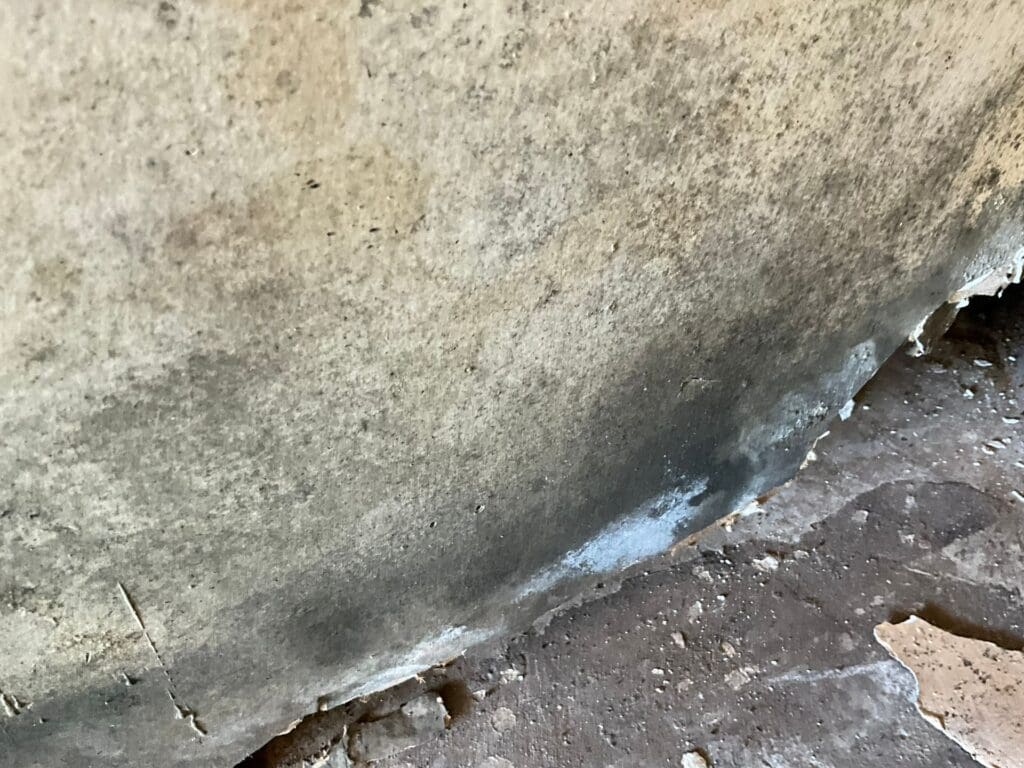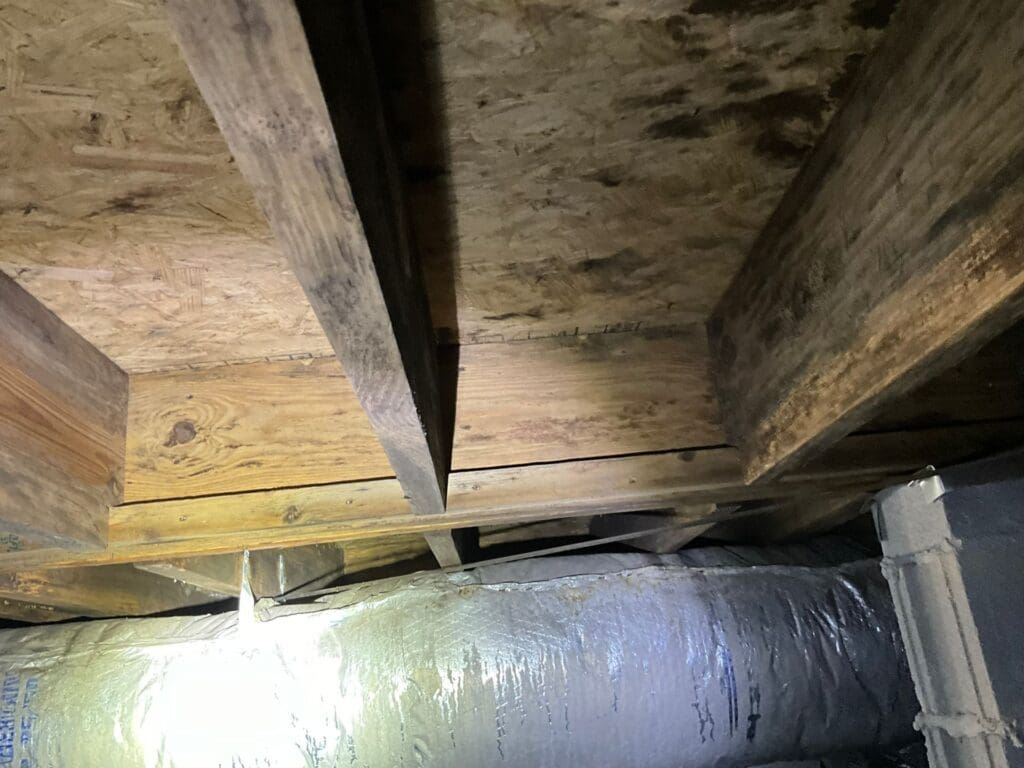
Winter mold problems in Augusta-area homes rarely start in winter. They start in October and November, when cooler temperatures interact with residual summer moisture and the HVAC system transitions from cooling to heating. By the time a ceiling stain becomes visible or a crawl space odor reaches the living area, the moisture source that caused it has often been active for weeks.
Understanding where fall moisture intrusion originates makes it possible to catch problems at the point when intervention is least disruptive and least expensive.
The HVAC Transition Problem
In the CSRA, cooling systems typically run from April through October. When heating begins, several things happen simultaneously that create mold risk. The HVAC supply registers that have been delivering cold air all summer begin delivering warm air. In homes where ductwork runs through crawl spaces or unconditioned attic spaces, the temperature differential between the duct exterior and the surrounding air reverses — which can cause condensation to form on the outside of ductwork rather than the inside.
More significantly, condensate drain lines that have been handling daily drainage throughout the cooling season sometimes develop partial blockages from algae growth over the summer. When the system shuts down for the season, any remaining water in a partially blocked line can pool in the drain pan. If that pan is not inspected before the next cooling season begins, standing water left through winter is a mold incubator. Professional inspection before or during the seasonal shutdown is the opportunity to catch this.
Gutters, Downspouts, and Foundation Moisture
Georgia leaf fall peaks in November, which is also when the region’s fall rain season delivers some of its heaviest rainfall. Gutters that are full of wet leaves cannot drain. Water backs up and overflows at the fascia, running down exterior walls and pooling along the foundation rather than being directed away by the downspout system.
Foundation moisture that accumulates in November and December migrates through crawl space vents and into floor framing. In CSRA homes where the crawl space vapor barrier is incomplete, deteriorated, or absent, ground moisture rises directly into the subfloor structure. Crawl space mold that starts in fall is often not detected until spring, when a musty odor finally reaches the living area above.
Five Signs of Fall Moisture Intrusion
- Musty odor in a specific room or from HVAC registers. A smell that emerges when the heat first turns on often indicates mold in ductwork or the air handler that formed during the cooling season.
- Brown or yellow ceiling stains near vents or in corners. New staining that appears in fall indicates an active moisture source — roof penetrations, around attic fans, or at flashing junctions are common locations.
- Rust or orange streaking on metal near pipes or vent collars. Surface rust indicates sustained moisture exposure on metal components that should be dry.
- Bubbling, peeling, or soft drywall near windows or at the base of exterior walls. These indicate moisture entering through the building envelope — often through window frame gaps or caulking that has dried and cracked over the summer.
- Respiratory symptoms among household members that worsen indoors. Location-specific symptoms that began after the HVAC switched to heating can indicate mold being distributed through the duct system.
Why Fall Is the Right Time to Act
The EPA notes that controlling moisture is the most effective way to prevent mold growth, and that wet building materials should be dried within 24 to 48 hours to prevent mold establishment. Fall is the optimal intervention window because moisture sources that are found and corrected before homes seal up for winter do not have months of trapped humidity to compound the problem.
Once heating begins and homes stay closed, any moisture that is already present has nowhere to go. The combination of reduced ventilation, warm indoor temperatures, and damp building materials creates sustained mold-growth conditions that persist through the entire winter. The CDC documents that prolonged mold exposure can worsen asthma and cause chronic respiratory symptoms — outcomes that are avoidable when moisture sources are found before they become established colonies.
Schedule a Pre-Winter Inspection
EnviroPro 360 provides mold inspection, moisture mapping, and leak detection across Augusta, Aiken, Evans, North Augusta, and the CSRA. Pre-winter inspections include crawl space and attic assessment, HVAC drain pan inspection, and thermal imaging for concealed moisture in wall and ceiling assemblies. Contact EnviroPro 360 to schedule a fall inspection before the heating season is fully underway.