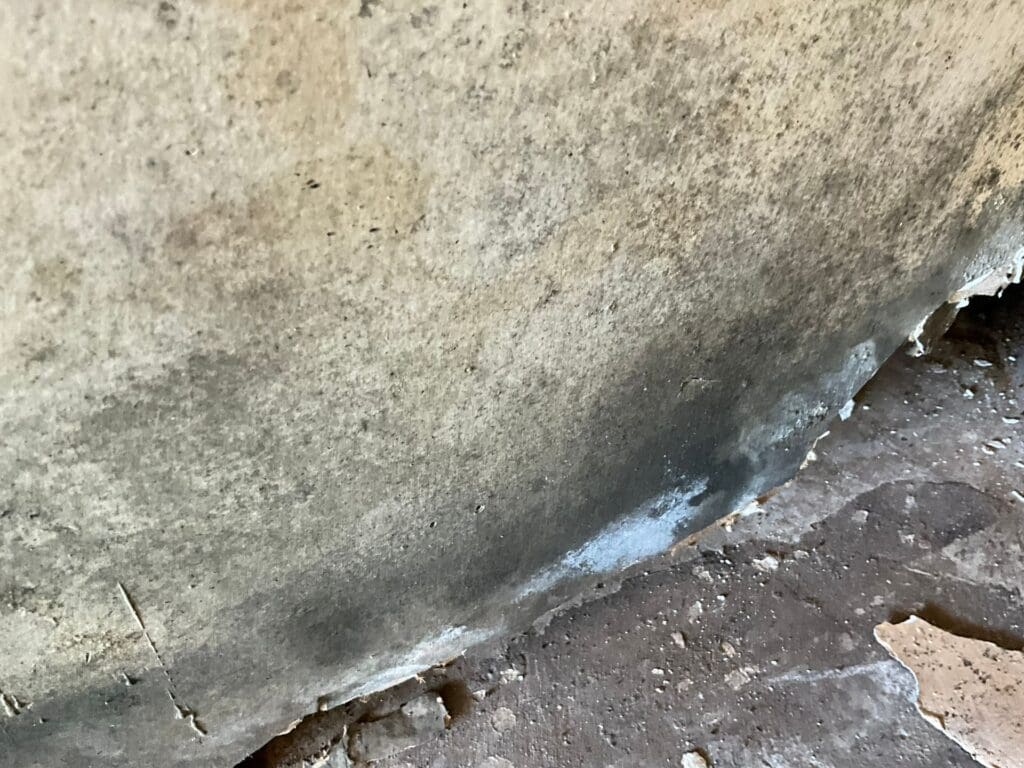
A dehumidifier running in your living room and showing 48 percent relative humidity can create confidence that indoor moisture is under control. That confidence is often misplaced. The reading reflects conditions in the air immediately around the unit. It says nothing about what is happening inside the crawl space below, the wall cavity behind the bathroom tile, or the attic framing above.
In Augusta and the CSRA, where spring and summer humidity returns aggressively after short winters, the gap between what a dehumidifier reads and what is actually happening in building materials is one of the more common reasons mold problems develop undetected.
What a Dehumidifier Measures and What It Misses
Dehumidifiers measure relative humidity in the air passing through or around the unit. They are effective at reducing airborne moisture in the immediate zone where they operate. What they cannot measure is moisture that is already absorbed into building materials or trapped in areas the unit does not reach.
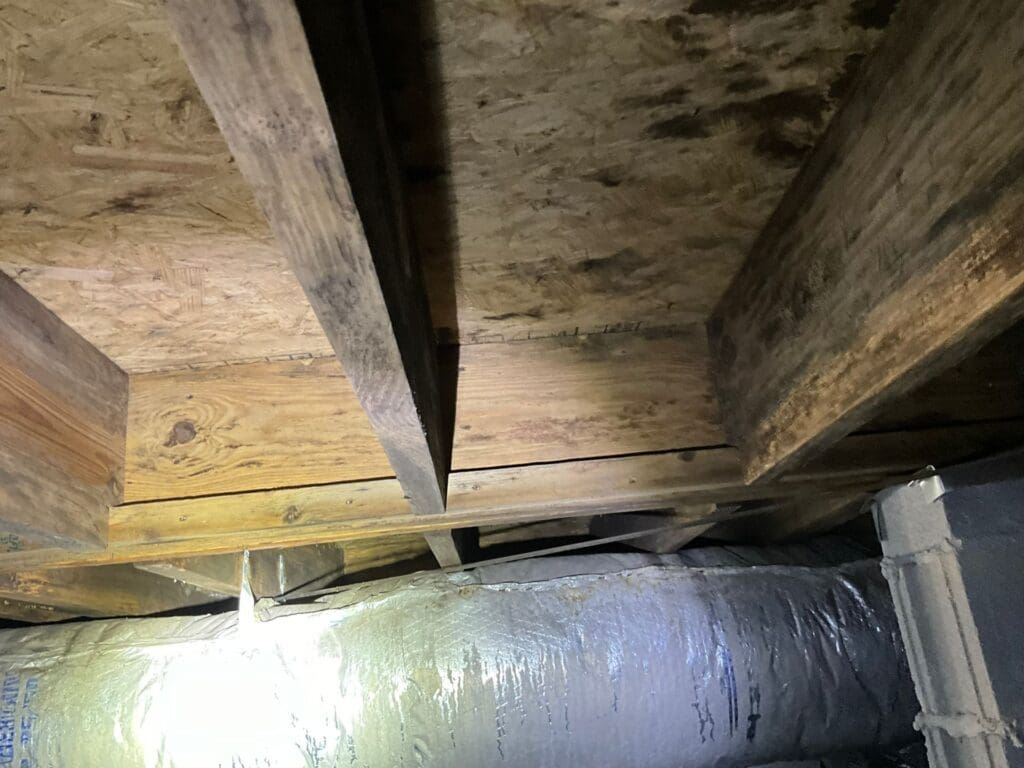
Wood framing, drywall, insulation, and concrete each absorb and hold moisture independently of the surrounding air humidity. A floor joist in a crawl space can hold moisture at a level sufficient to support mold growth even when the crawl space air registers at a moderate humidity level. An interior wall cavity can stay damp from a slow plumbing leak for weeks while the room air reads normal. The dehumidifier in the basement or bedroom has no way to detect any of this.
The Crawl Space Problem
Most CSRA homes have vented crawl spaces. When spring arrives and outdoor humidity rises, humid outside air enters through crawl space vents and contacts the cooler surface of the floor framing above. Condensation forms on the joists and subfloor. A dehumidifier in the living room above has no effect on this process. The crawl space develops its own humidity cycle that is largely independent of what the unit upstairs reads.
The EPA notes that mold growth in crawl spaces and wall cavities is a recognized indoor air quality concern because it is not detectable from inside the living space. Crawl space mold that establishes on floor joists in spring can produce musty odors that reach the living area by summer, months after the growth began.
Signs the Dehumidifier Is Missing the Real Problem
These indicators suggest moisture is present somewhere the unit cannot reach:
- A musty odor that persists even when the dehumidifier is running and the display shows an acceptable reading
- Walls that feel cool and slightly damp in areas away from plumbing
- Morning condensation on windows in rooms not served by the dehumidifier
- HVAC filters that become discolored quickly or develop an earthy smell
- Mold that keeps returning to the same surface locations after cleaning
- Elevated allergy or respiratory symptoms in household members that are consistently worse at home
Each of these points to moisture that the dehumidifier is not addressing because it is in a location the unit cannot monitor or control.
What Professional Moisture Assessment Measures
Professional moisture assessment uses tools that measure what dehumidifiers cannot. Moisture meters measure the actual moisture content inside wood, drywall, and other building materials — not the surrounding air. Readings above 19 percent moisture content in wood framing indicate conditions suitable for mold growth regardless of what the room air humidity reads.
Thermal imaging cameras detect temperature anomalies in walls and ceilings that indicate the presence of moisture — a cold, wet wall cavity will show a distinct thermal signature from a dry one. This allows inspectors to identify wet areas inside building assemblies without opening walls.
Air sampling at multiple locations throughout the home, including the crawl space and attic, provides a picture of where spore concentrations are elevated. A single reading in one room, whether from a dehumidifier or an air quality monitor, does not capture this distribution.
When to Schedule a Professional Moisture Inspection
The CDC recommends professional assessment when mold is suspected but not located, and when household members experience location-specific respiratory symptoms. A professional moisture inspection is appropriate when:
- A musty odor is present but the source cannot be identified
- The home has a crawl space that has not been professionally assessed within the past year or two
- A water event occurred in the past 12 months and materials were not professionally dried and verified
- An HVAC system has been running without documented maintenance for an extended period
- Household members have respiratory symptoms that are consistently worse at home and better elsewhere
Schedule a Moisture and Mold Assessment
EnviroPro 360 provides professional mold inspection and moisture mapping across Augusta, Aiken, North Augusta, and the CSRA, including crawl space evaluation, thermal imaging, and air sampling at multiple locations. Contact EnviroPro 360 to schedule a moisture assessment.