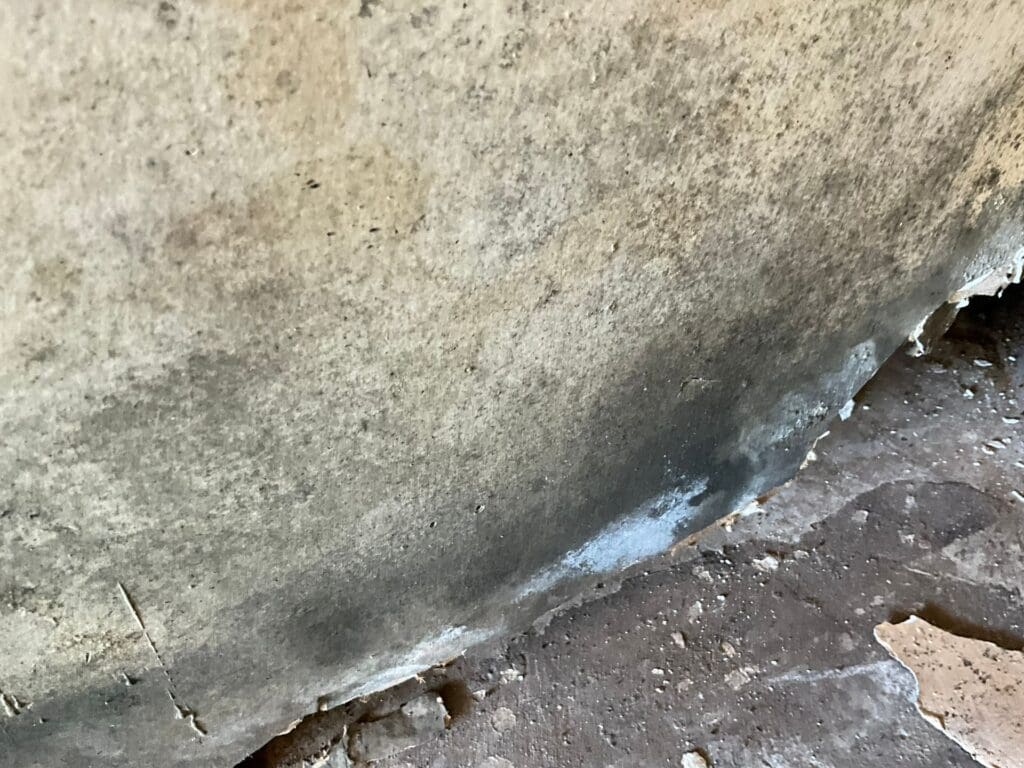
If your home smells musty when the AC kicks on, or your family’s allergy symptoms seem worse indoors than outside, it may not just be summer pollen.
It could be mold.
Summer in the Augusta and CSRA region brings heat, afternoon thunderstorms, and outdoor humidity that routinely climbs above 70 percent. That combination of warmth and moisture creates ideal conditions for mold growth, often inside wall cavities, attic spaces, and HVAC components that are not visible during routine home maintenance.
Understanding why mold accelerates in summer and knowing where it commonly hides in CSRA homes is the first step toward protecting your property before a minor issue becomes a major repair.
Why Mold Grows Faster in Summer
Mold requires three things to establish and spread: moisture, warmth, and a porous surface such as drywall, wood framing, or insulation. Georgia and South Carolina summers provide all three in abundance.
When outdoor air with high relative humidity enters a home, it contacts surfaces cooled by central air conditioning. The temperature differential causes water vapor to condense on those surfaces, the same process that produces condensation on a cold glass. Insulation inside wall cavities, the underside of roof decking, and wood framing around HVAC ducts are all vulnerable to this cycle. Mold spores that settle on damp organic material can begin growing within 24 to 48 hours under warm conditions.
According to the EPA, indoor relative humidity should be kept below 60 percent to discourage mold growth. During Augusta summers, outdoor humidity frequently exceeds that threshold, and any gap in the building envelope around doors, windows, or utility penetrations allows humid air to migrate into conditioned spaces and building materials.
According to the CDC, mold exposure is associated with nasal congestion, throat irritation, coughing, and worsened asthma symptoms. For individuals with existing respiratory conditions, young children, or immunocompromised occupants, symptoms can develop more rapidly and at lower spore concentrations.
Where Summer Mold Hides in CSRA Homes
Summer mold problems frequently start in areas that receive little regular inspection. Common concealed growth sites in Augusta-area homes include:
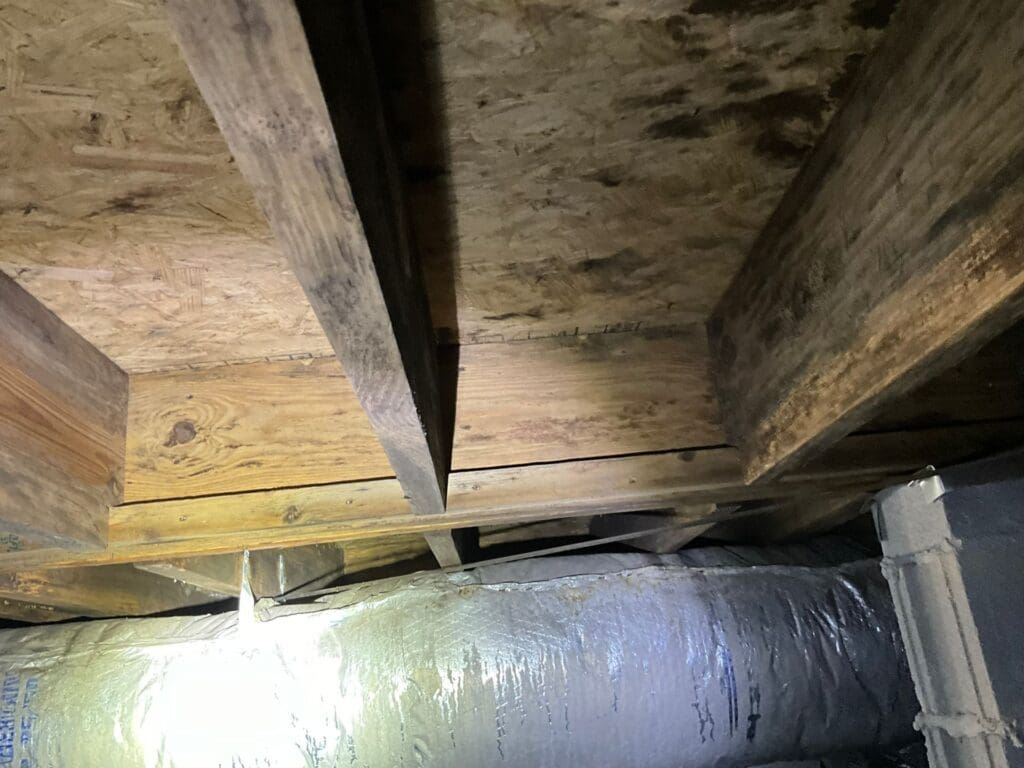
- Crawl spaces: Warm outdoor air flows beneath the home, contacts cooler subflooring, and deposits moisture on wood joists and insulation. Homes in Evans and Grovetown with unencapsulated crawl spaces are particularly susceptible. Through the stack effect, mold spores established in the crawl space migrate upward through floor penetrations and into the living area.
- Attics: Poor soffit and ridge ventilation traps humid air against roof decking, where mold colonies establish on OSB or plywood sheathing and can go undetected for months.
- HVAC drain pans and duct interiors: Air conditioning systems produce condensate during normal operation. A partially blocked drain pan or a sweating supply duct provides a consistent moisture source for mold growth that is then distributed through the home during each cooling cycle.
- Bathrooms and laundry rooms: Daily moisture output combined with inadequate exhaust ventilation allows humidity to saturate drywall and tile grout over repeated cycles.
- Basements and interior utility closets: Below-grade spaces remain cool year-round, and without adequate vapor control, condensation accumulates on foundation walls and flooring materials.
Signs That Summer Mold May Be Present
Mold does not have to be visible to affect indoor air quality. Watch for these indicators in your home during summer months:
- A persistent musty or earthy odor that intensifies when the AC runs
- Allergy or respiratory symptoms that are worse indoors than outside
- Visible discoloration on ceilings, walls, or around window frames
- Peeling paint or bubbling in areas without a known water damage history
- Condensation on interior window glass or cold-water supply pipes
A pattern worth noting: if symptoms consistently improve when occupants leave the home and worsen when they return, elevated indoor spore counts are worth investigating professionally rather than attributing to seasonal allergies.
Practical Measures to Reduce Summer Mold Risk
Several maintenance steps reduce moisture accumulation in CSRA homes during summer:
- Run a dehumidifier in crawl spaces, basements, or other high-humidity zones and maintain indoor relative humidity between 40 and 50 percent
- Schedule annual HVAC maintenance that includes inspection of the drain pan, evaporator coil, and accessible ductwork
- Ensure bathroom and kitchen exhaust fans vent to the exterior, not into attic space
- Seal foundation and crawl space penetrations where outdoor humid air can enter
- Address roof leaks, gutter overflow, and grading issues promptly; standing moisture against the foundation migrates into wall assemblies through capillary action
When to Schedule a Professional Mold Inspection
Prevention reduces risk but cannot eliminate it in a climate with Augusta-level summer humidity. A professional mold assessment is appropriate when:
- A musty odor persists despite cleaning and improved ventilation
- A past water intrusion event was not addressed with professional drying equipment
- Unexplained respiratory symptoms are present in home occupants
- A home inspection report flagged elevated moisture readings or visible staining
EnviroPro 360 conducts certified mold inspections throughout the Augusta and CSRA region. Our inspectors use moisture meters to identify wet building materials, thermal imaging cameras to locate concealed moisture intrusion, and air sampling equipment connected to AIHA-accredited laboratories to quantify spore concentrations by species. The resulting report identifies problem areas with specificity and documents conditions before any remediation work begins.
EnviroPro 360 is an independent testing company. We perform the assessment and provide documented findings. A separate licensed remediation contractor addresses any physical cleanup or material removal. This separation ensures that our clearance testing is objective and that our findings carry no financial interest in the outcome of any remediation work.
If your home has developed a musty smell this summer, or you have not had an indoor air quality assessment in the past several years, schedule a certified mold inspection with EnviroPro 360. Contact us to arrange a professional inspection for your Augusta or CSRA home.