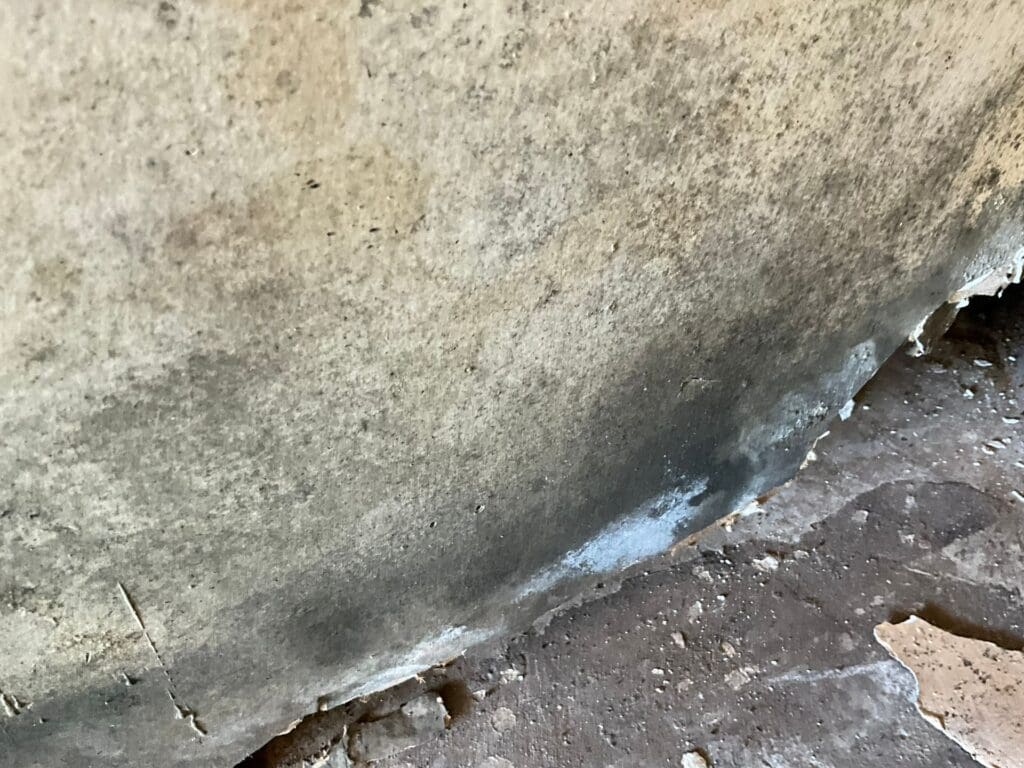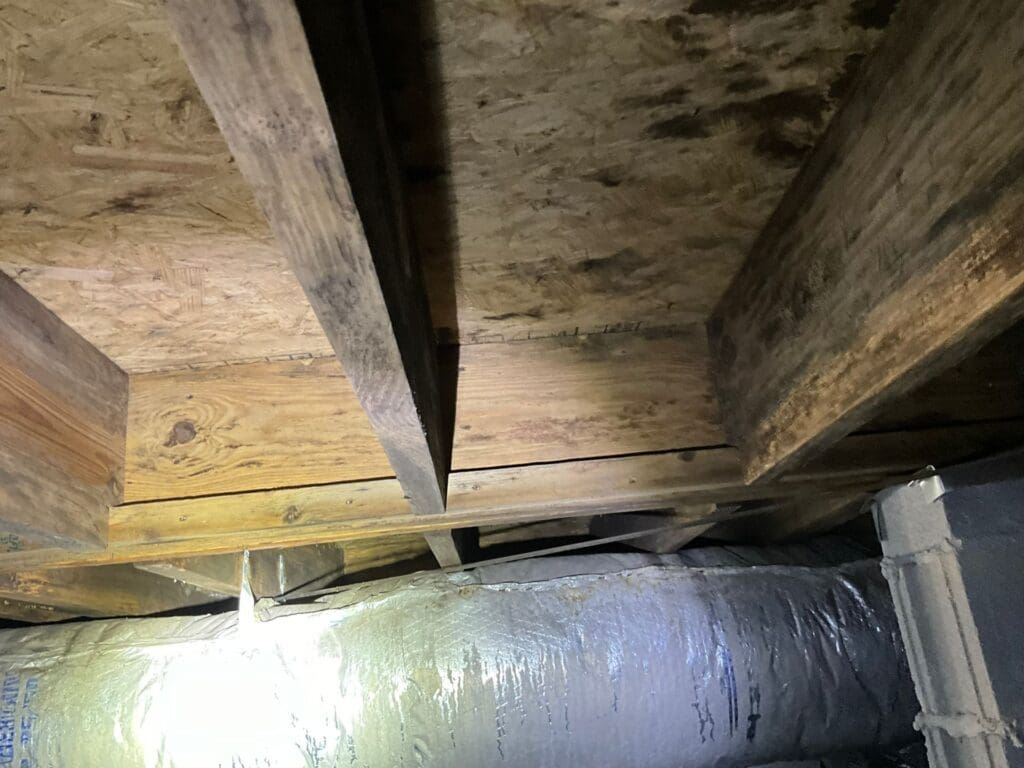
Discovering mold in your home is unsettling, and the instinct to clean it up immediately is understandable. Many Augusta-area homeowners scrub visible mold from bathroom tile grout, damp basement corners, or around a window frame, air out the space, and consider the matter resolved.
The problem is that visible surface mold is often the smallest part of what is actually present.
DIY cleanup removes what you can see. It does not address mold hidden in wall cavities, beneath flooring, inside HVAC components, or within porous building materials where household cleaners cannot penetrate. It also does not confirm whether the cleanup actually reduced indoor spore concentrations, or whether the moisture conditions that caused the growth are still present and will allow mold to re-establish within weeks.
Independent post-cleanup mold testing is the only way to know whether a DIY effort was actually effective.
Why DIY Cleanup Often Falls Short
According to the EPA, mold can grow on virtually any building material, including drywall paper, wood framing, insulation batts, and subflooring. Surface cleaning with household products removes visible colonies from non-porous surfaces but does not penetrate the substrate where root-like fungal hyphae have already colonized the material.
When homeowners disturb mold during cleaning without containment, they disperse spores into the air. Those spores settle in adjacent rooms and HVAC ducts and can establish new colonies within 24 to 48 hours given adequate moisture. Cleaning without air sampling before and after provides no evidence that overall indoor spore counts actually improved.
Common DIY cleanup shortfalls seen in CSRA homes include:
- Cleaning visible surface mold without identifying and repairing the moisture source that caused it
- Applying bleach to porous materials such as drywall or wood where it cannot reach embedded hyphae
- Cleaning without containment barriers, dispersing spores to previously unaffected areas
- Leaving disturbed drywall or wet insulation in place rather than removing compromised material
Structural Damage Below the Surface
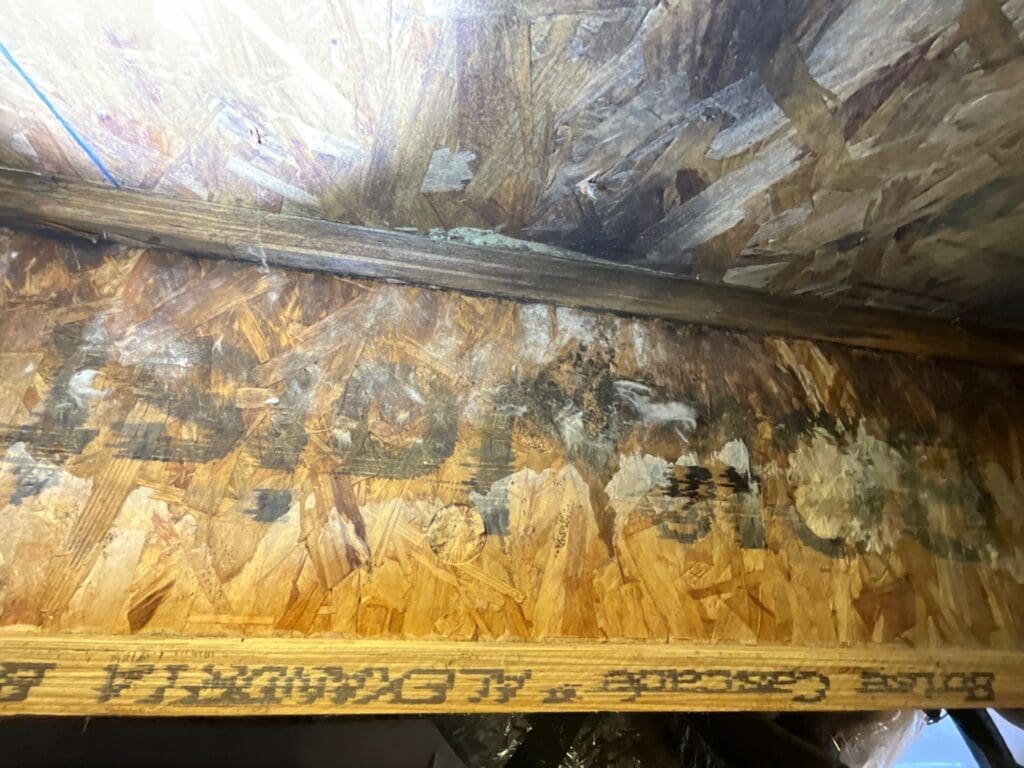
Subfloor mold is a common finding in CSRA crawl space homes where surface-level cleaning gave no visible indication of deeper colonization. The subfloor framing shown here had surface mold cleaned away by the homeowner, but significant wood degradation had already progressed beneath the surface. Structural mold of this type is identified through moisture metering and visual inspection from below the crawl space, not from above-floor cleaning efforts.
Health Risks That Persist After DIY Cleanup
According to the CDC, mold exposure is associated with respiratory irritation, coughing, throat discomfort, and aggravated asthma symptoms. For individuals with prior respiratory conditions, the elderly, young children, and those with weakened immune systems, elevated indoor spore counts carry meaningful health risk even after visible mold has been cleaned from surfaces.
Occupants who continue experiencing unexplained allergy symptoms, persistent coughing, or worsening asthma after a DIY cleanup effort should consider the possibility that active mold colonies remain present in the structure. Air sampling provides quantitative spore concentration data, identifying elevated levels before respiratory symptoms become the primary diagnostic indicator.
What a Post-Cleanup Mold Test Measures
A professional post-cleanup assessment goes well beyond a visual check. EnviroPro 360 uses the following methods to evaluate whether a DIY cleanup effort was effective:
- Air sampling: Pump-drawn air samples from the cleaned area and an unaffected exterior reference location are analyzed by an AIHA-accredited laboratory. The comparison identifies whether indoor spore concentrations remain elevated relative to outdoor baseline levels.
- Surface sampling: Swab or tape-lift samples from cleaned surfaces confirm whether viable mold remains on the material or whether the surface treatment was thorough.
- Moisture metering: Elevated moisture content in wall framing, subflooring, or drywall indicates conditions that will allow mold to re-establish regardless of surface cleaning.
- Thermal imaging: Infrared cameras identify temperature differentials that indicate moisture intrusion behind finishes, in areas the homeowner may not have identified as part of the original mold location.
When to Schedule Post-Cleanup Testing
Post-cleanup mold testing is appropriate for any Augusta-area homeowner who:
- Cleaned visible mold but did not identify and repair the moisture source that caused it
- Has experienced recurring mold growth in the same location after prior cleaning attempts
- Notices musty odors or respiratory symptoms that persist after cleanup
- Plans to sell the home and needs documentation confirming that conditions are resolved
- Cleaned a large or widespread mold growth area without professional containment in place
EnviroPro 360 is an independent testing company. We assess conditions and provide laboratory-backed documentation. A separate licensed remediation contractor addresses any physical cleanup or material removal that may be needed. This separation ensures our post-cleanup findings are objective and hold up in real estate transactions, insurance claims, and legal proceedings.
If you have recently cleaned mold in your Augusta or CSRA home and want to confirm the problem is actually resolved, schedule a certified post-cleanup mold inspection with EnviroPro 360. Contact us to arrange testing for your home.