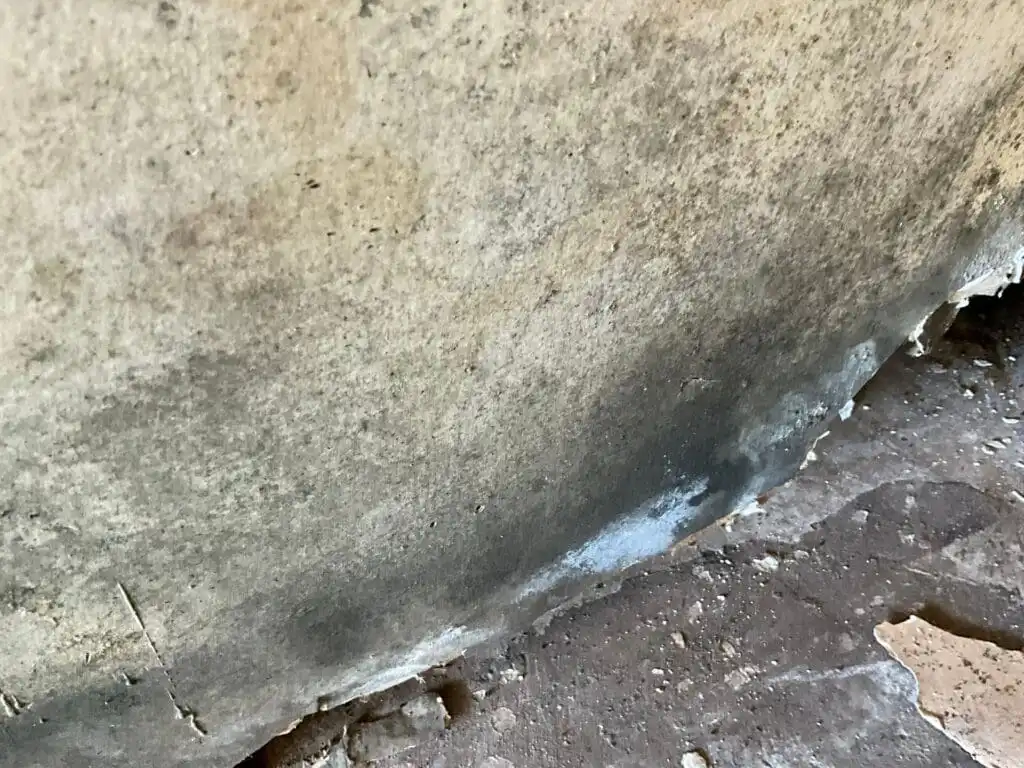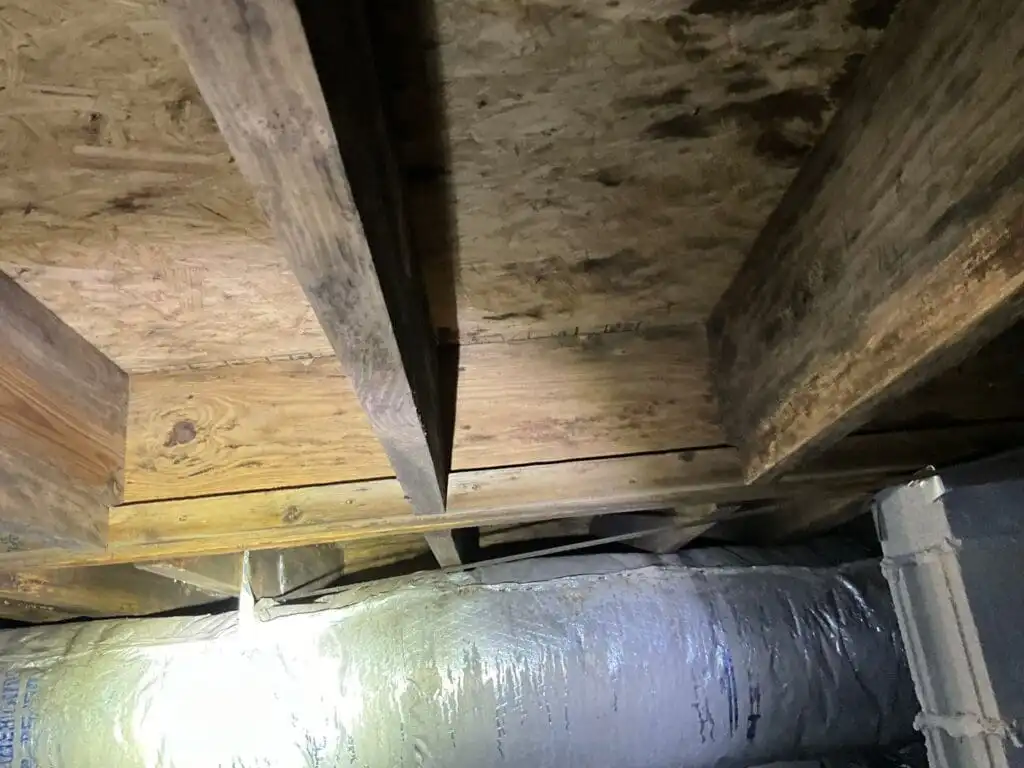
A bathroom that smells musty even after thorough cleaning is not just an unpleasant inconvenience. That persistent earthy odor is typically produced by mold growing behind surfaces that routine cleaning cannot reach.
Mold releases microbial volatile organic compounds (MVOCs) as metabolic byproducts. These compounds produce the characteristic musty, damp smell associated with mold growth. When that odor persists after scrubbing visible surfaces and improving ventilation, the growth source is almost always located inside a wall cavity, beneath flooring, or in another concealed location where a bleach spray has no effect.
Why Bathrooms Are Prone to Mold
Bathrooms generate more moisture per square foot than any other room in the home. Each shower deposits large amounts of water vapor, and without adequate exhaust ventilation, that moisture contacts porous materials, including tile grout, drywall, and wood framing, where it is absorbed and held.
According to the EPA, mold requires only moisture, warmth, and a porous surface to establish and grow. Bathrooms provide all three. In Augusta and the CSRA, where summer outdoor humidity regularly exceeds 70 percent, any inadequacy in bathroom ventilation is compounded by the outdoor moisture load, particularly in older homes where exhaust fans are undersized or have degraded over time.
According to the CDC, areas with high humidity and inadequate ventilation are among the most common places where mold establishes indoors. Even a small amount of moisture trapped behind tiles or inside a vanity cabinet can sustain a colony for months before visible growth appears.
Where Bathroom Mold Hides
Surface mold on tile grout or caulk is visible and easy to clean. The mold producing a persistent musty odor is almost always in a concealed location:
- Inside wall cavities around the shower: Water that migrates past failed grout or caulk lines enters the wall assembly and saturates the cement board or drywall behind the tile. Mold colonies establish in this space and release MVOCs that pass through the tile surface as odor without any visible growth on the face.
- Beneath the shower pan or tub surround: Failed waterproofing allows water to accumulate under the unit and saturate the subfloor and framing below. This location is invisible without removing the fixture.
- Behind or beneath the vanity cabinet: Slow drips from supply lines or drain connections create sustained moisture on the cabinet floor and adjacent wall. Because this area stays dark and enclosed, mold can grow for months without detection.
- Inside the exhaust fan housing and duct: Condensation inside the fan duct provides a moist surface for mold growth. When the fan runs, spores are drawn into the airstream and distributed into the room rather than expelled to the exterior.
- Around the toilet base: Condensation on cold porcelain, a failing wax ring seal, or a hairline crack in the tank can deposit moisture onto the floor and into the subfloor assembly over repeated wet-dry cycles.
Why Cleaning Does Not Resolve Hidden Mold
Bleach and antimicrobial sprays remove visible mold from non-porous surfaces like glazed tile. They do not penetrate into wall cavities, behind fixtures, or beneath shower pans where the odor-producing growth is located. Scrubbing visible mold from grout without addressing concealed growth simply removes the superficial portion of a larger colony that continues producing MVOCs inside the wall.
Cleaning visible mold without identifying and repairing the moisture source that caused it also guarantees recurrence. The moisture pathway, whether a failed grout line, a slow drain connection leak, or inadequate exhaust ventilation, continues feeding new growth after cleaning. This is the most common reason bathroom mold returns within weeks of being cleaned.
Health Effects of Bathroom Mold Exposure
Mold does not need to be visible to affect occupant health. MVOCs from concealed growth pass through wall surfaces and into room air continuously. Occupants who use a mold-affected bathroom daily accumulate exposure through repeated contact.
Symptoms associated with bathroom mold exposure often resemble seasonal allergies: nasal congestion, throat irritation, coughing, and itchy eyes. A reliable indicator that the bathroom may be the source is that symptoms are more pronounced in or shortly after using the bathroom and improve during extended time away from the home.
Ventilation as the Primary Preventive Measure
A properly sized exhaust fan that terminates at the exterior is the most important preventive measure in any bathroom. The fan should run during each shower and for at least 15 to 20 minutes afterward to remove residual moisture from the air and allow surface moisture on tile and fixtures to evaporate.
Exhaust fans routed into the attic rather than to an exterior vent deposit humid air onto roof decking and insulation, creating an attic mold problem rather than solving the bathroom moisture problem. Confirming that the fan terminates correctly and moves adequate air volume for the bathroom square footage is a worthwhile maintenance check in CSRA homes built before 2000.
When Professional Mold Testing Is Warranted
A professional assessment is appropriate when:
- A musty odor persists in the bathroom despite cleaning and improved ventilation
- Visible mold returns within weeks of cleaning
- Tile grout has failed or caulk joints have been deteriorated for an extended period
- Water staining is visible on a ceiling beneath an upper-floor bathroom
- Occupants experience recurring respiratory symptoms associated with bathroom use
EnviroPro 360 conducts certified mold inspections throughout the Augusta and CSRA region, with inspectors bringing over 20 years of experience to every assessment. Our inspectors use moisture meters to identify elevated moisture content in wall assemblies and subflooring, thermal imaging to locate concealed moisture behind tiles and inside vanity cabinets, and air sampling with AIHA-accredited laboratory analysis to quantify spore concentrations by species. The inspection report identifies the probable growth location and moisture source with specificity.
EnviroPro 360 is an independent testing company. We assess conditions and provide documented findings. A licensed remediation contractor performs any physical cleanup or material removal. This separation ensures our clearance testing after remediation is objective and unbiased.
If your bathroom has a musty odor that does not resolve with cleaning, schedule a certified mold inspection with EnviroPro 360. Contact us to arrange an assessment for your Augusta or CSRA home.