The pollen count drops in winter, windows stay closed, and most Augusta-area residents assume their indoor air quality improves during the colder months. For many, the opposite is true.
Winter in Georgia and South Carolina creates conditions that favor indoor mold growth: sealed homes with reduced ventilation, condensation from heating systems on cool surfaces, and sustained CSRA rainfall that deposits moisture in attics, crawl spaces, and wall assemblies through November and February. When occupants spend more time indoors in a sealed home, exposure to elevated mold spore concentrations accumulates through every hour spent inside.
Why Mold Thrives Indoors During Winter
Unlike outdoor pollen, which is seasonal, mold is a year-round organism that grows wherever adequate moisture is available. According to the EPA, mold can grow on virtually any porous surface given sufficient moisture and warmth. Winter does not eliminate indoor mold. It concentrates it in the sealed interior environment where occupants spend the most time.
Several winter-specific conditions accelerate indoor mold growth in CSRA homes:
- Reduced ventilation: Closed windows and doors limit outdoor air exchange, allowing mold spores and MVOCs (microbial volatile organic compounds) to accumulate in room air rather than diluting to outdoor levels
- Heating system condensation: Forced-air heat dries indoor air, causing warm humid air to condense on cooler surfaces including window glass, exterior walls, and HVAC ductwork, providing persistent low-level moisture sources
- Winter rainfall moisture intrusion: CSRA winters bring sustained rainfall that enters attics through degraded flashing or pipe boot seals and crawl spaces through foundation perimeter gaps
- Reduced attic and crawl space inspection frequency: Homeowners rarely access these spaces in winter, allowing moisture-driven mold growth to develop undetected for weeks or months
How Winter Mold Affects Health Indoors
According to the CDC, mold exposure causes nasal and throat irritation, coughing, wheezing, and worsened asthma symptoms. In winter, these effects are compounded because occupants cannot easily move to fresh outdoor air and the sealed home continuously recirculates spore-laden air through the HVAC system during each heating cycle.
Winter mold exposure symptoms closely resemble cold and flu symptoms, which is why many Augusta-area homeowners do not connect their indoor environment to how they feel. Common indicators include:
- Persistent nasal congestion or sinus pressure that does not resolve the way a normal cold does
- Coughing or throat irritation that worsens after extended time at home
- Itchy or watery eyes during winter months when outdoor pollen is absent
- Fatigue or difficulty concentrating that improves after leaving the home for several hours
- Increased asthma symptoms or inhaler use during winter months with no viral illness present
The Location-Dependence Test
The most reliable informal indicator that indoor mold may be contributing to symptoms is location-dependence. If symptoms consistently worsen at home and improve after several hours away from the building, the indoor environment is a plausible cause. Seasonal viral illness does not reliably improve with location change.
A secondary indicator specific to HVAC-distributed mold: if symptoms are noticeably worse shortly after the heat activates, mold colonies in the ductwork, evaporator coil housing, or near supply registers are a plausible source. Heat pumps in CSRA homes that operated minimally through mild autumn months can distribute accumulated spores when the heating mode engages in earnest.
Where Winter Mold Hides in Augusta-Area Homes
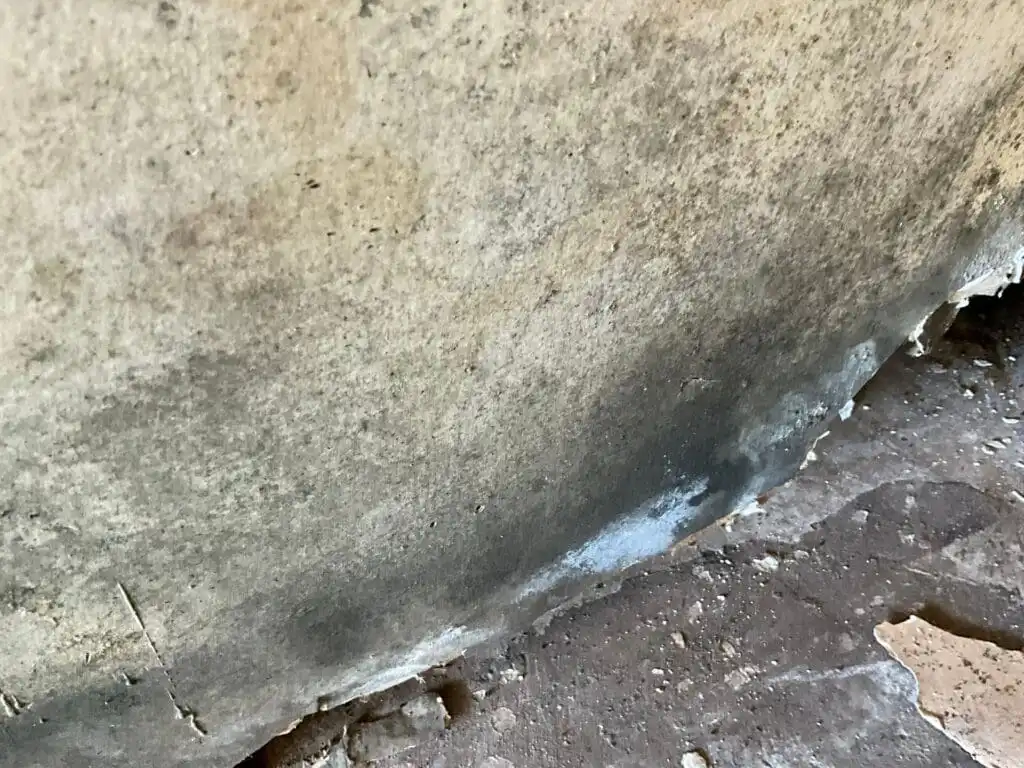
Mold that drives winter indoor air quality problems is rarely visible during routine household cleaning. Common concealed locations include:
- HVAC ductwork and air handler housing: Condensate and accumulated organic debris inside supply ducts provide a substrate for mold that is then distributed with every heating cycle throughout the living space
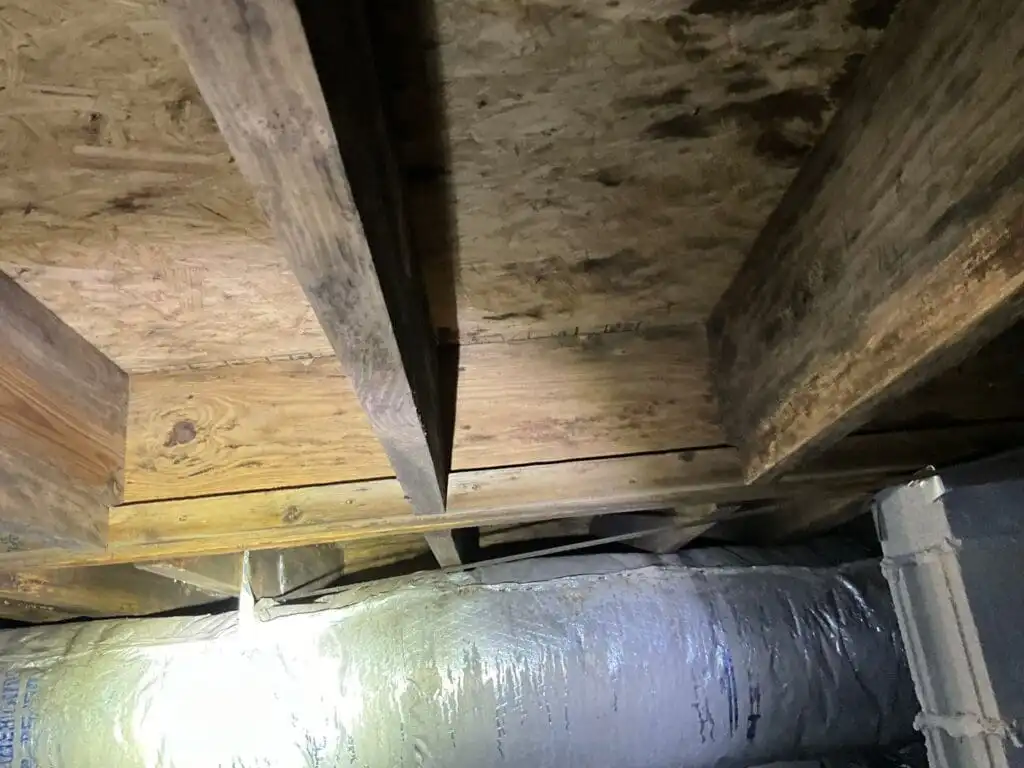
- Attic roof decking: Winter rainfall entering through degraded flashing or pipe boot seals deposits moisture on OSB and plywood sheathing, where mold establishes and spores migrate into the living space through ceiling penetrations and recessed lights
- Crawl space framing: Cold damp air entering an unencapsulated crawl space deposits moisture on wood joists and subflooring, and the stack effect carries spores upward into the living area through floor penetrations
- Exterior wall cavities: Condensation from warm interior air meeting cold exterior wall surfaces accumulates inside the wall assembly, particularly in older CSRA homes with minimal insulation in the stud bays
- Water heater and utility closets: Slow drips from pipe fittings, condensation on cold supply lines, and pressure relief valve drips create persistent low-level moisture in enclosed spaces that rarely dry completely
When to Schedule a Winter Mold Inspection
A professional assessment is appropriate when occupants experience respiratory symptoms during winter months that appear location-dependent, when a musty odor develops after fall rains or initial HVAC startup, or when a prior water intrusion event was addressed without professional moisture drying verification.
EnviroPro 360 provides certified mold inspections and indoor air quality assessments throughout Augusta, Evans, Aiken, and the CSRA. Our inspectors bring over 20 years of experience to each assessment, using air sampling with AIHA-accredited laboratory analysis to quantify spore concentrations by species, moisture metering to identify elevated material moisture in hidden locations, and thermal imaging to locate condensation zones in wall assemblies and attic spaces.
EnviroPro 360 is an independent testing company. We document conditions and provide findings. A licensed remediation contractor addresses any physical cleanup. This separation ensures that our post-remediation clearance testing is objective and unbiased.
If you or your family have been experiencing unexplained respiratory symptoms this winter, schedule a certified indoor mold assessment with EnviroPro 360. Contact us to arrange testing for your Augusta or CSRA home.