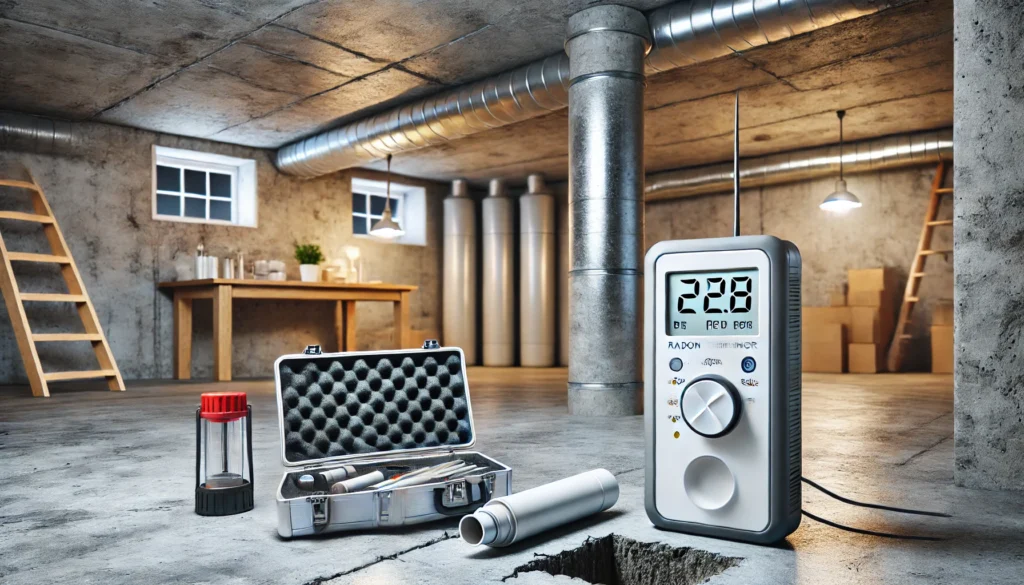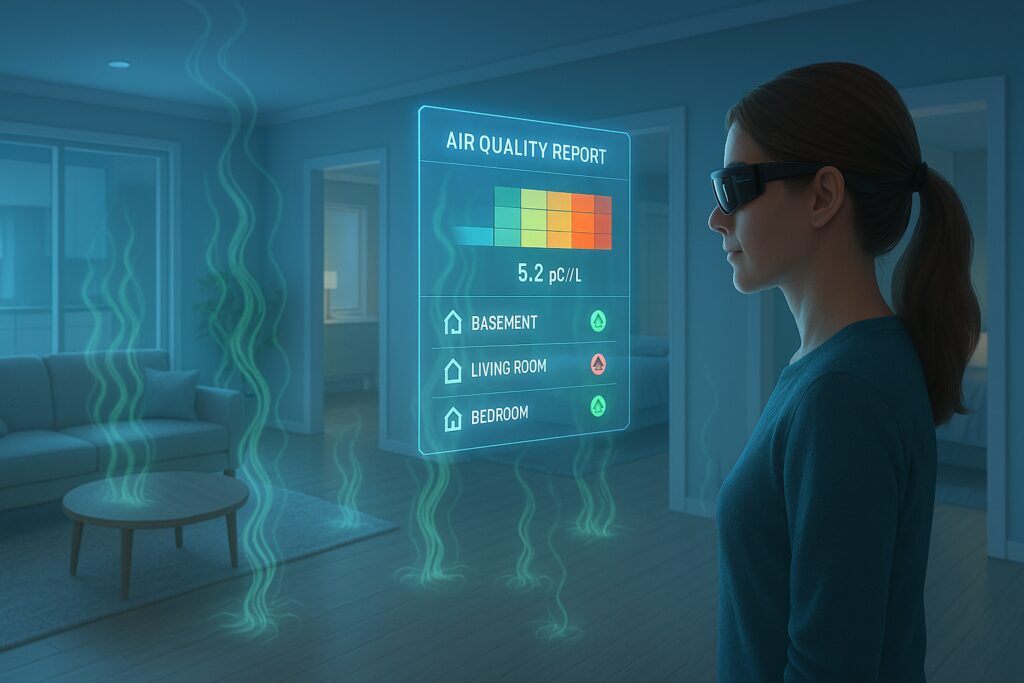
When the temperature drops, most people focus on staying warm, not on what may be lingering in the air they breathe indoors. But winter is not just cold season. It is also the time when radon levels in homes and apartments are most likely to rise.
If you have been putting off radon testing, here is why the winter months are the most accurate and most important time to get it done.
Why Radon Levels Rise in Winter
Radon is a naturally occurring radioactive gas that seeps into buildings through cracks in the foundation, plumbing gaps, and basement walls. During winter, several conditions combine to increase exposure:
- Windows and doors stay closed, limiting air exchange.
- Heating systems circulate indoor air, not fresh air from outside.
- The stack effect — where warm indoor air rises and escapes through upper openings — pulls additional radon up from the ground.
These conditions trap radon inside at higher concentrations than in warmer months when windows are open and air circulates more freely.
More Time Indoors Means More Exposure
Most people spend over 90% of their time indoors during winter. Any radon present in your home, apartment, or workplace has more hours each day to accumulate in the air you breathe.
The U.S. Environmental Protection Agency estimates that radon exposure causes over 21,000 lung cancer deaths annually in the U.S. It is the second leading cause of lung cancer after smoking.
Winter Testing Produces More Accurate Results
Winter conditions actually improve radon test accuracy. Because:
- Indoor air is more stagnant
- Ground-level pressure differences are more pronounced
- There is minimal airflow dilution from open windows
Rather than underestimating risk through summer ventilation effects, winter testing gives you a realistic picture of what you are actually breathing during peak exposure months.
What About Georgia and South Carolina?
The CSRA and surrounding area are not exempt from radon risk:
- Aiken County has some of the highest radon readings in South Carolina.
- Northern parts of Georgia, including Augusta-area suburbs, fall within moderate to high radon zones according to EPA mapping.
A building that appears well-maintained and properly ventilated in summer can still have elevated radon in winter when closed conditions favor accumulation.
What to Do This Winter
If your home or apartment has not been tested recently, or has never been tested, winter is the right time to act:
- Schedule a short-term radon test to measure current levels
- If levels are at or above 4.0 pCi/L, pursue radon mitigation
- Test even if you rent — radon affects renters as much as homeowners, and landlords in Georgia and South Carolina are not required by law to test or disclose radon levels
Professional Winter Radon Testing in Georgia and South Carolina
EnviroPro 360 provides certified radon testing for residential and commercial properties across Georgia and South Carolina. Our inspectors offer fast, accurate on-site testing with results you can act on.
- Serving residential and commercial properties in Georgia and South Carolina
- Fast, professional on-site testing with clear, actionable results
- Guidance on next steps if elevated levels are detected
- Fully certified and trained in current radon testing protocols
Winter is the best time to get an accurate baseline for your home or rental. Contact EnviroPro 360 to schedule your winter radon test and know what is actually in your air.