You can buy a radon test kit at the hardware store for about $20. A professional test costs more. So what do you get for the extra money? Sometimes nothing you need. Sometimes a lot.
This guide explains how each kind of radon test works. It covers where to buy a kit in Georgia and South Carolina. It also shows when a kit is enough and when to hire a certified tester.
Why you have to test for radon
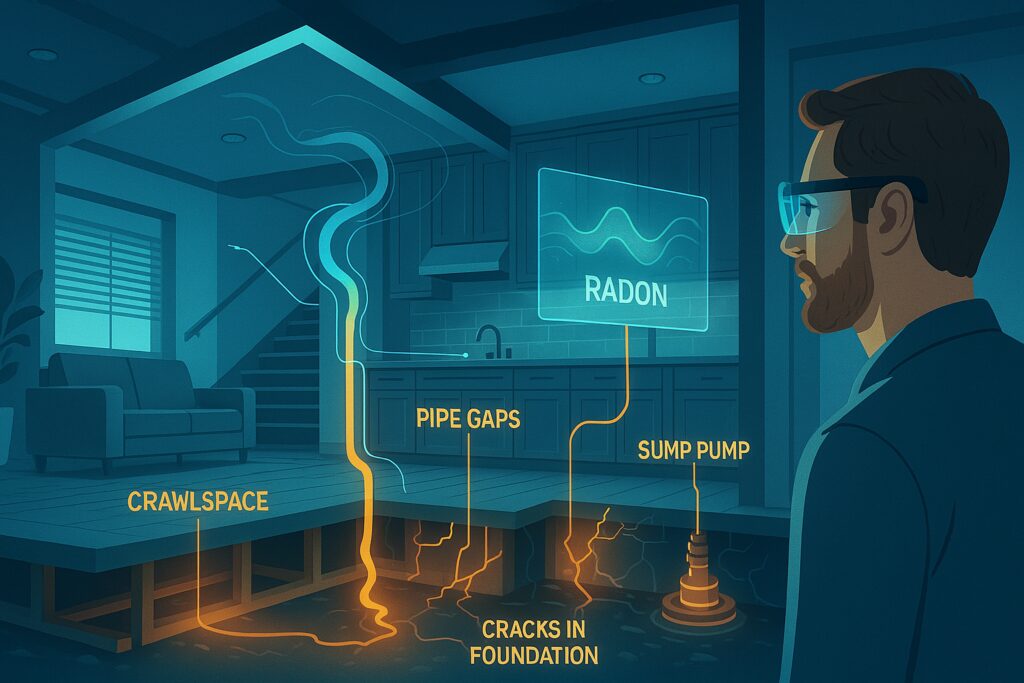
Radon is a radioactive gas. It forms when uranium in soil and rock breaks down. It has no color, smell or taste. It gets into homes through cracks in the foundation, gaps around pipes, crawl spaces and sump pits.
The EPA (Environmental Protection Agency) says radon is the second leading cause of lung cancer in the U.S. The CDC says it causes about 21,000 lung cancer deaths each year.
Radon is measured in pCi/L (picocuries per liter). This unit tells you how much radioactivity is in a liter of air. The EPA says to fix your home if the level is 4.0 pCi/L or higher. Between 2.0 and 4.0 pCi/L, it says to think about fixing it.
Two houses on the same street can have very different levels. The only way to know yours is to test.
How radon test kits work
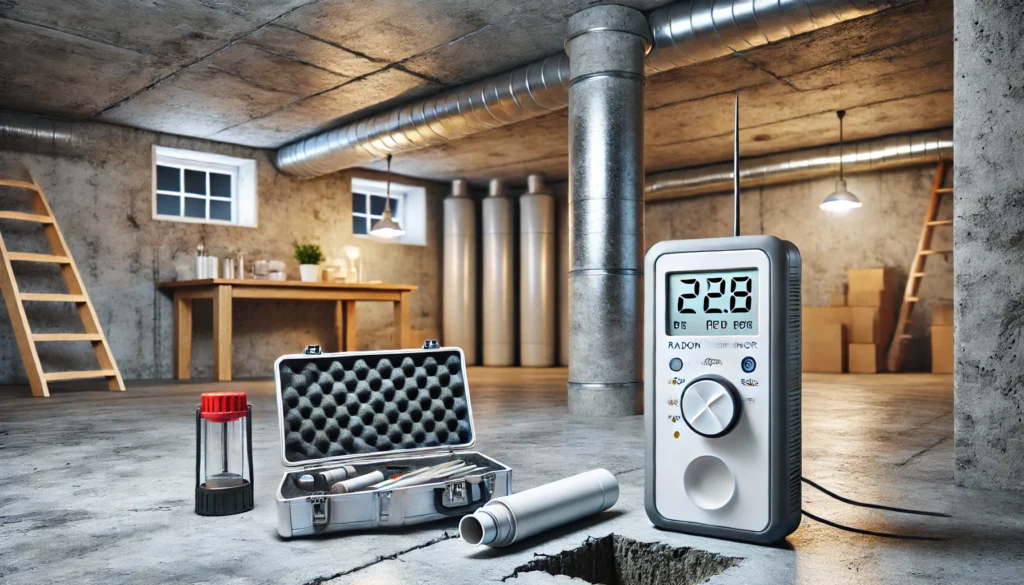
Every radon test does the same basic job. It measures radon in your indoor air over a set number of days. Then it reports an average in pCi/L. The difference is how each device catches and counts the radon.
Charcoal canisters (short-term)
This is the kit most stores sell. It’s a small can filled with activated charcoal. Activated charcoal is treated so it soaks up gases. You open the can and set it out for 2 to 7 days. Radon from the air sticks to the charcoal.
When the test ends, you seal the can and mail it to a lab. The lab uses a method called gamma spectroscopy. It reads the radiation coming off the charcoal to work out how much radon it caught. Results usually come back in 1 to 2 weeks.
Charcoal kits are cheap and easy. The catch is timing. Radon goes up and down with the weather and the seasons. A 2-day test is a snapshot. It may read higher or lower than your average for the year. Radon in the can also fades with time, so a kit that sits in the mail too long can read low.
Alpha track detectors (long-term)
An alpha track detector holds a small piece of special plastic. As radon breaks down, it gives off alpha particles. These leave tiny marks, or tracks, on the plastic.
You leave the detector out for 90 days to a year. Then you mail it to a lab. A technician counts the tracks under a microscope. The count shows your average radon level over that time.
A long-term test gives the truest picture of what you breathe all year. That’s why the EPA suggests one if you aren’t in a hurry. The downside is the wait. It won’t work for a home sale with a 10-day inspection period.
Digital radon monitors
Home digital monitors plug into the wall or run on batteries. They read radon all day and show a number on a screen or a phone app. Many show daily and long-term averages.
They’re handy for keeping an eye on things after a good test or after mitigation. Mitigation is a system that lowers radon, usually a fan and pipe that pull radon from under the house.
Most consumer monitors are not checked the way professional equipment is. Professional monitors go through calibration. That means testing the device against a known radon level so it reads correctly. A monitor that reads wrong every day can give you false comfort. Don’t use one alone for a big decision.
Where to buy a reliable radon test kit
You have a few good options in Georgia and South Carolina:
- Hardware stores and online. Most charcoal kits cost about $15 to $35. The lab fee is often included. Read the box before you buy.
- UGA Extension (Georgia). The University of Georgia runs the state’s radon education program. It sells low-cost short-term kits through radon.uga.edu and many county Extension offices. The price is about $15, and it includes the lab fee.
- SCDES (South Carolina). The South Carolina Department of Environmental Services gives out one free kit per home while supplies last. These free kits can’t be used for a home sale.
Whatever you buy, check the package for these things:
- The device is listed by the NRPP (National Radon Proficiency Program) or the NRSB (National Radon Safety Board). These groups check that devices and labs meet accuracy standards.
- The lab fee is included in the price.
- The test runs at least 48 hours.
- The steps for closed-house conditions are clear.
Want more detail? See can you trust a radon test kit from the store and short-term vs. long-term radon test kits.
How to set up a kit so the result is right
Most bad kit results come from setup mistakes, not bad kits. Follow these steps:
- Put it in the lowest room you use. That’s a lived-in basement, or the first floor if you don’t have one.
- Set it 20 inches to 6 feet off the floor.
- Keep it away from windows, outside walls, vents and fans.
- Don’t use a kitchen, bathroom or laundry room. Steam and moisture throw off charcoal kits.
- Keep closed-house conditions. Windows and outside doors stay shut, except to come and go. Start 12 hours before the test and keep it up the whole time.
- Write down the start and end times. Mail the kit the day you stop the test.
Open windows let outside air in. That makes the reading look lower than it really is.
What your kit result means
- Below 2.0 pCi/L: Low. Test again every 2 years and after big changes to the house.
- 2.0 to 3.9 pCi/L: The EPA says to think about fixing it. No level of radon is completely safe.
- 4.0 pCi/L or higher: Test again to confirm before you hire a mitigation company.
If your kit came back high, read what to do if your radon test kit shows a high level.
When a professional radon test is the better choice
A kit is a fine first step for your own home. A professional test makes more sense when someone else has to trust the number:
- Buying or selling a home. Buyers, sellers and agents want a result from a certified tester. They want to know nobody opened a window. Mail-in kits also take too long for most inspection periods.
- Checking a high or borderline kit result. Before you pay for mitigation, make sure the number is right.
- After mitigation. An independent test shows the system works.
- Rentals, offices and other buildings. Landlords, tenants and property managers need a report they can show others.
What a professional test includes
Our testers are NRPP certified. We follow ANSI testing standards. ANSI (American National Standards Institute) standards spell out how a radon test must be set up, run and checked.
We place calibrated equipment in the right spot and run the test for at least 48 hours. Most results are ready 24 to 48 hours after the test ends. You get a written report that explains your level and what to do next, if anything.
We don’t install radon mitigation systems. So we have nothing to sell you after the test. If your level is high, we’ll help you understand your options.
Your next steps
- If you’ve never tested, start now. A kit is fine for your own home.
- Set it up with care and keep closed-house conditions.
- If the result is 4.0 or higher, or you’re buying or selling, get a professional test.
EnviroPro 360 provides radon testing for homes and buildings in Augusta, Aiken, Columbia and nearby towns. If you have questions about radon kits or want to talk through your results, the EnviroPro 360 team is happy to help. Reach out any time.