You have signed the lease and settled into your new rental. At some point you hear about radon and scan your lease document looking for any mention of it. Nothing. The landlord said nothing about it. The property listing said nothing. Now you are wondering whether you are at risk, what your rights are, and what to do next.
This situation is more common than most renters realize. Here is a clear explanation of what a missing radon disclosure means, what your options are, and how to protect yourself as a tenant.
Why Leases Routinely Skip Radon
In Georgia and South Carolina, landlords are not currently required by state law to test for radon or disclose results to tenants. This absence of a specific legal mandate means that most standard lease templates do not include radon language. Many landlords have never tested the property. Others may have tested once years ago and not repeated it. Some assume radon is only a concern in certain regions and do not consider it relevant to their specific property.
The absence of radon language in your lease does not mean your landlord is hiding something. It most likely means the subject was never raised, and no law required it to be.
Does a Missing Disclosure Mean You Are Safe?
No. The absence of a radon disclosure says nothing about the actual radon level in the unit. Radon is a naturally occurring gas that seeps into buildings through cracks in foundations, gaps around pipes, and crawl space openings. It is odorless, colorless, and produces no immediate symptoms. The only way to know whether radon is present at elevated levels is to test.
The Environmental Protection Agency identifies radon as the second leading cause of lung cancer in the United States, responsible for approximately 21,000 deaths annually. The EPA action level is 4.0 pCi/L (picocuries per liter). Below that threshold, no action is required, though no level is considered entirely without risk. At or above 4.0 pCi/L, the EPA recommends taking steps to reduce radon concentration.
Ground-floor units and basement apartments carry higher radon risk than upper-floor units because radon concentrates near its entry points. A first-floor apartment or a unit with a crawl space beneath it deserves more scrutiny than a unit several stories up.
Your Rights as a Tenant When It Comes to Radon
Even without a specific radon disclosure law, tenants have meaningful protections under general housing law. Most landlord-tenant frameworks in both Georgia and South Carolina operate under the implied warranty of habitability — the principle that a landlord must provide and maintain a unit that is safe and livable. Whether elevated radon crosses the threshold of a habitability violation depends on the specific level, the jurisdiction, and sometimes the willingness of a tenant to document and escalate the issue.
As a tenant, you also have the right to conduct your own radon test. Nothing in a typical residential lease prohibits a tenant from placing a radon test device in their own unit. A professional test result gives you documented information about the air quality in the space you are paying to live in.
Steps to Take If You Are Concerned About Radon in Your Rental
The CDC recommends that radon testing be conducted in any home where residents spend significant time on lower levels. If you are in a ground-floor or basement unit, or if you have any reason to suspect elevated radon, the following steps are reasonable:
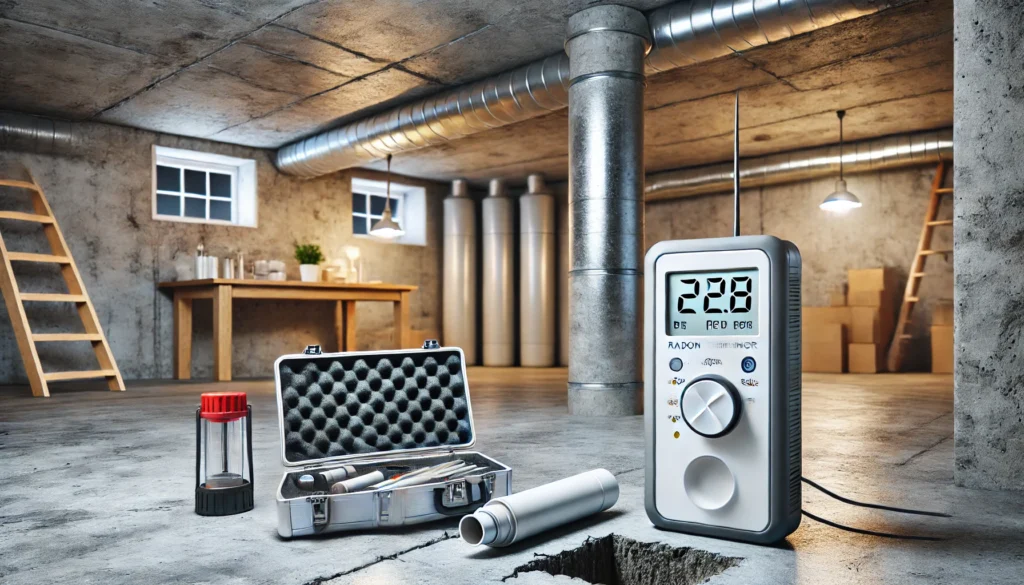
- Test the unit. Arrange for a professional radon test or purchase a short-term charcoal kit. A professional test will include proper placement and a clear result interpretation, which is important if you later need to present the findings to your landlord.
- Document everything. Keep the test device packaging, the lab report or monitoring data, and a written record of when and where the test was placed. If you later need to communicate with your landlord or seek legal advice, documentation of your test methodology matters.
- Communicate in writing with your landlord. If the test comes back at or above 4.0 pCi/L, notify your landlord in writing with the test result and ask what steps they plan to take. A written request creates a record that the landlord was made aware of the condition.
- Seek legal advice if the landlord is unresponsive. If your landlord refuses to address an elevated radon result, a tenant’s rights attorney can advise whether the condition rises to a habitability violation in your specific situation and jurisdiction.
What EnviroPro 360 Can Do for Augusta-Area Renters
EnviroPro 360 provides professional radon testing for residential properties throughout Augusta, Evans, Martinez, Grovetown, North Augusta, Aiken, and the broader CSRA. A professional test gives you a documented result that holds up whether your next step is a conversation with your landlord, a review by the property’s management company, or a consultation with a housing attorney.
EnviroPro 360 focuses on testing and result interpretation. The role is straightforward: measure the air, interpret the result accurately, and give you the information you need to make an informed decision about the space you are living in.
Contact EnviroPro 360 to schedule radon testing for your rental property in Augusta or anywhere in the CSRA.