Rental agreements cover rent, pets, maintenance responsibilities, and noise policies. They rarely mention radon. In Georgia and South Carolina, that silence is not an oversight; it reflects the current legal landscape for residential rentals. But radon is a real health risk, and renters who understand that gap are better positioned to protect themselves.
What Radon Is and Why It Matters
Radon is a colorless, odorless radioactive gas that forms from the natural decay of uranium in soil and rock. It seeps into buildings through foundation cracks, gaps around pipes, crawl spaces, and sump pits. Once inside, it can accumulate to levels that pose serious health risks. The CDC classifies radon as the second leading cause of lung cancer in the United States, responsible for an estimated 21,000 deaths each year. The EPA’s recommended action level is 4.0 picocuries per liter (pCi/L). At or above that level, the EPA advises taking steps to reduce exposure.
Radon does not discriminate by ownership status. Renters living in houses, apartments, and condominiums face the same exposure risk as homeowners. The risk is highest on lower levels because radon enters from the ground, but upper-floor units in buildings without adequate ventilation can also accumulate elevated concentrations.
Why Leases Rarely Address Radon
Neither Georgia nor South Carolina currently requires landlords to disclose radon information in residential lease agreements unless the landlord has specific knowledge of elevated levels and a legal obligation to share it. This contrasts with other environmental disclosures, such as the federal requirement to disclose known lead paint hazards in pre-1978 housing.
The result is that most landlords simply do not mention radon. Many have never tested their rental properties. Some are unaware of local radon risk levels. Others assume that because no tenant has complained, no problem exists. Without a legal mandate and without a visible symptom, radon stays off the lease entirely.
This is not unique to the CSRA. Across the United States, radon disclosure requirements in rental agreements remain inconsistent and incomplete despite well-documented health risks. Several states have enacted partial disclosure requirements, but Georgia and South Carolina are not among them as of this writing.
What Renters Can Do
The absence of a legal requirement does not mean renters are without options. Several practical steps are available before and after signing a lease.
Ask Before Signing
Renters can ask prospective landlords directly whether the property has been tested for radon and, if so, what the results showed. This is a reasonable question. A landlord who has tested and found normal levels should be willing to share that information. A landlord who has not tested may be open to scheduling one before the tenancy begins.
Any disclosed test results should be reviewed carefully. Radon levels can change over time as building conditions change, so a test from several years ago may not reflect current conditions accurately.
Test the Unit Directly
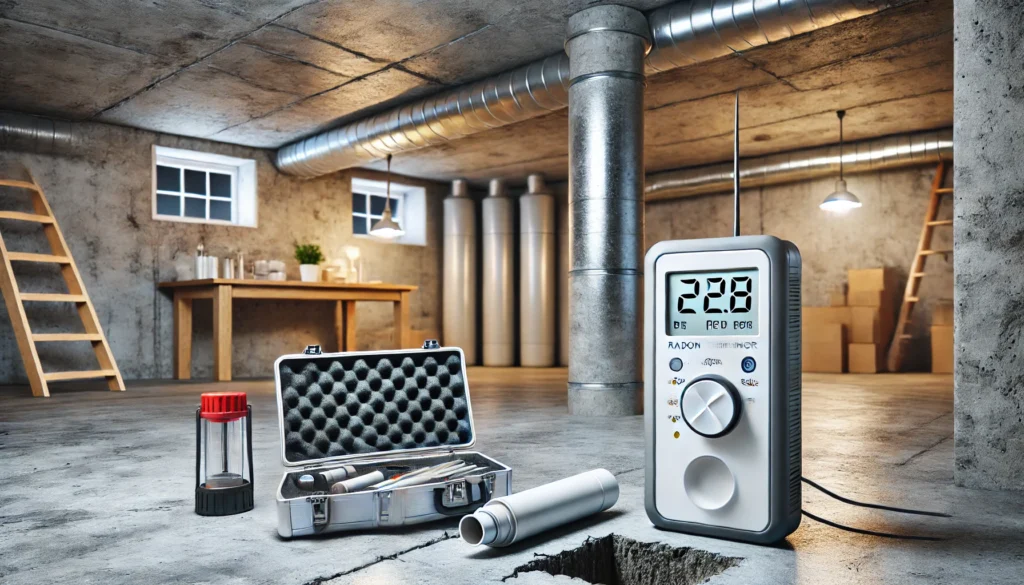
In most states, including Georgia and South Carolina, renters have the right to test their own unit for radon. DIY test kits are available at hardware stores and online, and short-term kits can produce results in 48 to 90 hours. These kits should be placed on the lowest livable level of the unit, away from kitchens, bathrooms, and exterior doors, and with windows closed during the test period.
Short-term DIY kits provide a useful screening result. However, certified professional radon testing produces defensible, lab-backed results that are more useful for communicating with a landlord or, if necessary, documenting conditions for legal or health purposes.
Request That the Landlord Test
A written request to the landlord asking for a professional radon test creates a paper trail. If the landlord declines and the renter later discovers elevated levels, that documentation may be relevant. Some landlords, when informed about radon as a health issue rather than a legal complaint, are willing to arrange testing because it protects them as well as the tenant.
Negotiate Lease Terms
Renters who want more formal protection can attempt to negotiate radon-related clauses into their lease before signing. A clause requiring the landlord to test before occupancy, or to address elevated levels above the EPA action level, is not standard but is not prohibited either. Landlords may agree if the request is framed constructively.
The CSRA Radon Context
The Augusta and Aiken region sits in an area where radon potential varies by county and soil type. Some counties in the CSRA fall within EPA Zone 2 for radon potential, meaning average indoor radon levels are predicted to be between 2.0 and 4.0 pCi/L. Individual homes and units can exceed those averages based on foundation type, construction, and ventilation. Renters in Augusta, Evans, Martinez, Grovetown, North Augusta, and Aiken benefit from the same testing awareness as homeowners in those communities.
Why Professional Testing Makes a Difference for Renters
A certified radon test from a professional provides several advantages over a DIY kit. The testing follows established protocols aligned with EPA and ANSI/AARST standards. Results are delivered in a formal report that is credible to landlords, property managers, and health officials. If a renter needs to document elevated levels for remediation negotiation or a formal complaint, a professional report carries more weight than a self-administered test.
EnviroPro 360 provides radon testing for rental units, single-family homes, and multi-unit buildings throughout the CSRA, including Augusta, Evans, Martinez, Grovetown, North Augusta, and the greater Aiken area. Testing is non-invasive and can be scheduled around lease timelines.
Schedule Radon Testing for Your Rental
Leases may not require radon disclosure in Georgia or South Carolina, but that does not mean renters have to accept uncertainty about the air they breathe at home. A single professional test provides clear data and removes the guesswork entirely. To schedule radon testing for a rental unit or multi-family property in the Augusta or Aiken area, contact EnviroPro 360.