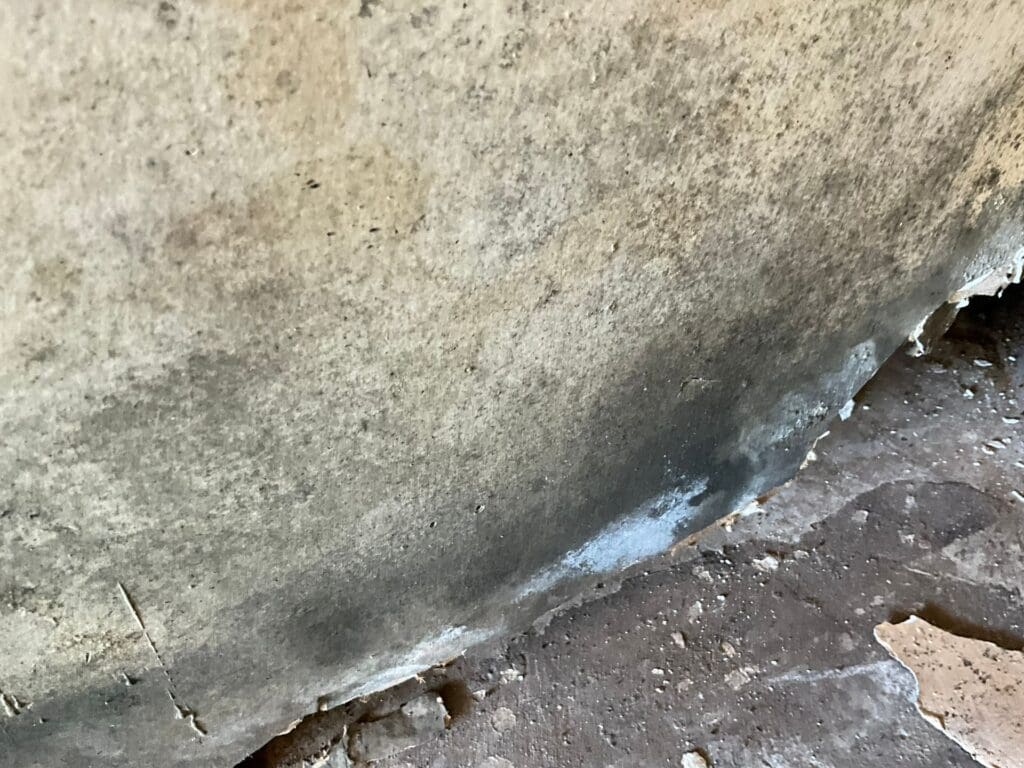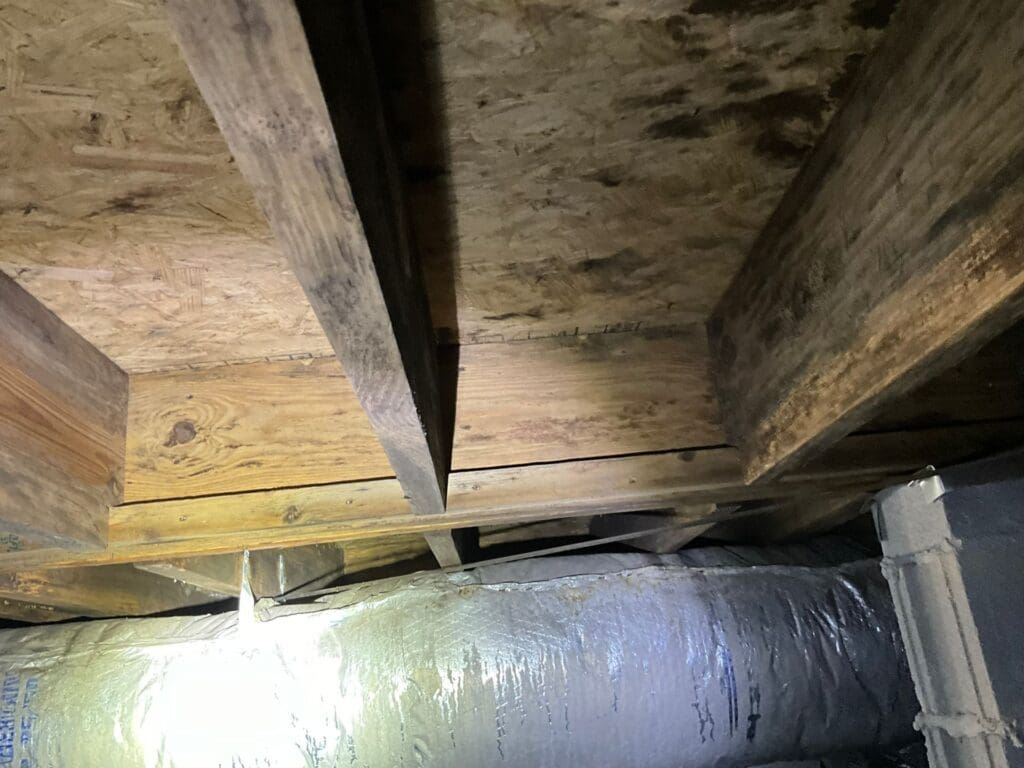
A homeowner in North Augusta called EnviroPro 360 after a home inspector’s general walkthrough came back clean, but she still noticed a musty smell every time she went downstairs to do laundry. The inspector had checked the basement, seen no visible mold on the walls, and moved on. What he hadn’t done was pull the baseboards away from the block wall or check behind the stored boxes lining the far corner. Air sampling found elevated mold spore counts, with the bulk of the growth on the back side of drywall installed directly against an unsealed concrete foundation wall.
This is a common gap. A basement is not just a lower floor. It behaves differently than the rest of the house, and testing it the same way you’d test a bedroom or kitchen often misses the problem.
Why Basements Are a Different Environment
Below-grade spaces sit partially or fully underground, surrounded by soil that holds moisture and stays cooler than the air above. That temperature difference matters. When warm, humid air from upstairs or the outdoors reaches the cooler basement walls and floor, it condenses, the same way a cold glass of water sweats on a humid day. This condensation happens on interior surfaces you can’t always see: behind furring strips, inside wall cavities, and on the underside of subfloor insulation.
Concrete block foundation walls, common in older Augusta and CSRA homes, are porous. Groundwater and soil moisture can migrate through the block itself (a process called capillary wicking) even when there’s no visible crack or leak. That moisture reaches framing, insulation, and drywall installed against the wall, creating conditions for mold growth without a single drop of standing water ever appearing on the floor.
Where Whole-House Inspections Miss Basement Mold
A general walkthrough inspection, the kind most home inspectors perform, is visual and non-invasive. It’s designed to catch obvious problems quickly across an entire house. In a basement, that approach has real limitations:
Finished basements hide the wall assembly. Drywall, paneling, or carpet installed over a foundation wall covers the exact surface where condensation and wicking moisture accumulate. A visual scan of painted drywall tells you nothing about what’s happening on the unfinished side.
Storage areas get skipped. Boxes, furniture, and stored items against foundation walls block the areas most likely to hold moisture and least likely to get airflow. Inspectors moving through quickly on a general walkthrough often don’t relocate stored items to check behind them.
Musty odor gets dismissed as “basement smell.” Many people assume basements simply smell different, a kind of expected mustiness. That smell is frequently microbial volatile organic compounds (MVOCs), gases produced by active mold growth, not a permanent characteristic of underground space.
Sump pits and floor drains aren’t sampled. These areas cycle moist air into the basement continuously and are common growth sites that a walking inspection can pass by without a closer look.
What Basement-Specific Testing Involves
A mold inspection focused on a basement or other below-grade space typically includes:
- Moisture mapping with a moisture meter along foundation walls, baseboards, and the underside of any finished flooring, to identify areas of elevated moisture content before mold is visible.
- Air sampling in the basement compared against a baseline sample from elsewhere in the house, to determine whether spore counts are elevated specifically in the below-grade space.
- Surface sampling on suspect areas, particularly behind stored items, around window wells, and near any HVAC equipment located in the basement.
- Inspection of sump pits, floor drains, and any history of water intrusion, since these are the most common sources of chronic moisture in finished and unfinished basements alike.
The CDC notes that mold growth requires moisture, and basements are structurally prone to accumulating it even in homes with no history of flooding. That’s why testing protocol for below-grade spaces looks different from a standard room-by-room check.
Why This Matters for Finished Basements Specifically
If your basement has been finished into living space, a bedroom, home gym, or media room, the exposure question changes. The EPA recommends addressing mold problems based on how much time occupants spend in the affected area and how porous the affected materials are. A finished basement used daily carries a different risk profile than an unfinished storage space visited twice a month, even if the underlying moisture source is identical.
Finished basements also make remediation more complicated after the fact. Drywall, insulation, and flooring installed directly against a foundation wall often has to be removed to address mold growing behind it, which is a more disruptive and expensive process than treating an unfinished wall.
What to Do
-
If your basement has a persistent musty smell that a general inspection didn’t explain, request basement-specific testing. A whole-house walkthrough is not designed to catch what’s happening behind finished walls or under stored items.
-
Have foundation walls checked for moisture before finishing a basement. Testing moisture content in concrete block before installing drywall or flooring can prevent a mold problem from being built into the renovation.
-
Check behind stored items periodically. If boxes or furniture have been against a foundation wall for months without being moved, that’s worth a look, especially in older CSRA homes with unsealed block foundations.
If your basement smells musty, feels damp, or just hasn’t been checked the way the rest of your house has, the EnviroPro 360 team can test it properly. Reach out here and we’ll help you figure out what’s actually going on below grade.