A parent in Augusta got a call from her pediatrician’s office after a routine screening: her toddler’s blood lead level came back at 4.2 micrograms per deciliter (µg/dL). The nurse mentioned it was “a little elevated” and recommended a follow-up test, but didn’t explain much beyond that. The parent hung up with a number and no real sense of whether it was a minor flag or a serious problem, or what she was supposed to do about her house.
That gap between getting a result and understanding it is common, and it’s the point where a lot of families either overreact or, more often, underreact because the explanation on the phone was thinner than the situation deserved.
What the Number Is Actually Measuring
A blood lead level test measures the concentration of lead in a child’s blood at the time the sample was drawn, reported in micrograms of lead per deciliter of blood. It reflects recent exposure, generally within the past few months, rather than lifetime accumulated exposure, which is part of why a single test is a snapshot rather than a complete picture.
The CDC Reference Value, and What It Doesn’t Mean
The CDC uses a blood lead reference value of 3.5 µg/dL to identify children with higher levels of lead in their blood compared to most children, based on the top 2.5% of children tested nationally. This is a screening threshold, not a safety line. The CDC is explicit that there is no known safe level of lead exposure in children, meaning a result below the reference value doesn’t mean lead exposure isn’t a concern, and a result above it doesn’t map to a specific, universal health outcome. It means the level is high enough, relative to other children, to warrant follow-up.
This distinction matters because parents often want the number to function like a fever thermometer, with a clear line between “fine” and “not fine.” Lead doesn’t work that way. Effects on cognitive development and behavior have been documented at levels below the reference value, which is why the reference value functions as a trigger for action rather than a diagnosis of harm.
What Typically Happens After an Elevated Result
A confirmatory test. A single elevated result, especially from a finger-stick capillary test rather than a venous draw, is often followed by a second test to confirm the level and rule out sample contamination, since capillary tests have a higher rate of false elevated readings from lead on skin surfaces.
Case management based on the level. Higher results (generally above 5 µg/dL, and especially above 45 µg/dL) trigger more active follow-up, including more frequent retesting, nutritional guidance (since iron and calcium deficiency can increase lead absorption), and in higher-level cases, medical evaluation for treatment. Your pediatrician’s office or state health department typically manages this based on established protocols.
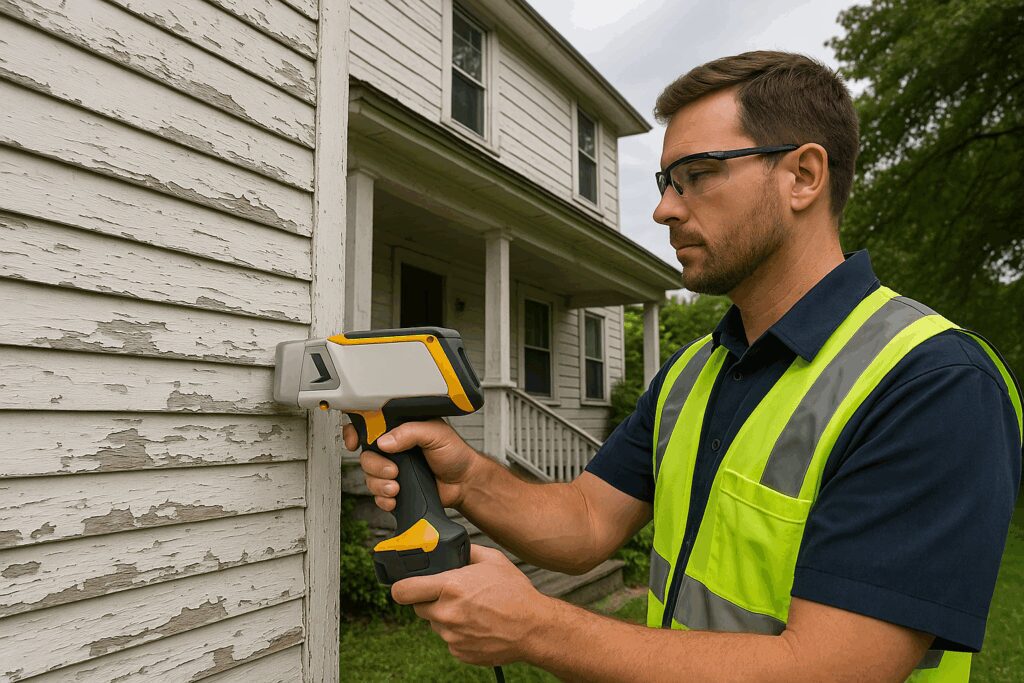
A referral to identify the exposure source. This is the step that most directly involves your home. Since lead-based paint in homes built before 1978 is the most common source of childhood lead exposure, an elevated test result is often the reason a family first learns their home needs to be checked, sometimes years after moving in.
Why the Source Investigation Matters As Much As the Number
Treating the child’s exposure without identifying the source addresses the symptom, not the cause. If the source is lead paint dust from a deteriorating windowsill, a floor with lead-contaminated dust from foot traffic, or soil near an older home’s foundation, that source keeps producing exposure until it’s identified and addressed, regardless of how the follow-up blood tests trend.
A home lead risk assessment looks for the specific pathways relevant to a child’s exposure: deteriorating paint, friction surfaces like windows and doors, dust on floors and windowsills (tested via dust wipe sampling), and soil where children play. This is different from a general lead paint test focused on renovation planning. It’s specifically oriented around how a child in that particular household could be encountering lead day to day.
What to Do If You Get This Call
-
Ask for the confirmatory test if one hasn’t already been scheduled, and ask whether the original sample was capillary or venous, since that affects how much weight to put on a single result.
-
Request a referral for a home lead risk assessment if your home was built before 1978, rather than assuming the pediatrician’s office will initiate this automatically. Follow-up protocols vary, and asking directly moves things faster.
-
Focus the home assessment on how your child actually spends time in the house: which windows they’re near, which floors they play on, whether there’s exposed soil near entry points. A useful assessment is specific to your household’s patterns, not a generic paint survey.
If your child’s blood lead test came back elevated and you need your home checked for the source, EnviroPro 360 can help you figure out where to start. Reach out here and we’ll walk through what an assessment would look like for your home.