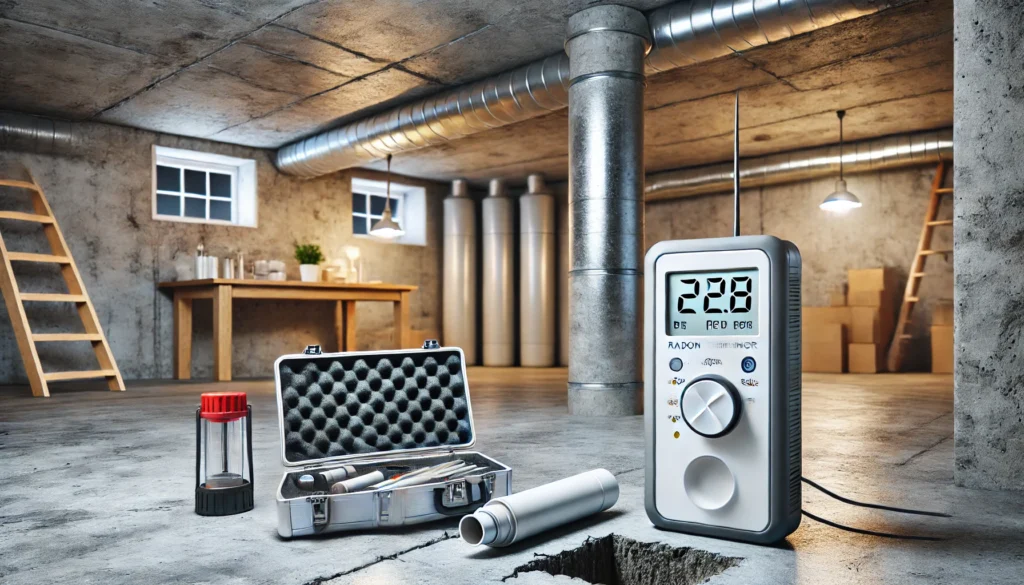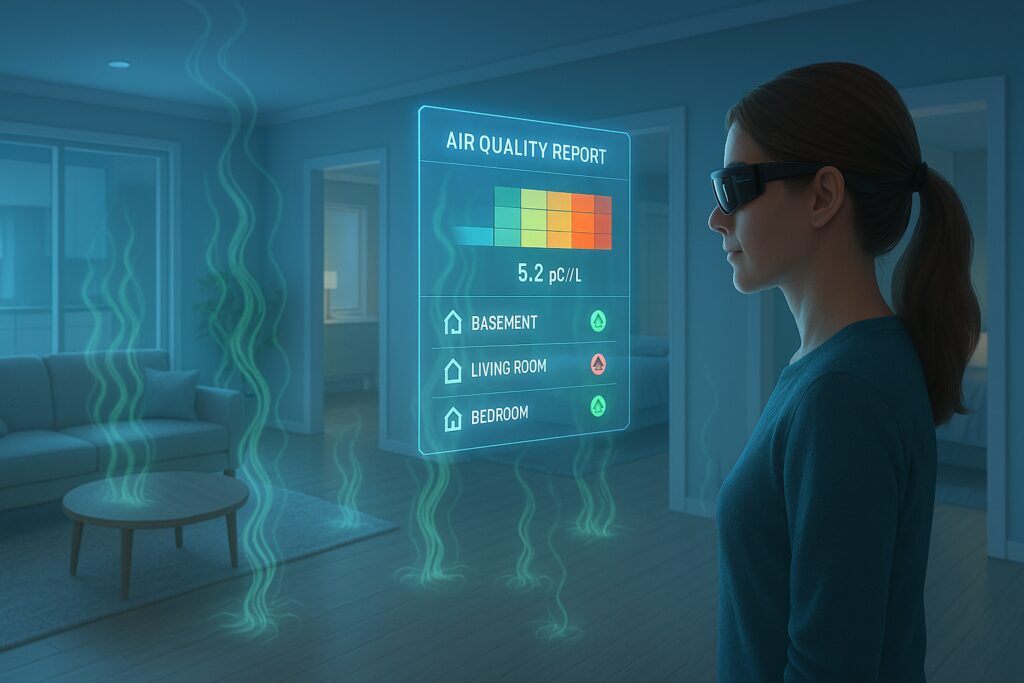
Radon is a naturally occurring radioactive gas that forms in soil and rock as uranium decays. It has no color, odor, or taste, which makes detection impossible without testing equipment. According to the EPA, radon is the second leading cause of lung cancer in the United States. The CDC estimates that radon causes approximately 21,000 lung cancer deaths annually.
Understanding how radon test kits work helps homeowners choose the right testing method for their situation and interpret results accurately.
What Is Radon and How Does It Enter a Home?
Radon forms in the ground beneath homes and enters through cracks in the foundation, gaps around pipes, crawl spaces, and sump pits. Once inside, it accumulates in enclosed spaces with limited air circulation. The lowest livable floor of a home typically has the highest radon concentration, though upper floors can also show elevated levels depending on building ventilation and construction type.
How a Radon Test Kit Works
A radon test kit measures the concentration of radon gas in indoor air over a defined period. The device collects an air sample, and results are analyzed to produce a reading in picocuries per liter (pCi/L). The EPA action level is 4.0 pCi/L. At or above this level, the EPA recommends addressing the source of radon entry through professional mitigation.
Different kit types use different collection and measurement methods. Each has appropriate use cases depending on the testing timeline, the accuracy required, and whether certified documentation is needed.
Types of Radon Test Kits
Charcoal Canisters (Short-Term)
Charcoal canisters are the most commonly used short-term testing option. The canister is placed in the lowest livable area of the home for 2 to 7 days. During that period, activated charcoal inside the canister absorbs radon gas from the surrounding air. After the test period, the canister is sealed and mailed to an accredited laboratory, which measures radon absorption using gamma spectroscopy. Results are typically returned within 1 to 2 weeks.
Charcoal tests are well suited for initial screening or for real estate transactions requiring quick results. Results can vary based on weather patterns and seasonal pressure changes, so a single short-term test may not reflect the home’s annual average radon level.
Alpha Track Detectors (Long-Term)
Alpha track detectors use a small piece of radiation-sensitive plastic film housed in a protective case. As radon decays, it releases alpha particles that leave microscopic tracks on the film surface. After 90 days or longer, the film is sent to an accredited laboratory, where technicians count the tracks under a microscope and calculate the average radon concentration over the testing period.
Long-term tests are more accurate than short-term tests because they capture seasonal and weather-driven variation. The EPA recommends long-term testing for homeowners seeking the most reliable picture of their home’s average radon level.
Continuous Electronic Monitors
Digital radon monitors use built-in sensors to measure radon concentration continuously, displaying readings in real time on a screen or through a connected mobile app. Some models provide hourly or daily averages and track radon trends over weeks or months.
These devices cost more than passive test kits and require periodic calibration to remain accurate. Not all commercially available digital monitors carry laboratory certification. Homeowners relying on these devices for real estate or mitigation decisions should verify the monitor’s certification status before using the readings as official documentation.
Where to Place the Test Kit
Placement significantly affects test accuracy. For reliable results:
- Place the kit in the lowest livable area of the home, typically the basement or first floor if no basement exists
- Position it at breathing height, between 20 inches and 6 feet above the floor
- Keep it away from drafts, windows, exterior walls, vents, and fans
- Avoid direct sunlight and high-humidity locations such as bathrooms or laundry rooms
For short-term tests, maintain closed-house conditions during the testing period by keeping windows and exterior doors closed except for normal entry and exit. Open windows and doors allow outdoor air to dilute indoor radon levels artificially, producing a lower reading than the home’s actual concentration.
Reading and Acting on Results
Results are reported in pCi/L. The EPA categorizes radon levels as follows:
- Below 2.0 pCi/L: Generally acceptable; retest every two years
- 2.0 to 3.9 pCi/L: Consider mitigation; increase testing frequency
- 4.0 pCi/L or higher: Mitigate promptly; confirm with a second test before scheduling remediation work
If a short-term test returns a result at or above 4.0 pCi/L, the EPA recommends confirming with a second short-term test before proceeding with mitigation.
When Professional Testing Is the Better Choice
DIY kits are useful for initial awareness, but professional testing is preferable in several situations:
- Real estate transactions requiring certified documentation for disclosure purposes
- First-time testing on a home with no prior radon history
- Confirmation testing after a DIY kit returns an elevated result
- Multi-unit residential or commercial properties where building-level data is needed
EnviroPro 360 provides certified radon testing throughout Georgia and South Carolina using laboratory-calibrated equipment. Testing produces a certified report suitable for real estate disclosures, landlord documentation, and mitigation contractor planning. In the Augusta, CSRA, Aiken, and Columbia areas, professional testing can typically be completed and reported faster than waiting for a mail-in lab kit result.
Schedule a Radon Test
If your home has not been tested for radon, or if your last test is more than two years old, contact EnviroPro 360 to schedule a certified radon test in Augusta, the CSRA region, or anywhere in Georgia or South Carolina.
Contact EnviroPro 360 to schedule your test or request a quote.