You’re in your attic and you notice something that looks like little gray-gold pebbles scattered across the floor. Maybe you’re prepping for a renovation. Maybe you’re getting ready to sell. Either way, the question is the same: is this stuff dangerous, and how worried should I actually be?
If you’re looking at loose, granular insulation in a home built before 1990, there’s a reasonable chance it’s vermiculite — and if it is, it deserves your attention. Here’s how to think about the risk honestly.
The Short Answer: It Depends on Whether You’re Disturbing It
Vermiculite insulation sitting undisturbed in a sealed attic poses minimal risk to the people living below it. The fibers stay contained. You’re not breathing them. Your family isn’t being exposed.
The risk changes the moment that material gets disturbed — and “disturbed” covers more than you might think:
- Walking through the attic and crushing granules underfoot
- Installing recessed lighting or an attic fan
- Running new wiring or HVAC ductwork
- Adding new blown-in insulation on top
- Storing and retrieving boxes from the attic regularly
- Any renovation that opens up the ceiling below
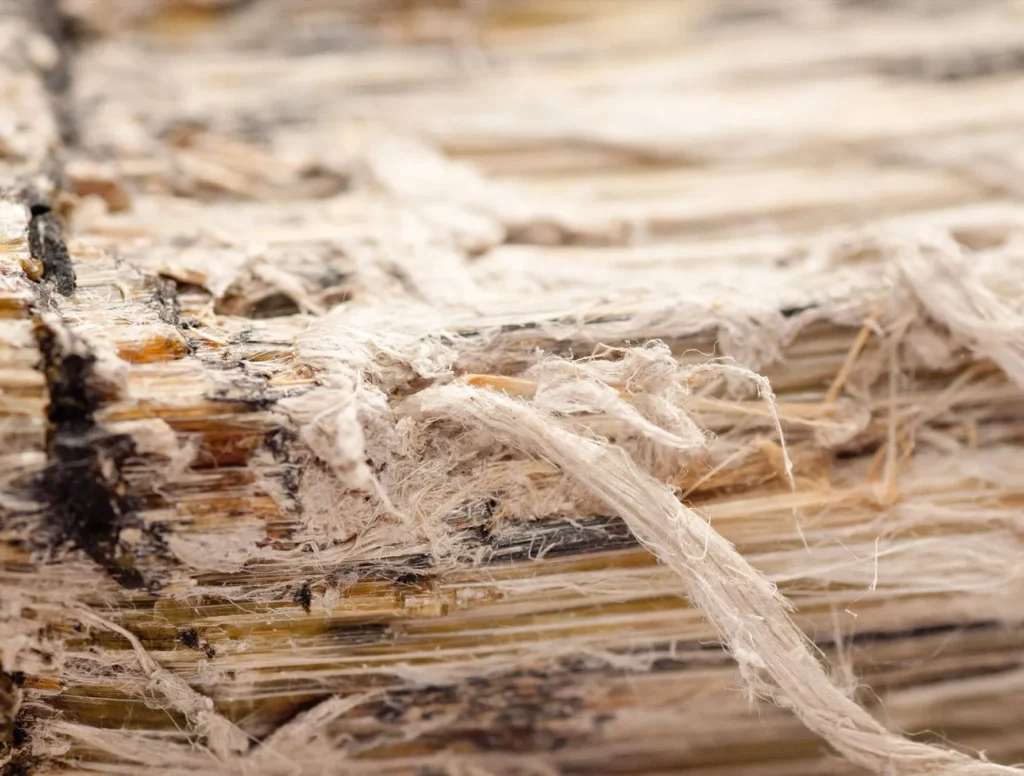
Any of those activities can release asbestos fibers into the air if the vermiculite is contaminated. Once airborne, the fibers are invisible and can remain suspended for hours. According to the CDC/NIOSH, there is no established safe level of asbestos exposure — the risk is cumulative over time.
Why Vermiculite Is a Concern Specifically
Not all vermiculite contains asbestos — but a significant portion of what’s in older American homes does. An estimated 70% of all vermiculite sold in the United States between 1919 and 1990 came from a single mine in Libby, Montana. That mine’s ore was naturally contaminated with tremolite and actinolite asbestos — two particularly hazardous fiber types.
The EPA designated the Libby site as a Superfund cleanup zone. The contamination affected miners, their families, and the surrounding community for decades before the full picture became clear. Vermiculite from Libby was distributed nationally — sold at hardware stores, installed by contractors, used by homeowners who had no reason to suspect a problem.
The EPA’s current guidance is straightforward: treat all vermiculite insulation as potentially contaminated unless testing proves otherwise. For a full breakdown of the Libby connection and how to identify vermiculite, see our detailed vermiculite guide.
How Worried Should You Be Right Now?
Here’s a practical framework based on your situation:
Low urgency — monitor and plan:
- The vermiculite is undisturbed and the attic access is sealed
- No one uses the attic regularly
- You have no renovations planned that will touch the attic or ceiling
- You’re not selling the home in the near term
In this scenario, leaving it alone is a legitimate choice. Seal the attic hatch with weatherstripping, keep people out of the attic, and don’t store anything up there that requires regular access.
Act before proceeding:
- You’re planning any renovation that involves the attic, ceiling, or HVAC system
- You’re selling the home — buyers and inspectors will ask
- A contractor needs to access the attic space
- The attic has already been disturbed and you’re concerned about prior exposure
- Children or family members with respiratory conditions live in the home
In any of these situations, get it tested before proceeding. Testing tells you what you’re actually dealing with and whether abatement is required before that work begins.
What NOT to Do
Before you have test results, don’t:
- Walk through the attic or disturb the material in any way
- Sweep, vacuum, or try to bag it up — this releases fibers
- Attempt to remove it yourself — vermiculite removal requires licensed abatement contractors with proper containment equipment
- Assume it’s safe because the house “looks fine” or was renovated at some point
What Testing Involves
A licensed asbestos inspector collects bulk samples from the vermiculite using wet methods and sealed containment — so the sampling process itself doesn’t release fibers. Samples go to an accredited laboratory for polarized light microscopy (PLM) analysis.
One important nuance: asbestos contamination in vermiculite is not uniformly distributed. A negative result on one small sample doesn’t guarantee the entire attic is clear. This is why the EPA recommends treating all vermiculite as potentially contaminated even after negative results, and why multiple samples matter.
EnviroPro 360 provides asbestos testing for homeowners across Georgia and South Carolina. We handle sampling safely and deliver written lab results with clear guidance on next steps.
If It Tests Positive — Your Options
A positive result doesn’t mean you need to tear the house apart. You have three realistic paths:
- Leave it in place — if the vermiculite is intact, the attic isn’t used, and no renovation is planned, leaving it undisturbed remains a legitimate approach with proper access controls in place.
- Encapsulation — covering the vermiculite with new insulation to seal it in place. Less expensive than removal, but only appropriate if no future work will disturb the layer beneath. A professional assessment determines whether this is suitable for your situation.
- Professional removal — licensed abatement contractors remove the vermiculite under controlled conditions with proper containment, HEPA filtration, and regulated disposal. This is the permanent solution and is required if you’re doing major attic renovations. Costs typically run $8,000 to $20,000 or more depending on attic size and accessibility.
The Bottom Line
Finding vermiculite in your attic is not a reason to panic and evacuate. It is a reason to stop using the attic, find out what you have, and make a plan before any work begins up there.
The homeowners who run into real problems are the ones who disturb it first and ask questions later — mid-renovation, when it’s already too late to avoid exposure.
If you’ve found vermiculite in your attic and want to know what you’re dealing with, the EnviroPro 360 team is happy to help. Reach out any time.