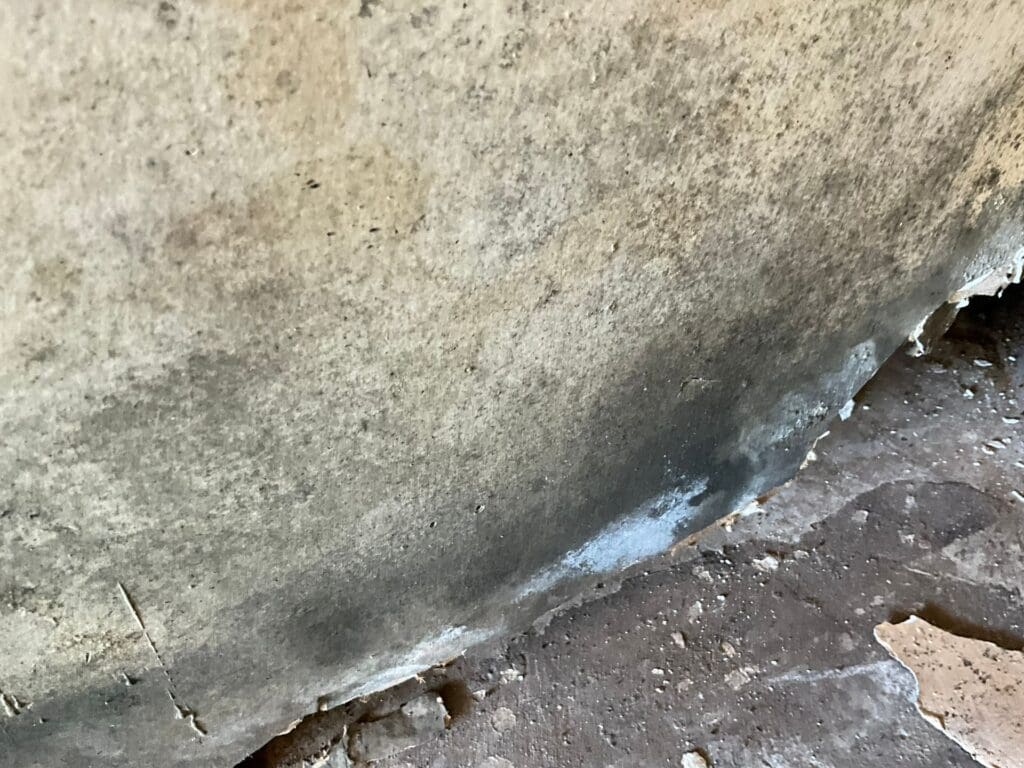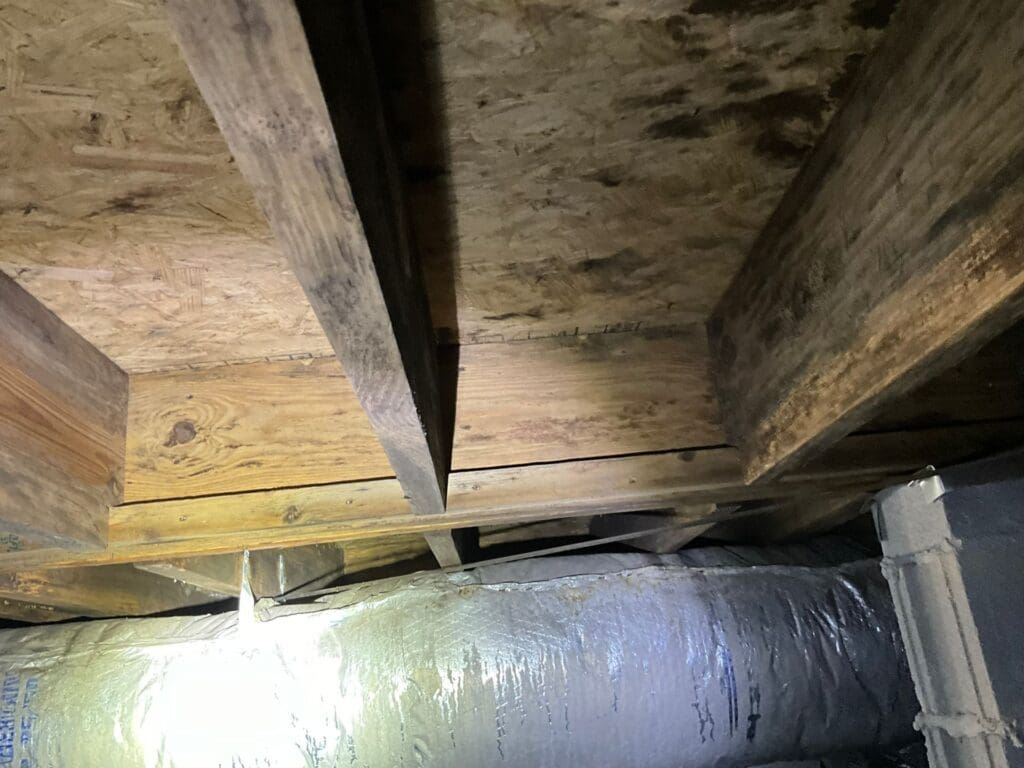
Most homeowners who discover mold want one thing: to get rid of it. That instinct is correct, but the order of operations matters. Starting removal before proper testing is one of the most common mistakes in mold remediation, and it is why mold problems recur in homes that have already paid for cleanup once.
Here is what homeowners in Augusta and the CSRA need to understand about the removal process before work begins.
Testing Before Removal Is Not Optional
The first step in any professional mold remediation is not scrubbing or spraying. It is understanding what you are dealing with. That requires answers to four questions:
- What species of mold is present and at what concentrations?
- Where is the moisture source that allowed the mold to grow?
- How far has growth spread beyond what is visible?
- Are spore counts in the living areas elevated?
These questions require professional mold testing: air sampling, surface sampling, moisture mapping, and thermal imaging. The CDC recommends professional assessment when mold is suspected, particularly for individuals with asthma, allergies, or compromised immune systems. Without testing, contractors are guessing about containment scope, removal extent, and whether the moisture source has been addressed.
In the CSRA, where indoor humidity regularly exceeds 60 percent during summer months even with air conditioning running, a moisture source that goes unidentified before removal guarantees regrowth within one season. EnviroPro 360 regularly sees this pattern across Augusta: a homeowner pays for mold remediation, the problem returns within a year, and testing after the fact reveals the moisture source was never identified or corrected.
What the Removal Process Involves
Once testing establishes the scope, professional mold remediation performed by a licensed contractor follows the EPA’s mold cleanup guidance and IICRC S520 standards:
- Containment — Affected areas are sealed with plastic sheeting and run under negative air pressure to prevent spores from spreading during work.
- Personal protection — Contractors wear N95 respirators or higher, Tyvek suits, and gloves. Occupants and pets stay out of the work zone.
- Material removal — Porous materials with established mold growth (drywall, insulation, carpet) are bagged and removed. Non-porous surfaces like concrete and metal are cleaned in place.
- Surface treatment — Structural members are cleaned with EPA-registered antimicrobial solutions.
- Drying — The area is dried with commercial dehumidifiers and air movers. Reconstruction does not begin until moisture readings confirm the cavity is dry.
- Reconstruction — Replaced materials go back in after drying is verified.
The principle underlying all of it: the moisture source must be corrected before or during remediation. A contractor who removes mold without addressing the moisture source is setting conditions for recurrence.
Why Clearance Testing Is the Step Most People Skip
Post-remediation clearance testing is arguably the most important part of the entire process, and it is the step most homeowners skip because the contractor says the job is done.
Clearance testing, performed by a party separate from the contractor who did the removal, uses air sampling and surface sampling to verify that mold spore counts have returned to normal levels and that no moisture or visible growth remains. The EPA explicitly recommends that post-remediation verification be conducted independently from the contractor, because a contractor verifying their own work is not an objective assessment.
A clearance report from an AIHA-accredited laboratory provides documentation that the remediation was successful. That documentation matters for insurance claims, real estate transactions, and your own confidence that the problem has been resolved.
Common Mistakes to Avoid
- Painting over active mold — mold-resistant paint applied over a surface with active growth does nothing to stop the colony behind it
- Skipping clearance testing — a verbal assurance from the contractor is not a documented result
- Ignoring the moisture source — treating visible growth without identifying what allowed it to grow is the most common cause of recurrence
- Using bleach on porous materials — bleach removes visible staining but does not penetrate drywall or wood deeply enough to address mold roots
EnviroPro 360’s Role in the Process
EnviroPro 360 does not perform physical mold remediation. Our role is testing and assessment — the work that informs effective removal and verifies it was done correctly.
We provide pre-remediation testing (air sampling, surface sampling, moisture mapping, and thermal imaging) to establish scope and identify moisture sources. After contractor work is complete, we conduct post-remediation clearance testing with laboratory analysis from an AIHA-accredited lab. Reports include findings in plain language with specific moisture readings and next-step recommendations.
We serve homeowners and property managers across Augusta, Aiken, North Augusta, Columbia, and the surrounding CSRA. If you have found mold and are preparing to hire a contractor, or if you have recently completed remediation and want independent verification, contact EnviroPro 360 to schedule an inspection.